


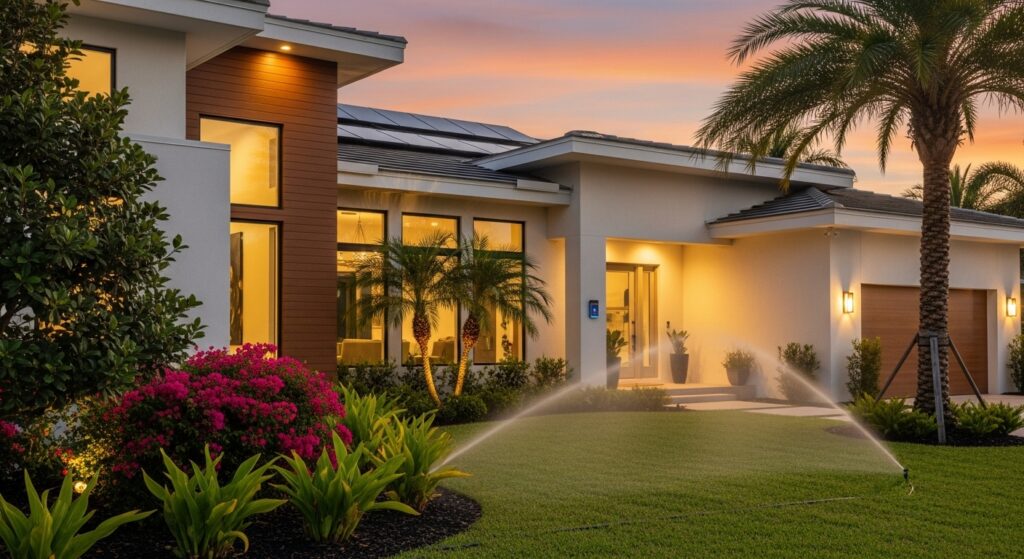
In today’s world, the idea of a “smart home” goes far beyond just a voice-activated speaker. For Florida homeowners, integrating smart home technology offers benefits that touch comfort, convenience, safety, energy efficiency – and even property value. At GreatFlorida Insurance, we often advise homeowners on risk reduction and value preservation. Let’s explore whether a smart home truly is a better home, and how you can make the right upgrades.
1. What we mean by “smart home” in 2025
A smart home is a residence equipped with connected devices – thermostats, lighting, locks, cameras, sensors, appliances – that communicate via the internet (IoT = Internet of Things) and often allow remote control or automation. In 2025, common features include voice assistants, mobile-app interfaces, AI-driven automation routines, and systems that talk to each other.
According to market research, the U.S. smart home market was valued at about US $31.85 billion in 2023 and is projected to exceed US $87 billion by 2032. In Florida in particular, adoption is rising quickly as home owners and builders see the benefits of automation, particularly in areas like energy control and hurricane season readiness.
2. Top benefits of smart homes for Florida homeowners
2.1 Energy efficiency & cost savings
In Florida’s warm climate, HVAC systems can dominate utility bills. Smart thermostats, occupancy sensors and automated lighting help manage costs by cooling only where needed and turning systems off when no one is home. One Southwest Florida builder notes that smart irrigation, smart appliances and thermostats lower monthly energy costs significantly.
2.2 Enhanced safety, security & risk reduction
Smart security cameras, video doorbells, sensors for water leaks or carbon monoxide — these are no longer luxury add-ons. They’re risk mitigation tools. Real estate reports show smart security systems are increasingly linked to insurance discounts and property value premiums. For Florida homes facing hurricane risk or seasonal occupancy, the ability to monitor remotely or automatically shut off water or power adds peace of mind.
2.3 Improved comfort, convenience & lifestyle
A home that ‘knows’ you’re coming, turns on lighting, queues up music, adjusts temperature and locks the doors — that level of automation is now mainstream in many homes. As one Florida market commentary put it, smart features are no longer “nice to have,” but increasingly expected. Especially for remote-working homeowners (like many of you at GreatFlorida), these features can support lifestyle flexibility.
2.4 Increased home value and marketability
Homes equipped with integrated smart systems often fetch premium pricing or sell faster. For example, in Naples, FL, properties with built-in smart systems reportedly gained about a 5 % premium. As the smart home market continues to grow, real estate agents say these technologies are becoming key selling features.
3. What makes a smart home “better”? Consider the risk-return trade-off
To call a smart home “better” means that the benefits outweigh the costs and implementation challenges. Here are things to weigh:
- Up-front cost vs incremental cost. Not every home needs every gadget. While entry-level smart devices are affordable, full system integration may cost thousands.
- Return on investment. Energy savings, lower insurance premiums, higher resale value may offset cost — but the specific outcome depends on the features and local market.
- Usability and reliability. Smart devices only deliver value if they are easy to use, maintained (software updates), and interoperable.
- Cybersecurity & privacy. More devices means more data and more potential exposure. Ensuring devices are secure is critical.
- Future-proofing. Smart home ecosystems evolve quickly. Choosing open platforms, upgrade-friendly systems, and standardized protocols (such as Matter) helps avoid obsolescence.
4. What Florida homeowners should focus on
Since GreatFlorida Insurance serves homeowners in Florida, let’s highlight Florida-specific considerations:
- Hurricane & storm readiness: Smart home systems that allow remote monitoring, automatic shutter/garage control, leak sensors and water- shut-off reduce risk when a home is vacant for part of the year.
- Energy use in warm climate: Smart thermostats and zoning systems make a bigger difference in Florida than in cooler states — savings from smarter cooling can add up.
- Resale and relocation market: With many people relocating to Florida, buyers increasingly expect modern connected features. Having smart home upgrades may help your home appeal in a competitive market.
- Insurance benefits: Some insurers in Florida and elsewhere reward monitored security systems, flood sensors and water-shutoff devices with premium credits — check with your provider.
- Water usage and irrigation: Smart irrigation systems connected to weather and soil sensors (especially in Southwest Florida) help conserve water and reduce expense.
5. Getting started: Smart home upgrade roadmap
Here’s a practical roadmap for turning your home into a smarter home — without getting overwhelmed:
- Define your goals. Do you want energy savings? Enhanced security? Convenience for vacation/seasonal home? Start with what matters most.
- Start small with key systems. Consider beginning with a smart thermostat + smart lock + video doorbell. These deliver strong value and are user-friendly.
- Ensure compatibility and network setup. Choose a platform (Alexa, Google Home, Apple HomeKit or a neutral hub) and make sure new devices will integrate smoothly.
- Add strategic upgrades. Next add smart lighting, leak sensors, irrigation control, remote HVAC zoning – especially given Florida specifics.
- Monitor outcomes. Track your energy savings, how often you use remote features, any insurance premium reductions, impact on home comfort.
- Plan for long term. Leave the door open for future upgrades (EV charging, energy storage, full home automation) and evaluate tech life-cycle periodically.
6. Common pitfalls & how to avoid them
Smart home technology has huge upside, but there are some frequent mistakes homeowners make:
- Buying gadgets in isolation. One of the biggest mistakes is adding devices without ensuring they integrate. That leads to “tech islands” that don’t talk to each other.
- Chasing flashy “cool” devices vs proven value. Gadgets that look impressive may offer little real value (and may become obsolete quickly). Focus on features tied to your goals.
- Neglecting network & cybersecurity. A smart home is only as secure as its weakest link. Weak WiFi, outdated firmware, or unsupported devices can create vulnerability.
- Ignoring support and maintenance. Devices and platforms require software updates, occasional troubleshooting, and may tie you to subscription fees.
- Underestimating total cost. The cost of wiring, professional installation, ongoing monitoring and ecosystem lock-in can add up. Estimate total lifecycle cost, not just sticker price.
7. Bottom line
So, is a smart home a better home? For many Florida homeowners the answer is yes — when the smart technology is thoughtfully selected, aligned with your lifestyle and goals, and managed effectively. The benefits in comfort, safety, efficiency and property value are real. But “smart” doesn’t automatically mean “better” – it depends on execution.
At GreatFlorida Insurance, we encourage homeowners to view smart home upgrades as part of a broader risk-management and value-enhancement strategy. Combine smart tech with good insurance, a solid home maintenance plan and energy awareness, and you’ll be well-positioned to enjoy a home that’s not just more connected — but better.
Frequently Asked Questions
1. What is the average cost to upgrade a home with smart features?
The cost varies widely depending on the number of devices and level of integration. For basic systems (smart thermostat, locks, video doorbell) homeowners may spend a few hundred dollars. Fully integrated systems with lighting, security, HVAC zoning and monitoring can run into thousands. The key is starting with high-impact upgrades and expanding over time.
2. Can smart home technology really reduce my insurance premium?
Yes, in some cases. Insurance companies increasingly recognize the risk-reduction potential of monitored security systems, leak sensors and home automation. For Florida homes, the benefit is especially strong given weather, water and storm-related risks. Be sure to talk to your insurer about eligible devices and documented results.
3. Will smart home upgrades increase my home’s resale value?
Yes — research and market commentary show homes with integrated smart systems tend to sell at a premium or faster. For example, a Florida market report found a 5 % premium for homes with built-in smart home systems. That said, value depends on what features are installed, home condition, and buyer expectations in your market.
4. What are the best smart home upgrades for Florida homes?
For Florida homeowners, focus on devices that deliver climate, security or water-management benefits: smart thermostats, flood/ leak sensors, smart irrigation, smart security cameras and remote monitoring tools. These tend to give the best return in our climate and home-ownership environment.
5. Are there any tax credits or rebates for smart home technology?
Yes — many energy-efficiency devices (smart thermostats, efficient HVAC, connected water heaters) qualify for state or federal rebates. The broader smart home market is also driven by such incentives. For example, research shows U.S. smart home market growth is supported by utility-backed rebates. Always check latest Florida utility programs and federal rules.
6. How do I ensure my smart home is secure from hackers?
Security is critical: ensure your WiFi uses strong encryption, keep firmware updated, use devices from reputable vendors, consider network segmentation (guest vs smart device network), use unique passwords and enable two-factor authentication where available. As the market evolves, certification marks (such as the upcoming US Cyber Trust Mark) are emerging to help.
7. Can smart home systems help if my house is rented or vacant for part of the year?
Absolutely. Remote monitoring (for security, water leaks, HVAC condition) is especially valuable for second homes or seasonal residences—common in Florida. Automated systems can turn off water, detect unusual activity, adjust temperature or lighting remotely, reducing risk and utility waste.
8. What happens if I install a smart home system but later sell my property?
Ideally, the smart system becomes a selling point — as long as it works reliably and the buyer understands the value. Document your system’s features and value when you sell. Avoid highly proprietary systems that lock a buyer into subscriptions or vendor-lock. Choose open platforms when possible to maximize appeal.
9. Is it better to hire a professional integrator or go DIY for smart home installation?
It depends on your comfort level and system complexity. For basic add-ons (smart thermostat, video doorbell) DIY is often fine. But for whole-home integration (lighting control, HVAC zoning, security monitoring) a professional brings better reliability, proper wiring, system design and fewer compatibility issues. The U.S. report shows professional installations are growing.
10. How do I future-proof my smart home investment?
Choose devices and platforms that support industry standards (for example Matter, Thread), and are firmware-updateable. Avoid systems locked into proprietary ecosystems without upgrade paths. Plan for incremental additions rather than “big bang,” and keep your network and firmware maintained. The smart home market evolves rapidly; planning ahead helps prevent obsolescence.