


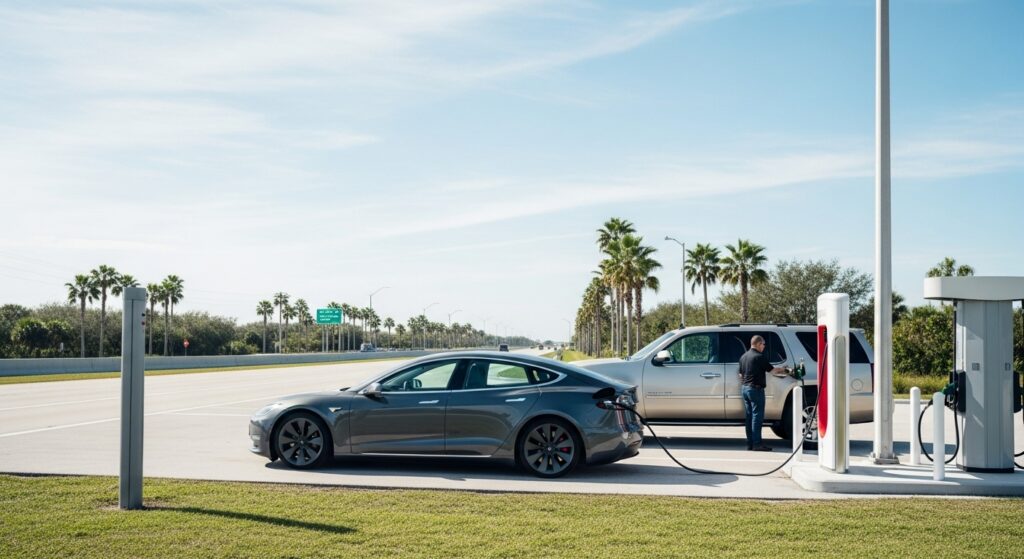
As of September 2025, the debate between electric vehicles (EVs) and gas-powered cars is no longer just about performance or environmental impact, it’s increasingly about cost. Florida, with one of the fastest-growing EV adoption rates in the country, presents unique financial considerations for drivers.
While EVs promise long-term savings on fuel and lower emissions, they also bring higher insurance premiums and repair costs. Understanding these trade-offs can help Florida drivers make the right decision for their lifestyle and budget.
Insurance Costs for EVs vs. Gas Cars
One of the most striking differences between EVs and gas-powered vehicles is the cost of insurance. In Florida, EV owners pay on average 66% more for insurance. For example:
- Average EV annual premium: $5,283
- Average gas vehicle premium: $3,189
Why the gap? EVs often cost more to repair after an accident and require specialized technicians. Their higher purchase prices and expensive battery systems also mean insurers face greater potential payouts, which directly impacts premiums.
Repair and Maintenance Expenses
Repairing an EV can be considerably more expensive than repairing a traditional car. According to 2025 repair cost data, EV repairs cost an average of $1,322 more than repairs for gas-powered vehicles. Reasons include:
- Limited availability of specialized parts.
- Need for certified EV repair technicians.
- Complex battery and electrical systems.
On the other hand, EVs have fewer moving parts, no oil changes, and generally lower routine maintenance requirements. Brake systems also last longer due to regenerative braking.
Total Cost of Ownership in Florida
When calculating the total cost of ownership, Floridians should consider:
- Purchase Price: EVs still tend to cost more upfront, although tax credits and incentives can reduce this gap.
- Insurance: Higher premiums remain a consistent expense.
- Fuel/Energy: EV drivers save hundreds annually compared to gas fill-ups, especially as Florida’s average gas prices remain above $3.40/gallon.
- Maintenance: Lower day-to-day maintenance costs offset some repair risks.
Over a five-year span, EVs may equal or surpass gas cars in cost efficiency—especially for drivers with high mileage or those who charge at home using solar energy.
Florida Incentives for EV Ownership
While Florida does not currently offer state-level EV purchase rebates, there are incentives worth noting:
- Federal tax credits of up to $7,500 on eligible new EVs.
- Utility company rebates for installing Level 2 home charging stations.
- Reduced maintenance from fewer routine services.
Additionally, some local municipalities in Florida are expanding public charging infrastructure, which can further lower operating costs.
Environmental and Lifestyle Factors
Beyond the dollars, many Floridians choose EVs for environmental benefits—lower emissions, quieter operation, and energy independence. With Florida’s growing population and traffic congestion, the shift toward EVs is expected to accelerate, despite higher insurance premiums.
Frequently Asked Questions
1. Why is EV insurance more expensive in Florida?
EV insurance costs more because of higher repair expenses, the cost of battery replacement, and fewer specialized repair shops. Insurers set higher premiums to account for these risks.
2. How much more do EV repairs cost than gas car repairs?
On average, EV repairs cost $1,322 more than those for gas-powered vehicles, due to specialized parts and labor.
3. Are there EV insurance discounts in Florida?
Yes. Some insurers, such as Farmers Insurance and State Farm, offer discounts for alternative-fuel or eco-friendly vehicles. Bundling policies may also reduce premiums.
4. Do EVs cost more to maintain?
EVs generally cost less to maintain than gas cars because they lack oil changes and have fewer moving parts. However, when major repairs occur, they are often more expensive.
5. Is it cheaper overall to own an EV or a gas car?
It depends on your driving habits. High-mileage drivers and homeowners with solar panels often find EVs cheaper long-term. Low-mileage drivers may find gas cars more economical.
6. Do Florida utilities offer EV charging rebates?
Yes, some utilities such as Florida Power & Light offer rebates or lower rates for off-peak EV charging.
7. How do fuel savings compare between EVs and gas cars?
EV drivers in Florida can save $600–$1,200 annually on fuel compared to gas drivers, depending on mileage and charging rates.
8. What is the lifespan of an EV battery?
Most EV batteries last 8–12 years. Replacements can cost $10,000–$20,000, though warranties typically cover the first 8 years or 100,000 miles.
9. Are there more charging stations in Florida now?
Yes, Florida has rapidly expanded EV charging infrastructure, with over 6,000 public charging ports available statewide as of 2025.
10. Will EV insurance costs come down in the future?
Likely, as EV adoption increases, repair networks expand, and insurers gain more data. Costs should gradually decrease, but premiums may remain higher than gas cars in the near term.
Conclusion
Choosing between an EV and a gas-powered car in Florida requires weighing both financial and lifestyle factors. While EVs come with higher insurance and repair costs, they also deliver long-term savings on fuel and maintenance, as well as environmental benefits. For many Floridians, the decision comes down to driving habits, financial priorities, and access to charging infrastructure.
For more information on auto insurance options in Florida, visit GreatFlorida Insurance.