


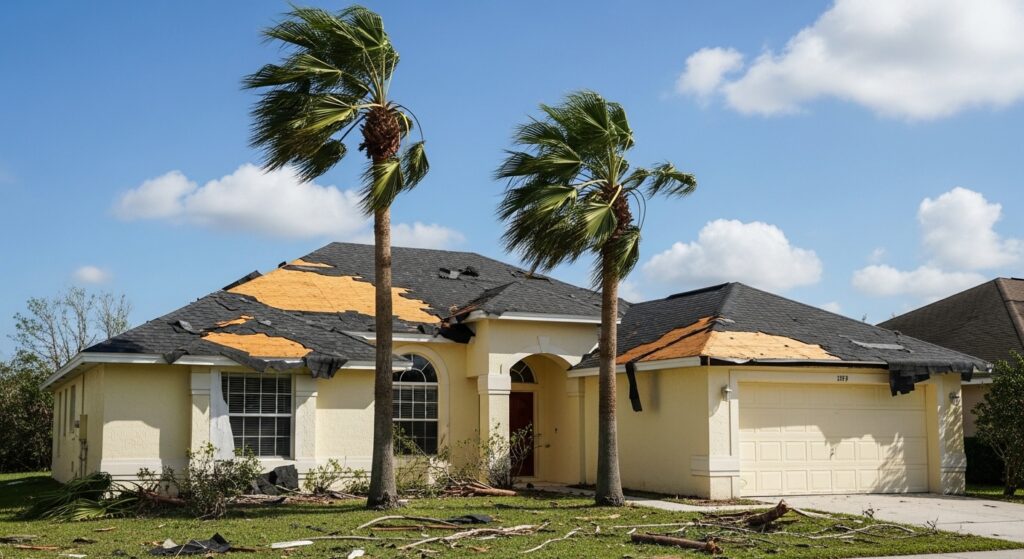
Roof damage is one of the most common—and most misunderstood—home insurance claims in Florida. Between hurricanes, tropical storms, hail, and intense sun exposure, Florida roofs take a beating year-round.
But filing a roof claim in Florida isn’t as simple as it used to be. According to the Florida Office of Insurance Regulation, recent reforms have changed how claims are handled.
Recent insurance reforms, stricter underwriting, and rising premiums mean homeowners need to be more informed than ever before. If you’re dealing with roof damage—or want to be prepared—this guide will walk you through exactly what to know.
What Causes Roof Damage in Florida?
Florida’s climate is uniquely tough on roofs. The most common causes of damage include:
- Hurricanes and tropical storms (wind uplift, debris impact)
- Hail damage (even small hail can weaken shingles)
- Windstorms (missing or lifted shingles)
- UV exposure (gradual deterioration over time)
- Falling branches or debris
Important: Insurance typically covers sudden and accidental damage, not gradual wear and tear.
Does Homeowners Insurance Cover Roof Claims in Florida?
In most cases, yes—but with important limitations. The Insurance Information Institute explains that homeowners insurance typically covers sudden damage, but not wear and tear.
Typically Covered:
- Wind and storm damage
- Hail damage
- Damage from fallen trees (if caused by a covered peril)
Typically NOT Covered:
- Old age or normal wear and tear
- Lack of maintenance
- Pre-existing damage
- Cosmetic damage (in some policies)
Understanding Florida Roof Claim Laws (Recent Changes)
Florida has made significant changes to reduce fraudulent and excessive roof claims. Here’s what homeowners need to know:
1. Shorter Claim Filing Deadlines
- You generally have 1 year to file a property insurance claim after damage occurs
- Supplemental claims must be filed within 18 months
2. Assignment of Benefits (AOB) Restrictions
- Contractors can no longer easily take over your claim
- You, the homeowner, stay in control of the process
3. Limited Roof Payouts (Age-Based Coverage)
Many policies now use Actual Cash Value (ACV) instead of replacement cost for older roofs.
That means:
- Older roof = depreciation applied
- Lower payout than full replacement cost
Replacement Cost vs. Actual Cash Value (Why It Matters)
This is one of the biggest surprises for Florida homeowners.
- Replacement Cost (RCV): Pays to replace your roof at today’s cost
- Actual Cash Value (ACV): Pays replacement cost minus depreciation
Example:
If your roof is 15 years old, your payout could be reduced significantly—even if the damage is covered.
How to File a Roof Claim in Florida (Step-by-Step)
1. Document the Damage Immediately
- Take photos and videos
- Note the date and cause (storm, wind, etc.)
2. Prevent Further Damage
- Use tarps if needed
- Keep receipts for temporary repairs
3. Contact Your Insurance Company
- File your claim as soon as possible
- Provide documentation
4. Schedule an Inspection
- Insurance adjuster will assess damage
- You can also hire a public adjuster (optional)
5. Review the Settlement Carefully
- Understand depreciation and deductibles
- Ask questions if anything is unclear
Common Reasons Roof Claims Are Denied
Understanding why claims get denied can help you avoid costly mistakes:
- Damage determined to be wear and tear
- Roof is too old or poorly maintained
- Late filing of the claim
- Lack of documentation
- Damage occurred before policy coverage
Tips to Protect Your Roof—and Your Claim
Be Proactive:
- Schedule annual roof inspections
- Keep records of maintenance and repairs
Know Your Policy:
- Check if you have ACV or RCV coverage
- Understand your hurricane deductible
Act Quickly:
- Don’t wait to file a claim
- Delays can result in denial
Work with Trusted Professionals:
- Avoid storm-chasing contractors
- Get multiple estimates
When Should You NOT File a Roof Claim?
Sometimes filing a claim can do more harm than good.
Consider avoiding a claim if:
- Damage is minor and below your deductible
- You’ve filed multiple claims recently
- Repair costs are manageable out-of-pocket
Filing too many claims can impact your insurability in Florida.
FAQS
What is the time limit to file a roof claim in Florida?
Homeowners typically have 1 year from the date of damage to file a claim.
Does Florida insurance cover roof replacement?
It depends on your policy. Some provide full replacement cost, while others only pay actual cash value based on the roof’s age.
Why are roof claims denied in Florida?
Common reasons include wear and tear, late filing, poor maintenance, or pre-existing damage.
Should I call a roofer or insurance first?
You can do both, but it’s best to document damage and notify your insurance company quickly.
Final Thoughts
Roof claims in Florida have become more complex—but with the right knowledge, you can navigate the process confidently.
The key is understanding your coverage, acting quickly after damage, and working with professionals you trust.
If you’re unsure about your policy or coverage, speaking with a Florida insurance expert can help you avoid costly surprises.
Need help reviewing your roof coverage or filing a claim?
Contact GreatFlorida Insurance today for a policy review and personalized guidance.
We’ll help you understand exactly what’s covered—and what to do next.