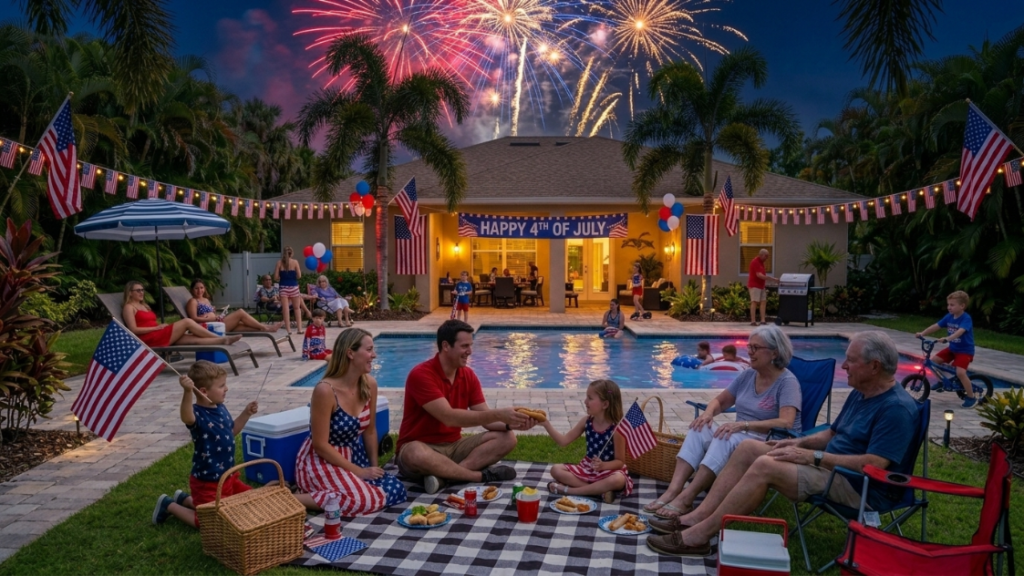
The 4th of July is one of the most celebrated holidays of the year. Across Florida, families gather for cookouts, beach days, boating, fireworks, pool parties, road trips, and neighborhood celebrations. It is a day filled with fun, patriotism, and time with the people we love.
But Independence Day can also bring a higher risk of accidents, property damage, injuries, and insurance claims. Fireworks can damage homes, decks, roofs, fences, vehicles, and neighboring property. Grills and outdoor cooking can lead to fires. Pool parties can create liability concerns. Holiday travel can increase the chance of auto accidents. In Florida, boating is another major part of the holiday weekend, and crowded waterways can raise the risk of collisions or injuries.
That does not mean you should avoid celebrating. It simply means a little planning with GreatFlorida Insurance can help protect your family, your guests, and your finances.
Before the holiday weekend arrives, it is a good idea to review your insurance policies and understand where coverage may apply. Homeowners insurance, renters insurance, condo insurance, auto insurance, boat insurance, umbrella insurance, and even motorcycle or RV insurance can all play a role during a busy 4th of July celebration.
Why the 4th of July Creates Extra Insurance Risk
The 4th of July combines several common claim risks into one holiday: fire, injury, travel, alcohol, crowds, pets, boats, cars, and outdoor entertaining.
Fireworks are one of the most obvious concerns. The U.S. Consumer Product Safety Commission reported 11 fireworks-related deaths and an estimated 14,700 fireworks injuries in 2024, including about 1,700 injuries involving sparklers. The National Fire Protection Association also warns that thousands of people, often children and teens, are injured each year while using consumer fireworks.
In Florida, the risk can be even more complicated because many celebrations happen close to homes, condos, boats, beaches, docks, dry grass, lanais, and screened enclosures. Wind, palm debris, and crowded neighborhoods can make fireworks and grills more dangerous than people expect.
Insurance becomes important because a single accident can be expensive. A fire-damaged roof, injured guest, damaged vehicle, or boating accident can quickly turn a fun holiday into a stressful financial situation.
Homeowners Insurance and 4th of July Fireworks
Homeowners insurance may help if your home is damaged by fire, smoke, or an explosion caused by fireworks. For example, if a firework lands on your roof and causes a fire, your homeowners policy may help pay for repairs, depending on the policy terms and circumstances.
However, coverage is not always simple. If damage occurs because of illegal activity, intentional misuse, or reckless behavior, your claim could become more complicated. Insurance companies may review whether the fireworks were legal, whether they were used responsibly, and whether the damage was accidental.
Homeowners should also think about neighboring property. If you set off fireworks and they damage a neighbor’s roof, car, fence, or landscaping, you could be held responsible. The personal liability portion of your homeowners policy may help in some situations, but there are limits and exclusions.
Before lighting fireworks at home, check your local rules, follow safety guidelines, and consider whether a public fireworks display is the safer choice. The National Fire Protection Association recommends leaving fireworks to trained professionals.
Renters Insurance and Holiday Liability
If you rent a home or apartment, you may assume your landlord’s insurance protects you. It usually does not protect your personal belongings or your personal liability.
Renters insurance may help if your belongings are damaged by a covered fire or if someone is injured in your rented home and you are found responsible. For example, if a guest trips on your patio during a 4th of July gathering, renters insurance may provide liability protection, depending on the policy.
Renters should also be cautious with fireworks, grills, candles, and decorations. Many leases and apartment communities have strict rules about open flames and fireworks. Violating those rules could lead to fines, eviction issues, or denied claims.
Condo Insurance and Shared Property Concerns
Condo owners in Florida should be especially careful during the 4th of July. Many condo communities have shared spaces, parking areas, lanais, pool decks, docks, and balconies. Fireworks, grills, and parties can create risk not only for your unit, but also for neighboring units and common property.
Your condo insurance policy may cover your personal property, interior improvements, and personal liability. The condo association’s master policy usually covers certain shared structures and common areas, but every association is different.
Before hosting a party or using fireworks near a condo, check your association rules. Some communities completely prohibit fireworks, balcony grilling, or open flames. If a celebration causes damage to shared property, responsibility can become complicated quickly.
Auto Insurance During the 4th of July Weekend
Holiday weekends often mean more drivers on the road. People travel to beaches, family gatherings, fireworks shows, restaurants, parks, and marinas. Unfortunately, busier roads can increase the chance of accidents.
Your auto insurance may help if you are involved in a covered crash, but the type of protection depends on your policy. Liability coverage may help pay for injuries or damage you cause to others. Collision coverage may help repair your own vehicle after an accident. Comprehensive coverage may help with certain non-collision damage, such as fire, theft, vandalism, or a falling object.
The 4th of July is also a good reminder to avoid impaired driving. If your celebration includes alcohol, plan ahead with a designated driver, rideshare, taxi, or overnight stay. An impaired driving accident can create legal, financial, and personal consequences far beyond a typical insurance claim.
Boat Insurance and Florida Waterway Safety
In Florida, the 4th of July often means boating. Sarasota Bay, the Gulf, lakes, rivers, and coastal waterways can become crowded with boaters, jet skis, kayaks, paddleboards, and swimmers.
Boat insurance may help protect you if your boat is damaged, stolen, or involved in an accident. It may also provide liability coverage if you injure someone or damage another person’s boat, dock, or property.
Before heading out for the holiday, check your boat insurance limits, make sure safety equipment is onboard, review weather conditions, and avoid boating under the influence. Crowded waterways require extra patience and attention.
Also remember that not all homeowners policies provide meaningful boat coverage. Smaller boats may have limited protection under some homeowners policies, but larger boats and personal watercraft often need separate boat insurance.
How much could you save on Florida Homeowners Insurance? It takes two minutes to find out.
Get a Free QuoteGrill Fires, Outdoor Cooking, and Home Insurance
Grilling is a major part of the 4th of July, but it is also one of the most common sources of outdoor fire risk. Grills should be kept away from homes, fences, patio furniture, umbrellas, screened lanais, trees, and overhangs.
If a grill fire damages your home, homeowners insurance may help, depending on the circumstances. But if the fire results from careless or prohibited use, the claim may be reviewed more closely.
Simple precautions can make a big difference. Clean grease buildup before cooking. Keep a fire extinguisher nearby. Never leave the grill unattended. Make sure propane tanks and hoses are in good condition. Let coals cool completely before disposal.
For condo owners and renters, always check whether grilling is allowed. Many communities restrict gas or charcoal grills on balconies and patios.
Pool Parties and Guest Injuries
Pools are another common part of Florida holiday celebrations. They are fun, but they also create liability risk. If someone is injured in your pool, slips on your deck, or has an accident during a party, you could be held responsible.
Homeowners insurance may include personal liability coverage, but you should know your limits. If you frequently host guests or have a pool, umbrella insurance may be worth considering. Umbrella insurance provides extra liability protection above the limits of your home, auto, boat, or other eligible policies.
For 4th of July pool safety, keep children supervised, avoid glass around the pool, provide adequate lighting, keep walkways clear, and avoid mixing alcohol with swimming.
Umbrella Insurance for Holiday Gatherings
Umbrella insurance can be especially valuable for people who host parties, own a pool, have a boat, own rental property, or have significant assets to protect.
A serious injury claim can exceed the liability limits on a standard home or auto policy. Umbrella insurance may provide an additional layer of protection if you are sued or held responsible for a covered accident.
For example, umbrella coverage may help if a guest is seriously injured at your home, if you cause a major auto accident, or if a boating accident results in expensive damages. It is not a replacement for responsible planning, but it can provide added financial protection.
Fireworks Safety Tips for the 4th of July
The safest option is to enjoy a professional fireworks show. If you choose to use consumer fireworks where permitted, follow basic safety steps.
Only use legal fireworks. Read all instructions. Keep children away from fireworks. Never allow young children to handle sparklers. Keep water nearby. Light one firework at a time. Never relight a firework that fails to ignite. Do not point fireworks at people, homes, vehicles, pets, or dry vegetation. Never use fireworks while impaired by alcohol or drugs.
The Consumer Product Safety Commission offers fireworks safety guidance and injury statistics for consumers.
Pet Safety and Insurance Considerations
Fireworks can be frightening for pets. Dogs and cats may run away, hide, bark, shake, or injure themselves trying to escape. While pet insurance is separate from homeowners insurance, it may help with certain veterinary costs if your pet is injured, depending on the policy.
Before fireworks begin, bring pets indoors, close windows and doors, use calming background noise, and make sure your pet’s ID tags and microchip information are current.
Review Your Insurance Before the Holiday
Before the 4th of July, take a few minutes to review your insurance coverage. Make sure your homeowners, renters, condo, auto, boat, motorcycle, RV, and umbrella policies are current. Check your deductibles, liability limits, exclusions, and whether you have enough protection for the way you celebrate.
If you have recently bought a boat, added a pool, upgraded your home, bought expensive outdoor equipment, or started hosting larger gatherings, your coverage may need to be updated.
A local GreatFloridaInsurance agent can help you compare coverage options and identify gaps before a claim happens.
Final Thoughts
The 4th of July should be a time to celebrate freedom, family, and community. With a little preparation, you can reduce risk and enjoy the holiday with more peace of mind.
Insurance may help protect you from the unexpected, but safety is still the best first step. Be careful with fireworks, drive sober, supervise children, protect your pets, use grills responsibly, and review your coverage before the holiday weekend begins.
A safe celebration is always the best kind.
Frequently Asked Questions About Insurance and the 4th of July
1. Does homeowners insurance cover fireworks damage?
Homeowners insurance may cover accidental fire or property damage caused by fireworks, depending on your policy and the circumstances. Claims involving illegal fireworks, reckless behavior, or intentional damage may be more complicated.
2. Am I liable if my fireworks damage my neighbor’s property?
You could be held responsible if fireworks you use damage a neighbor’s home, car, fence, landscaping, or other property. The liability portion of your homeowners policy may help, but coverage depends on the policy.
3. Does renters insurance cover 4th of July accidents?
Renters insurance may help cover personal belongings damaged by a covered event and may provide liability protection if someone is injured in your rental home. It does not cover the building itself; that is usually the landlord’s responsibility.
4. Does condo insurance cover fireworks damage?
Condo insurance may cover damage to your personal property, interior unit improvements, or liability claims. Damage to shared areas may involve the condo association’s master policy.
5. Does auto insurance cover fireworks damage to my car?
Comprehensive auto insurance may help cover certain fireworks-related damage, such as fire or falling debris. Liability-only policies generally do not cover damage to your own vehicle.
6. Is boat insurance important for the 4th of July?
Yes. Florida waterways are often crowded during the holiday. Boat insurance may help cover damage, theft, liability, and accidents involving your boat, depending on your policy.
7. Does homeowners insurance cover grill fires?
Homeowners insurance may cover accidental fire damage caused by a grill, depending on the circumstances. Always grill away from structures and follow community rules.
8. Should I consider umbrella insurance before hosting a party?
Umbrella insurance can provide extra liability protection beyond your home, auto, or boat policy limits. It may be helpful if you host guests, own a pool, or have significant assets to protect.
9. Are sparklers dangerous?
Yes. Sparklers burn extremely hot and can cause serious burns, especially for children. Safer alternatives include glow sticks, streamers, and LED toys.
10. What should I review before the 4th of July?
Review your home, renters, condo, auto, boat, RV, motorcycle, and umbrella policies. Check liability limits, deductibles, exclusions, and whether recent life changes require updated coverage.
Ready to save on Florida Homeowners Insurance?
GreatFlorida Insurance Agents compare rates from Florida's best carriers for you.
Get a Free QuoteOr call 888.478.7801