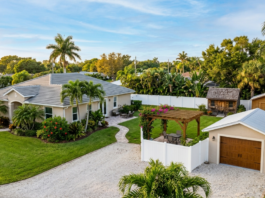

Florida has one of the most lawsuit-prone driving and homeowning environments in the country. A single at-fault accident with serious injuries, a slip-and-fall on your property, a dog bite, or a teen-driver crash can produce a settlement that crashes through the liability limits on your auto or home policy in minutes. A personal umbrella policy is the simplest fix for that gap. In 2026 it remains one of the most cost-efficient coverages a Florida household can buy.
This guide walks through what an umbrella policy does in Florida, what it costs in 2026, and who needs it most. It also covers the underlying-limit thresholds admitted Florida carriers require before they will bind a policy.
Key Takeaways
- A $1,000,000 personal umbrella in Florida costs $200 to $400 per year, roughly $20 to $35 per month for protection.
- Florida jury verdicts in catastrophic injury cases routinely exceed seven figures, making umbrella coverage financially essential.
- You must have adequate underlying limits (250/500/100 auto and $300k homeowners liability) before an umbrella policy will bind.
What a Personal Umbrella Policy Does in Florida
An umbrella policy is a separate liability policy that sits on top of the liability limits in your auto and homeowners (or renters/condo) policies. It pays once those underlying limits are exhausted, almost always in $1,000,000 increments stacked over your other coverages.
The Florida-specific value comes from three pressures. Crash severity on I-95, I-75, and the Turnpike runs higher than the national average. Jury verdicts in Miami-Dade, Broward, and Hillsborough routinely cross seven figures in catastrophic-injury cases. And homeownership exposures — pools, docks, trampolines, golf carts, short-term rentals — simply do not exist at the same scale in colder states.
An umbrella policy in Florida typically extends over bodily injury and property damage liability on auto, personal liability on homeowners or renters, watercraft liability (with the right endorsement), rental dwelling liability, and libel/slander/false-arrest exposure. It does not cover your own injuries, your own property, or business activities — those need their own policies. A Florida GreatFlorida® umbrella agent can map your specific exposures to the policy language before you bind.
2026 Cost: What a Florida Umbrella Policy Actually Runs
A $1,000,000 personal umbrella policy in Florida typically costs $200–$400 per year — roughly $20–$35 per month. That price assumes a clean household with adequate underlying limits and no surcharged drivers. Coastal ZIPs and households with multiple cars or rental properties usually price toward the top of that band.
Premiums climb in step with exposure. Each rental unit you own typically adds $50–$100, a pool adds $50–$150, and a teen driver in the household adds $100–$200. A boat over 26 feet, a jet ski, or a recreational vehicle endorsement each tack on another $75–$150 per year. Stepping from $1M to $2M usually costs another $75–$125 annually, and going to $5M typically lands at $400–$700 total.
Bundling your umbrella with the same carrier that writes your auto and home almost always unlocks a 5–10% multi-policy credit on the package. A Florida GreatFlorida® agent can run the bundle math across 6–8 admitted carriers in a single quote so you see the net cost — not just the umbrella line.
Eligibility: Underlying Limits Florida Carriers Require
Florida umbrella carriers will not bind a policy until your underlying auto and home policies meet minimum liability thresholds. The most common 2026 requirements are 250/500/100 on auto — $250,000 per person, $500,000 per accident bodily injury, and $100,000 property damage — plus $300,000 of personal liability on your homeowners or renters policy. Watercraft and rental-property exposures usually add their own underlying-limit floors.
If your current auto policy carries Florida’s state-minimum 10/20/10 limits, you will need to raise those limits before the umbrella binds. That raise typically adds $150–$300 per year to your auto premium. Most households recover that cost several times over in umbrella-bundle savings and avoided out-of-pocket exposure.
How much could you save on Florida Auto Insurance? It takes two minutes to find out.
Get a Free QuoteWho Needs a Florida Umbrella Policy Most
The traditional rule is to buy umbrella coverage equal to your net worth. In Florida, that rule routinely under-states the risk for several common household profiles. The list below covers the profiles where $2M–$5M of umbrella is typically the practical floor, not the ceiling.
Households with a teen driver: a 17-year-old at-fault crash on I-4 can exhaust a 250/500 auto policy in a single collision. Pool owners: drowning and diving injuries produce some of the largest single-incident verdicts in Florida law. Short-term-rental hosts: Airbnb and VRBO host protection caps at $1M and excludes many common claims. Boat owners over 26 feet: watercraft liability under most homeowners policies stops at $300K.
Landlords with more than one rental unit are also above the typical risk band, since each unit multiplies premises-liability exposure. For most Florida families with a house, two cars, and one teen driver, $2,000,000 of umbrella coverage is the practical floor in 2026.
How to Quote Florida Umbrella Coverage Correctly
Start by listing every exposure: vehicles, drivers, properties, pools, boats, jet skis, recreational vehicles, dogs (by breed), and any rental or business use of personal assets. Pull the declarations pages for your current auto and home so the agent can verify underlying limits without back-and-forth. The exposure list plus current decs is enough for a Florida agent to quote a real umbrella number in a single call.
Then call a GreatFlorida® umbrella insurance agent or use the Florida insurance agent search to find a local office. A good independent agent will quote umbrella, auto, and homeowners together so the bundle credit, the underlying-limit raise, and the umbrella premium net out into a single number.
Frequently Asked Questions
How much umbrella insurance do I need in Florida?
Does a Florida umbrella policy cover hurricane damage?
Will my umbrella policy cover my teen driver in Florida?
Does umbrella insurance cover Airbnb or short-term rental claims in Florida?
Ready to quote a Florida umbrella policy alongside your auto and home? Contact a local GreatFlorida® umbrella insurance agent or use the agent search tool to find an office near you.
Ready to save on Florida Auto Insurance?
GreatFlorida Insurance Agents compare rates from Florida's best carriers for you.
Get a Free QuoteOr call 888.478.7801