


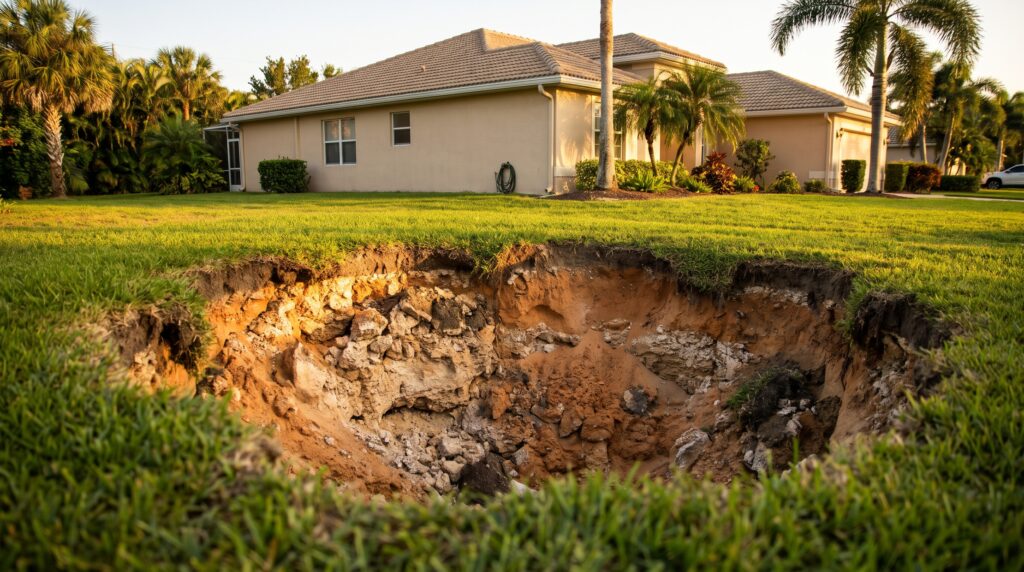
Florida’s unique geology makes it especially vulnerable to sinkholes. For homeowners, this raises a critical question: does your insurance cover the risk of the ground opening beneath you? This guide explains the difference between catastrophic ground cover collapse (CGCC) and optional sinkhole loss coverage, how claims work, and what steps you can take to protect your home and finances.
Key Takeaways
- All residential property insurance policies must include Catastrophic Ground Cover Collapse (CGCC) coverage by Florida law.
- CGCC only covers abrupt collapses with visible depressions where the home is structurally damaged and government authorities condemn it.
- Optional sinkhole coverage is available with deductibles of 1, 2, 5, or 10 percent of your dwelling coverage limit.
- Average sinkhole claim payouts exceed $100,000; in high-risk counties, sinkhole endorsements can cost more than the base policy.
Catastrophic Ground Cover Collapse (CGCC)
By Florida law, all residential property insurance policies must include CGCC coverage. However, CGCC applies only under strict conditions:
- The collapse is abrupt.
- A visible depression in the ground appears.
- The home suffers structural damage, including the foundation.
- A government authority condemns or orders the home vacated.
If any one of these conditions is not met, the insurer can deny CGCC coverage.
Optional Sinkhole Coverage (Endorsement)
Most sinkhole activity in Florida does not meet CGCC criteria. That’s why insurers are required to offer optional sinkhole loss coverage for an additional premium. This endorsement broadens protection and may cover:
- Structural and foundation repairs
- Soil stabilization and ground remediation
- Damage to attached property and certain contents
Deductibles for sinkhole coverage can range from 1% to 10% of your home’s dwelling limit.
Costs and Risk in Florida
Florida has some of the highest sinkhole claim activity in the nation. In certain counties, adding sinkhole coverage can cost more than the base homeowners insurance policy itself. The average claim payout is well into six figures, and insurers require geological testing before approving claims.
How to File a Sinkhole or CGCC Claim
- Report damage immediately. Notify your insurer as soon as cracks, depressions, or signs of subsidence appear.
- Engineering evaluation. Insurers will send engineers or geologists to test for sinkhole activity.
- Neutral evaluation. If disputes arise, homeowners can request neutral evaluation through the Department of Financial Services.
- Timely repairs. Once approved, repairs must begin within statutory timeframes and follow engineering standards.
How much could you save on Florida Homeowners Insurance? It takes two minutes to find out.
Get a Free QuoteTips for Florida Homeowners
- Ask your agent if sinkhole coverage is available and get multiple quotes.
- Keep records of inspections and repairs for resale and insurance eligibility.
- Hire contractors experienced in sinkhole remediation.
- Regularly review your policy to ensure adequate coverage.
Frequently Asked Questions (FAQs)
1. Does my homeowners policy automatically cover sinkholes in Florida? No. Policies must include CGCC, but general sinkhole damage usually requires an optional endorsement.
2. What is the main difference between CGCC and sinkhole coverage? CGCC only applies when a home is structurally damaged, condemned, and a visible collapse occurs. Sinkhole coverage protects against broader forms of damage, even if the home is still livable.
3. How much does sinkhole insurance cost? It depends on your county and home. In high-risk counties, endorsements can cost more than the base policy premium.
4. What is the deductible for sinkhole coverage? Florida law allows deductibles of 1%, 2%, 5%, or 10% of the dwelling coverage limit.
5. What signs should I watch for? Cracks in walls, sloping floors, doors/windows sticking, and ground depressions are all warning signs.
6. What happens if my insurer denies a claim? You can request a neutral evaluation by a state-appointed geologist or engineer.
7. Will sinkhole insurance cover just my land? No. Policies do not cover land value loss alone, only structural and attached property damage.
8. Can I get sinkhole coverage after a prior sinkhole claim? Yes, but you’ll need engineering documentation proving repairs were properly completed.
9. How common are sinkhole claims in Florida? Florida sees thousands of sinkhole-related claims each year, with payouts averaging over $100,000.
10. How can I reduce my sinkhole risk? Maintain proper drainage, avoid over pumping groundwater, and have soil/foundation inspections done regularly.
Talk to a GreatFlorida Insurance agent to find out how to protect your home from sink hole damage with homeowners insurance.
Ready to save on Florida Homeowners Insurance?
GreatFlorida Insurance Agents compare rates from Florida's best carriers for you.
Get a Free QuoteOr call 888.478.7801
