


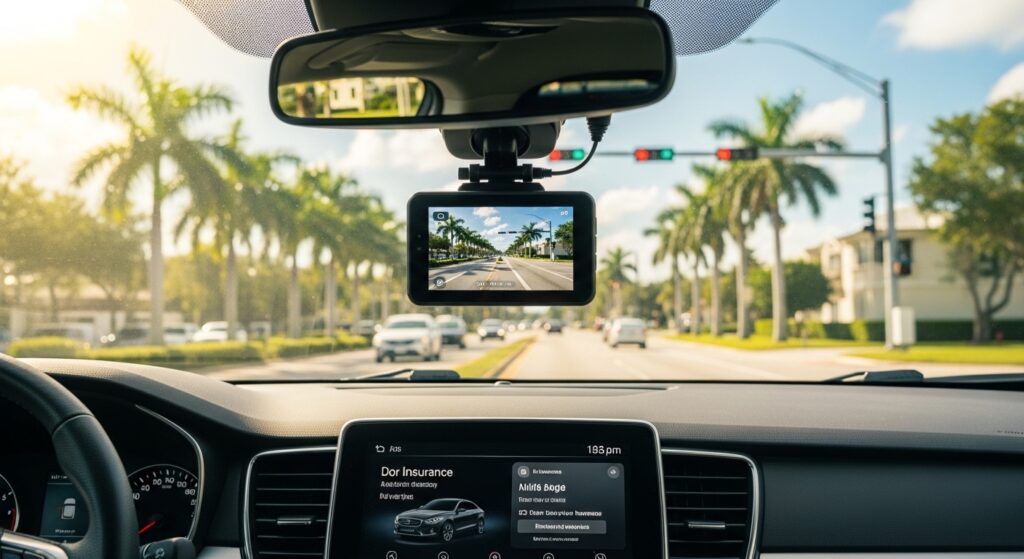
Florida drivers face some of the highest auto insurance rates in the nation, thanks to a combination of traffic density, accident frequency, and the state’s no-fault insurance laws. For many, the question arises: should I invest in a dashcam to protect myself, and will it actually help with my car insurance?
This article explores the role of dashcams in insurance claims, fraud prevention, and financial protection—helping you decide if buying one is the right choice for you.
Key Takeaways
- Dashcams don’t lower insurance rates in Florida, but they prevent wrongful blame and can save hundreds in claim disputes.
- A dashcam costs $60 to $300 upfront and protects you from fraud and staged accidents in Florida’s high-incident markets.
- Florida audio recording requires two-party consent, so disable sound or inform passengers before using a dashcam.
Why Dashcams Are Growing in Popularity
Dashboard cameras, or dashcams, are small recording devices mounted on a vehicle’s windshield or dashboard. They capture continuous video of the road (and sometimes the cabin). What was once a niche gadget has become mainstream, especially in regions where insurance disputes and staged accidents are common.
In Florida, dashcam interest has spiked for three main reasons:
- High accident rates: Florida consistently ranks among the top states for crashes.
- Fraud and staged accidents: Dashcams can reveal fraudulent claims, a growing issue in metropolitan areas.
- Insurance disputes: Video evidence often resolves “he said, she said” scenarios quickly.
Do Dashcams Lower Insurance Rates?
Currently, most major auto insurers—including State Farm, GEICO, Progressive, and Allstate—do not offer an official dashcam discount in Florida. Unlike anti-theft devices or defensive driving courses, dashcams haven’t yet been incorporated into rating formulas.
That said, dashcams provide an indirect financial benefit. If you’re in an accident, clear video evidence can prevent you from being held at fault, saving you from premium increases, deductibles, and out-of-pocket expenses. In fraud-heavy markets like Florida, that can mean hundreds—or even thousands—of dollars saved.
Insurance Claims: How Dashcams Help
Insurance adjusters rely on physical evidence, police reports, and witness statements when investigating a claim. But those sources can be unreliable. Dashcam footage provides:
- Accident clarity: Identifies who had the right-of-way.
- Fraud prevention: Exposes staged collisions or false injury claims.
- Liability protection: Protects you from wrongful blame.
- Faster claim resolution: Speeds up payouts by eliminating disputes.
Florida’s comparative negligence system makes this especially important. If an accident is deemed partially your fault—even 20%—your payout is reduced, and your rates may rise. Dashcam evidence can limit or eliminate shared liability.
Legal Considerations in Florida
Florida law allows dashcams, but there are rules:
- Obstruction of view: The device must not block your clear view of the road.
- Audio recording: Florida is a “two-party consent” state for audio. If your dashcam records sound, you must inform passengers or disable audio.
- Privacy concerns: Footage can be subpoenaed in legal disputes—meaning it may also be used against you.
Cost vs. Value of a Dashcam
Dashcams range from $60 for a basic single-lens model to $300+ for dual-lens systems with GPS, night vision, and cloud storage. While this is an upfront investment, consider the financial protection:
- A single claim dispute resolved in your favor could save $500–$2,000 in deductibles and rate hikes.
- Some dashcams double as security cameras, catching hit-and-runs or break-ins when your car is parked.
How much could you save on Florida Auto Insurance? It takes two minutes to find out.
Get a Free QuoteDo Florida Insurers Accept Dashcam Evidence?
Yes. Insurers in Florida typically review dashcam footage if provided. While they aren’t legally required to accept it, most adjusters welcome video evidence. Courts also admit dashcam footage in accident lawsuits, provided it hasn’t been tampered with.
Downsides to Owning a Dashcam
Dashcams aren’t risk-free. Consider:
- Self-incrimination: If you were speeding or distracted, your dashcam may capture that.
- Storage limits: Basic models overwrite old footage every few hours unless saved manually.
- Data privacy: Cloud-enabled dashcams raise concerns about third-party access to your footage.
Who Benefits Most From Dashcams?
While any driver can benefit, dashcams are especially useful for:
- High-mileage commuters (greater exposure to accidents).
- Young drivers (often blamed in disputes).
- Rideshare drivers (extra liability exposure with passengers).
- Florida city drivers (Miami, Orlando, Tampa—high fraud activity).
Bottom Line
From an insurance standpoint, dashcams don’t yet lower your premium in Florida. But they can protect you from wrongful blame, inflated claims, and costly disputes. In today’s high-cost insurance market, many drivers view dashcams as an inexpensive form of financial protection—one that often pays for itself after just one incident.
FAQs
1. Do dashcams lower car insurance in Florida?
No, major insurers in Florida do not currently offer a dashcam discount. However, they can help prevent wrongful claims and keep your premiums lower over time.
2. Can dashcam footage be used in an insurance claim?
Yes. Most insurance companies will review dashcam footage as part of the claims process, and it can be critical in determining liability.
3. Is it legal to use a dashcam in Florida?
Yes, dashcams are legal. However, they must not obstruct the driver’s view, and audio recording requires passenger consent due to Florida’s two-party consent law.
4. Will my insurance company require me to provide dashcam footage?
No. Providing dashcam footage is voluntary, but if you believe it supports your claim, sharing it can strengthen your case.
5. Can dashcam footage be used against me?
Yes. If the footage shows you were at fault, speeding, or distracted, insurers and courts may use it against you.
6. Do rideshare drivers benefit from dashcams?
Absolutely. Rideshare drivers face higher liability and passenger disputes, making dashcams highly valuable for documentation and protection.
7. What features should I look for in a dashcam?
Look for HD resolution, wide-angle lenses, loop recording, night vision, GPS tracking, and parking mode. These features provide the best insurance protection value.
8. How much does a dashcam cost?
Basic dashcams start around $60, while advanced dual-lens models with GPS and cloud storage can cost $200–$300.
9. Can dashcams record while my car is parked?
Yes, many dashcams feature parking mode, which records if motion or impact is detected while the car is off.
10. Is a dashcam worth it for Florida drivers?
Yes. While it won’t reduce your premiums today, it provides valuable financial protection, peace of mind, and strong evidence in accident disputes.
GreatFlorida Insurance will cover all your auto insurance needs, give our experienced agents a call today.
Ready to save on Florida Auto Insurance?
GreatFlorida Insurance Agents compare rates from Florida's best carriers for you.
Get a Free QuoteOr call 888.478.7801