Florida’s beauty and climate come with unique driving challenges — from sandy coastal roads to sudden downpours that can turn streets into shallow rivers. Whether you’re navigating a beach, a muddy trail, or a flooded intersection, getting stuck can happen faster than expected. Knowing what to do — and what not to do — can save you money, protect your vehicle, and keep you safe.
1. Stay calm and assess the situation
Before trying to accelerate out, stop and assess. Spinning tires often dig deeper. Determine what you’re stuck in — sand, mud, or standing water — and how deep it is. Check for nearby hazards like incoming waves, traffic, or rising floodwater. If you’re in immediate danger (fast-moving water, deep flooding), exit the vehicle and move to higher ground. Call Florida 511 or 911 if conditions are unsafe.
2. If your car is stuck in sand
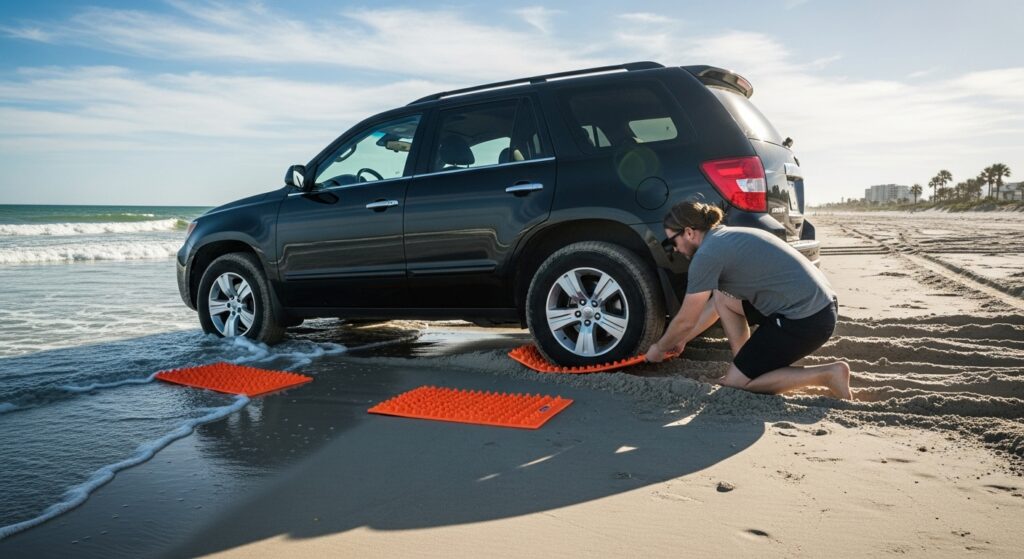
Soft sand can trap tires quickly, especially near beaches. Switch your vehicle into the lowest gear or “sand mode” if equipped. Gently rock forward and backward without spinning the tires. Lowering tire pressure slightly (to around 15–20 PSI) can help create traction — but only if you have a portable inflator to reinflate afterward. Place traction mats, floor mats, or branches under the drive wheels for grip. Avoid revving the engine; steady motion works best.
3. If your car is stuck in mud
Florida’s summer storms can create slick, muddy shoulders and trails. If your tires are coated in mud, clear space in front of them using a small shovel or stick. Add traction material — sand, gravel, or even kitty litter from your emergency kit. Turn off traction control temporarily to allow slight wheel spin for momentum. If you have friends or bystanders, have them push gently while you accelerate slowly.
4. If your car is stuck in water or flooding
Floodwater presents serious danger. Just six inches of standing water can reach your vehicle’s undercarriage; one foot can carry small cars away. Never attempt to drive through moving or unknown-depth water. If your engine stalls after being submerged, do not try to restart it — doing so can cause catastrophic engine damage. Instead, exit safely and call roadside assistance or a tow truck.
Florida’s Road Rangers program and local towing services can assist stranded motorists on highways. You can also monitor weather and closures via FL511.com and find flood updates at FloridaDisaster.org.
5. When to call for help
If your tires sink beyond the rim or the water level reaches the doors, stop and call for professional recovery. Many insurance policies include roadside assistance. Attempting to tow yourself without the right equipment can damage the drivetrain or bumper — and in flood situations, water can rise quickly.
6. Insurance considerations for flood or off-road damage
In Florida, comprehensive auto insurancetypically covers damage caused by flooding, storms, or submerged vehicles. If your car’s interior or engine was exposed to water, contact your agent before attempting to restart it. Take photos and document the situation. For beach or off-road incidents, coverage may vary — confirm with your GreatFlorida agent whether off-pavement driving is included under your policy.
Comprehensive coverage may help pay for:
- Water damage to electrical systems
- Engine repair or replacement due to flooding
- Towing and roadside assistance
- Rental car reimbursement while repairs are made
7. How to prevent getting stuck
- Know your terrain. Avoid driving on unpaved roads after heavy rain.
- Maintain tire tread and pressure. Proper traction helps on wet or loose surfaces.
- Carry recovery gear. A compact shovel, traction boards, and tow straps can save the day.
- Check weather and tide forecasts. Florida’s flash floods and coastal tides change quickly.
- Use the buddy system. Don’t drive remote trails or beaches alone.
How much could you save on Florida Auto Insurance? It takes two minutes to find out.
Get a Free Quote8. After recovery: vehicle checks
Once your vehicle is freed, inspect for damage:
- Look for leaks, especially under the engine and transmission.
- Rinse mud or saltwater from brakes and undercarriage.
- Check oil and transmission fluid for milky appearance (a sign of water contamination).
- Have a mechanic inspect electronics, sensors, and bearings if the car was submerged.
9. Preparing your emergency kit
Every Florida driver should carry:
- Traction mats or tow straps
- Portable tire inflator
- Flashlight and extra batteries
- First-aid kit
- Reflective triangles or flares
- Phone charger and waterproof pouch
10. The bottom line
Getting stuck in sand, mud, or water is stressful — but preparation and calm decision-making make all the difference. Florida drivers face unique challenges, from beach roads to hurricane downpours. Knowing what to do, when to call for help, and how insurance can assist ensures that a tough situation doesn’t become a costly one. For more guidance, talk to your GreatFlorida Insurance agent about coverage options that protect you on and off the road.
Frequently Asked Questions
1. Should I try to keep driving if I start sinking in sand or mud?
No. Stop immediately. Spinning your wheels will dig deeper. Gently rock forward and backward using minimal throttle, or add traction under your tires before trying again.
2. Can I drive on Florida beaches legally?
Some beaches, such as Daytona Beach, allow limited vehicle access. Always follow posted regulations and drive only on designated paths with firm sand.
3. Does my insurance cover flood damage to my car?
Only if you have comprehensive coverage. Liability-only policies do not cover water or flood damage.
4. What happens if I restart a flooded engine?
Starting a waterlogged engine can cause hydrolock — bending internal parts and destroying the motor. Have it towed and inspected before starting.
5. How deep can my car go in water safely?
Most vehicles should not enter water deeper than 6 inches. Trucks and SUVs can handle slightly more, but moving water is always dangerous.
6. What if I get stuck on a flooded highway in Florida?
Turn on hazard lights, stay inside if water is shallow, and call Road Rangers or 911 if the water rises. Do not exit into moving water.
7. Can saltwater damage my car after beach driving?
Yes. Rinse your undercarriage and brakes immediately after exposure to prevent corrosion and brake wear.
8. What gear should I use to get unstuck?
Use low gear (L or 4-Low for 4WD) for steady torque. Avoid high-rev acceleration.
9. How can I prepare for hurricane-season flooding?
Stay informed with FloridaDisaster.org, park on higher ground before storms, and avoid street parking near drainage areas.
10. Who should I call for roadside help in Florida?
Call your insurance provider’s roadside assistance, or reach out to FL511.com for updates and FLHSMV Road Rangers for highway assistance.
For dependable auto insurance, give GreatFlorida Insurance a call today.
Ready to save on Florida Auto Insurance?
GreatFlorida Insurance Agents compare rates from Florida's best carriers for you.
Get a Free QuoteOr call 888.478.7801