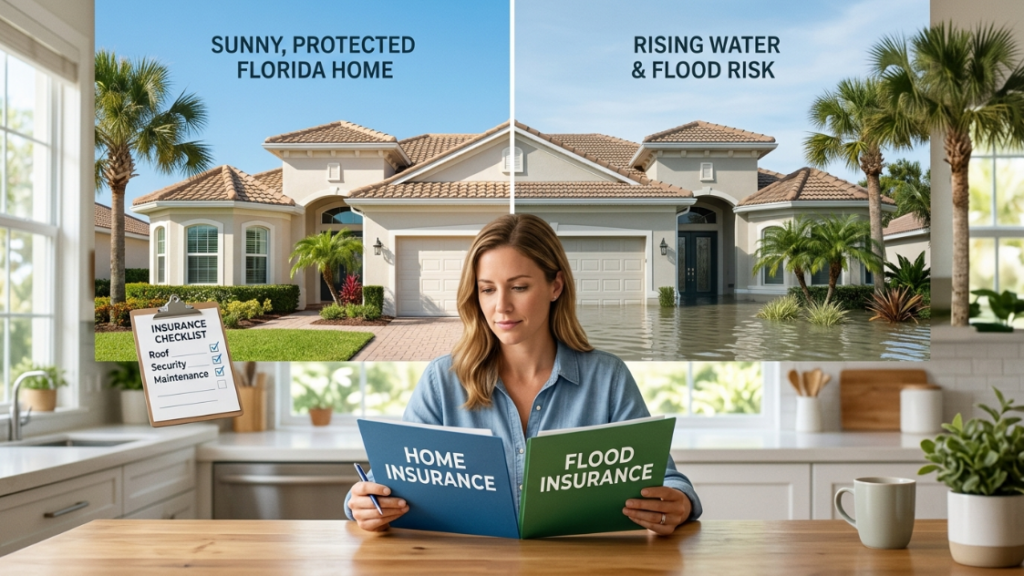
Homeowners insurance and flood insurance are often confused, especially in Florida. Many homeowners assume that if they have a homeowners insurance policy, they are protected from storm damage, water damage, hurricanes, and flooding. Unfortunately, that is not always true.
A standard homeowners insurance policy and a flood insurance policy are two different types of coverage. They protect against different causes of damage, have different rules, and may be purchased through different programs or insurers.
GreatFlorida Insurance expalins, home insurance typically helps protect your house and belongings from covered events such as fire, theft, wind, lightning, and certain types of sudden water damage. Flood insurance helps protect your home and belongings from flood damage caused by rising or accumulating water.
That distinction matters in Florida. Hurricanes, tropical storms, heavy rain, storm surge, overflowing canals, drainage problems, and flash flooding can all create water damage. But not all water damage is treated the same by insurance.
FEMA’s National Flood Insurance Program explains that most homeowners, renters, and business insurance policies do not cover flood damage. Flood insurance is a separate layer of protection. The Insurance Information Institute also notes that homeowners, condo owners, and renters insurance generally does not cover damage from flooding.
For Florida homeowners, the key question is not whether you have insurance. The better question is: Do you have the right policies for the type of damage that could happen?
What Home Insurance Usually Covers
Homeowners insurance is designed to protect your home, personal belongings, liability exposure, and additional living expenses after certain covered losses.
A standard homeowners policy may include several major parts:
Dwelling coverage helps protect the structure of your home. This may include the roof, walls, floors, built-in appliances, and other attached parts of the house.
Other structures coverage may apply to detached structures such as a shed, detached garage, fence, or similar property.
Personal property coverage helps protect belongings such as furniture, clothing, electronics, kitchen items, and other personal possessions.
Loss of use coverage may help pay additional living expenses if your home becomes unlivable after a covered loss.
Personal liability coverage may help if someone claims you are responsible for injury or property damage.
Medical payments coverage may help with smaller injury-related expenses for guests, regardless of fault, depending on the policy.
Common covered causes of loss may include fire, lightning, theft, vandalism, wind, hail, and certain sudden and accidental water damage. However, every policy is different. Florida policies may include special deductibles, limitations, roof settlement provisions, wind exclusions, or water damage limits.
What Home Insurance Usually Does Not Cover
Homeowners insurance can be broad, but it does not cover everything.
Most standard homeowners policies do not cover flood damage, earth movement, normal wear and tear, mold from long-term moisture, poor maintenance, pest damage, or intentional damage. The Insurance Information Institute explains that standard homeowners policies do not cover flooding, earthquakes, or poor maintenance.
This is where many homeowners get surprised. A pipe suddenly bursting inside the home may be treated very differently from water entering the home from the ground outside. A roof leak from covered storm damage may be treated differently from rising water entering through doors, walls, or the foundation.
In Florida, the difference between wind-driven rain, roof damage, storm surge, and flood damage can become extremely important after a hurricane.
What Flood Insurance Covers
Flood insurance is designed to cover direct physical loss caused by flooding, subject to the policy terms and limits.
FEMA defines a flood as a general and temporary condition where two or more properties, or two or more acres of normally dry land, are partially or completely inundated by water or mudflow. Flooding may be caused by overflow of inland or tidal waters, rapid accumulation or runoff of surface waters, mudflow, or collapse of land along a body of water due to erosion or undermining caused by waves or currents.
A flood policy may include building coverage, contents coverage, or both.
Building coverage may help protect the structure of your home, including the foundation, electrical and plumbing systems, HVAC equipment, water heaters, built-in appliances, cabinets, permanently installed carpeting, and certain detached garages, depending on the policy.
Contents coverage may help protect personal belongings such as clothing, furniture, electronics, curtains, portable appliances, and other items, subject to policy limits and exclusions.
It is important to know that building and contents coverage are usually separate. Do not assume that buying flood insurance for the structure automatically covers your belongings.
What Flood Insurance May Not Cover
Flood insurance has its own exclusions and limitations.
A standard NFIP flood policy may not cover temporary housing, additional living expenses, loss of income, vehicles, currency, valuable papers, decks, patios, landscaping, fences, pools, hot tubs, septic systems, or property outside the insured building. Basements and areas below the lowest elevated floor can also have limited coverage.
Flood insurance is designed for flood damage, not every type of water-related loss. It also may not cover moisture, mildew, or mold damage that could have been avoided by the homeowner.
This is why it is important to review policy details carefully. Homeowners should ask what is covered, what is excluded, how much building coverage they have, how much contents coverage they have, and whether private flood insurance offers additional options.
The Key Difference: Source of the Water
The biggest difference between home insurance and flood insurance often comes down to the source of the water.
If water damage begins inside the home from a sudden plumbing failure, homeowners insurance may apply, depending on the policy.
If water enters from outside due to rising water, storm surge, overflowing canals, heavy rain runoff, or flooding, flood insurance is usually needed.
Here are a few examples:
If a water heater suddenly bursts and damages flooring, homeowners insurance may apply.
If a pipe under the sink suddenly breaks and damages cabinets, homeowners insurance may apply.
If hurricane wind damages the roof and rain enters through the damaged roof opening, homeowners insurance may apply, depending on the policy and cause.
If storm surge enters the house from the Gulf, bay, river, canal, or ocean, flood insurance is typically needed.
If heavy rain accumulates outside and enters through doors or the foundation, flood insurance is typically needed.
If a nearby retention pond overflows and water enters the home, flood insurance is typically needed.
These distinctions can become complicated after major storms. A single hurricane can cause both wind damage and flood damage. In that case, more than one policy may be involved.
How much could you save on Florida Homeowners Insurance? It takes two minutes to find out.
Get a Free QuoteWhy This Matters in Florida
Florida homeowners face multiple water-related risks. The state has hurricanes, tropical storms, thunderstorms, storm surge, coastal flooding, inland flooding, rising groundwater, drainage problems, and heavy rain events.
Flood risk is not limited to beachfront homes. Inland homes can flood from intense rainfall, overflowing lakes, canals, rivers, and stormwater systems. FEMA’s FloodSmart program states that flood events are common and that 99% of U.S. counties have experienced a flood event in the past 20 years.
That matters because many Florida homeowners outside high-risk flood zones choose not to buy flood insurance. But “not required by the lender” does not mean “not at risk.”
A home outside a Special Flood Hazard Area may still experience flooding. If the homeowner does not have flood insurance, the standard homeowners policy may not pay for flood-related damage.
Hurricane Damage: Home Insurance or Flood Insurance?
Hurricanes create one of the most common sources of confusion.
A homeowners policy may cover wind damage from a hurricane, subject to the policy terms and hurricane deductible. For example, if hurricane winds tear shingles from the roof and rain enters through the opening, the homeowners policy may respond.
Flood insurance is different. It may respond to rising water, storm surge, or floodwater entering the home.
The Insurance Information Institute notes that standard homeowners, condo, and renters policies do not cover flood damage, including flood damage from storm surge.
That means one hurricane can create two separate claims:
A wind claim under the homeowners policy.
A flood claim under the flood insurance policy.
Homeowners should understand both deductibles, both claim processes, and both sets of limits before hurricane season.
Do Mortgage Lenders Require Flood Insurance?
Mortgage lenders may require flood insurance if a home is in a high-risk flood zone and the mortgage is federally backed or regulated. FEMA explains that flood insurance may be required for certain properties in high-risk flood areas and that the requirement can be tied to the property, not just the homeowner.
However, many homes outside high-risk flood zones are not required by a lender to carry flood insurance. That does not mean they cannot flood.
Some homeowners choose to buy flood insurance voluntarily because the cost of flood damage can be severe. Even a few inches of water can damage flooring, drywall, cabinets, electrical systems, appliances, and personal belongings.
NFIP Flood Insurance vs. Private Flood Insurance
Florida homeowners may have more than one option for flood coverage.
The National Flood Insurance Program, managed by FEMA, provides flood insurance in participating communities. NFIP policies have standardized terms and limits.
Private flood insurance may also be available through private insurers. Private policies may offer different limits, broader coverage options, shorter waiting periods, additional living expense coverage, replacement cost options, or other features. However, underwriting rules and availability can vary.
A homeowner should compare NFIP and private flood options carefully. The best choice may depend on the home’s location, elevation, replacement cost, lender requirements, flood zone, claim history, and desired coverage.
Waiting Periods Matter
Flood insurance usually cannot be purchased at the last minute when a storm is already approaching.
NFIP policies often have a waiting period before coverage takes effect, with some exceptions. Private flood policies may also have waiting periods, though they can vary.
This is important in Florida because many homeowners think about flood insurance only when a hurricane is in the forecast. By then, it may be too late to buy coverage for that storm.
The best time to review flood insurance is well before hurricane season, during a home purchase, or during your annual insurance review.
How Much Coverage Do You Need?
For homeowners insurance, the dwelling limit should usually reflect the cost to rebuild your home, not the market value. You should also review personal property, liability, loss of use, ordinance or law, water damage, and hurricane deductible options.
For flood insurance, review both building coverage and contents coverage. Make sure you understand whether contents are included and whether coverage is replacement cost or actual cash value.
Common Misunderstandings
One misunderstanding is that hurricane insurance automatically includes flood insurance. It usually does not.
Another misunderstanding is that flood insurance is only needed in high-risk flood zones. Flooding can happen outside high-risk areas.
A third misunderstanding is that homeowners insurance covers all water damage. It does not.
A fourth misunderstanding is that federal disaster assistance will fully rebuild your home after a flood. Disaster aid is limited, not guaranteed, and often comes in the form of loans or grants that may not make the homeowner whole.
Finally, many homeowners assume their belongings are covered under flood insurance when they only purchased building coverage. Contents coverage should be confirmed separately.
Final Thoughts
Home insurance and flood insurance are both important, but they are not the same. Homeowners insurance may help with fire, theft, wind, liability, and certain sudden water damage. Flood insurance helps protect against rising or accumulating water that enters your home from outside.
For Florida homeowners, understanding the difference can prevent major financial surprises. Hurricanes, storm surge, heavy rain, overflowing canals, and inland flooding can create damage that a standard homeowners policy may not cover.
The safest approach is to review both policies before storm season. Confirm what your homeowners policy covers, whether flood is excluded, whether your flood policy includes contents, and whether your coverage limits are enough.
A local GreatFlorida Insurance agent can help you compare home insurance and flood insurance options, identify gaps, and build a coverage plan that fits your home’s location and risk.
Ready to save on Florida Homeowners Insurance?
GreatFlorida Insurance Agents compare rates from Florida's best carriers for you.
Get a Free QuoteOr call 888.478.7801