
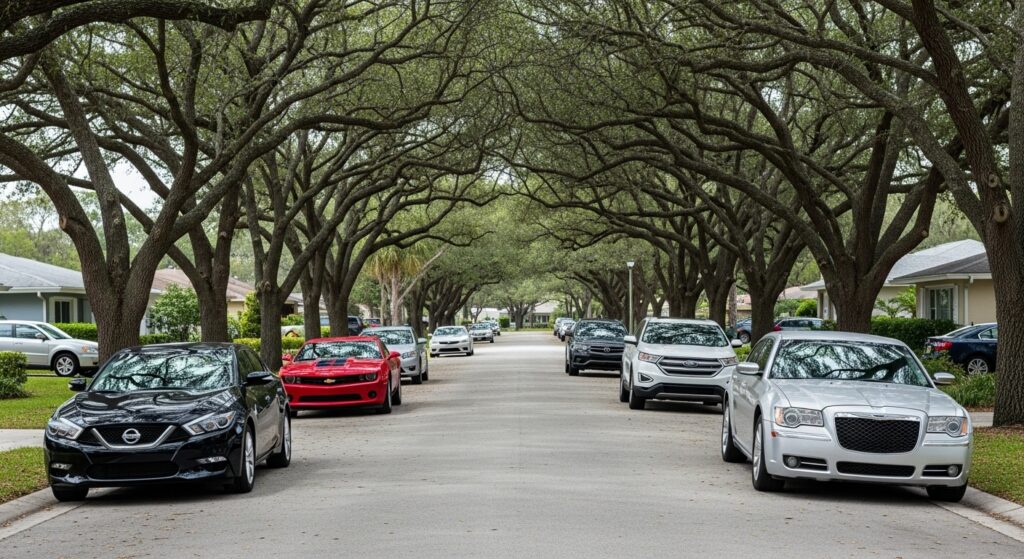
Automakers continue to reshape their lineups as consumer preferences shift toward SUVs, trucks, and electric vehicles. From 2023 through 2026, several well-known cars and SUVs have been discontinued in the U.S. market. While these vehicles are no longer being produced, many remain common on Florida roads and can still be practical to own or buy.
Below is a look at some of the most notable recently discontinued vehicles and what their exit means for Florida drivers.
Vehicles Discontinued for the 2023 Model Year
- Chevrolet Bolt EV & Bolt EUV – Production ended in late 2023 as GM prepared for a new generation of electric vehicles. These models remain popular for short Florida commutes and urban driving.
- Kia Rio (U.S. market) – Discontinued due to declining demand for subcompact sedans and hatchbacks.
- Mercedes-Benz C-Class Coupe & Convertible – Two-door variants were eliminated as Mercedes shifted focus to sedans, SUVs, and EVs.
Vehicles Discontinued for the 2024 Model Year
- Chevrolet Camaro – Production officially ended in 2024. Enthusiast demand remains strong, but insurance costs can be higher due to performance and theft exposure.
- Ford Edge – A popular midsize SUV discontinued as Ford retooled North American plants for electric vehicle production. Still widely driven in Florida.
- Nissan Maxima – The long-running full-size sedan was retired as Nissan reduced its traditional sedan lineup.
- Mini Clubman – The wagon-style Mini was phased out in favor of crossovers and EVs.
Vehicles Discontinued for the 2025 Model Year
- Audi TT (U.S. market) – The sporty coupe was discontinued as Audi shifted toward performance-oriented electric vehicles.
- Infiniti Q50 & Q60 – Both the sedan and coupe were discontinued as Infiniti restructured its lineup around SUVs and future electrification.
- Volvo S60 (gas-powered) – Gas versions ended in the U.S. as Volvo accelerated its transition toward electric models.
Vehicles Discontinued or Ending Production Around 2026
- Chrysler 300 – Production concluded as Chrysler moves toward an all-electric future. The 300 remains common in Florida fleets and rental markets.
- Multiple gas-powered luxury sedans – Several manufacturers have announced phased exits of low-volume or non-hybrid sedans through 2026.
Key Takeaways
- Many cars from 2023-2026 remain affordable to insure, though owners should understand their vehicle’s current value and repair outlook.
- Popular discontinued models like the Ford Edge still have parts available for many years after production ends.
- Discontinued vehicles may depreciate differently, affecting total-loss calculations in insurance claims.
What These Recent Discontinuations Mean for Florida Drivers
Recent discontinuations differ from older model cancellations. Many are driven by long-term electrification plans rather than short-term sales problems.
- Parts availability: High-volume vehicles like the Ford Edge or Nissan Maxima are expected to have parts available for many years.
- Insurance value: Discontinued vehicles may depreciate differently, affecting total-loss calculations after accidents or storms.
- Florida risks: Flooding, hurricanes, and high mileage make realistic coverage limits especially important for older or discontinued vehicles.
Owning a recently discontinued car does not automatically increase insurance costs—but understanding your vehicle’s value and repair outlook can help you make smarter coverage decisions.
Frequently Asked Questions About Recently Discontinued Cars
1. Are recently discontinued cars still legal to drive in Florida?
Yes. Discontinued vehicles remain fully legal to own, register, and drive in Florida. Florida law provides more detail here.
2. Can I still insure a car discontinued between 2023 and 2026?
Yes. Insurance companies do not deny coverage simply because a vehicle is discontinued.
3. Do recently discontinued cars lose value faster?
It depends on demand, condition, and model popularity. Some retain value due to scarcity.
4. Are parts harder to find for recently discontinued models?
Usually not in the short term. High-volume models typically have parts available for many years, according to AutoTrader.
5. Are discontinued performance cars more expensive to insure?
They can be, especially if theft rates or repair costs are higher.
6. Is it risky to buy a recently discontinued car?
Not necessarily. Many discontinued cars offer good value on the used market.
7. Do discontinued electric vehicles still get support?
Yes. EV manufacturers are required to provide parts and service support after production ends.
8. Are discontinued cars more likely to be totaled after a claim?
Older or lower-value vehicles may reach total-loss thresholds more easily, especially after storm damage.
9. Will discontinued models ever return?
Sometimes. Some nameplates return as redesigned or electric vehicles.
10. Who can help me decide if my auto coverage still makes sense?
A local GreatFlorida Insurance agent can help review your auto insurance based on your vehicle’s current value and Florida-specific risks.
Ready to save on Florida Auto Insurance?
GreatFlorida Insurance Agents compare rates from Florida's best carriers for you.
Get a Free QuoteOr call 888.478.7801