
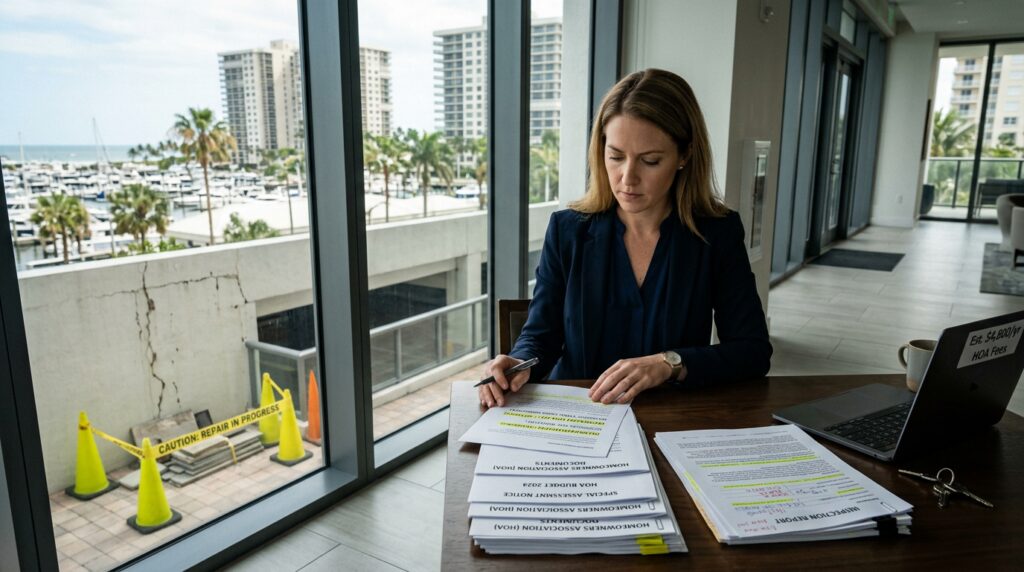
Buying a condo can be an excellent way to enjoy homeownership with less maintenance responsibility, access to amenities, and desirable locations. In Florida especially, condos are popular among retirees, vacation homeowners, investors, and first-time buyers.
But while condos may appear attractive on the surface, some properties carry hidden financial, structural, or insurance-related risks that buyers fail to discover until after closing.
Unlike purchasing a single-family home, buying a condo also means buying into a homeowners association (HOA) or condominium association. That means the financial health and management of the association can affect your monthly costs, future property value, financing options, and even your ability to obtain insurance.
Before buying a condo, it’s important to recognize the warning signs that may indicate future problems.
In this guide, we’ll cover the biggest condo buying red flags, what documents to review, and the questions every buyer should ask before purchasing a condominium.
Why Condo Due Diligence Matters
When buying a condo, you are not only evaluating the unit itself — you are also evaluating:
- The building
- The association finances
- The reserve funds
- The insurance situation
- The maintenance practices
- The HOA rules
- The long-term condition of the property
A beautiful condo unit can still become a financial nightmare if the association is poorly managed or underfunded.
That’s why careful due diligence is essential.
1. Large or Frequent Special Assessments
One of the biggest warning signs when buying a condo is a history of large special assessments.
A special assessment occurs when the association charges unit owners additional money beyond normal HOA fees to pay for major repairs or unexpected expenses.
Examples May Include:
- Roof replacement
- Structural repairs
- Concrete restoration
- Elevator replacement
- Insurance shortfalls
- Hurricane damage repairs
Occasional assessments are not always unusual, but repeated or massive assessments may indicate:
- Poor financial planning
- Deferred maintenance
- Insufficient reserves
- Building deterioration
Some Florida condo owners have faced assessments totaling tens of thousands of dollars per unit.
2. Low Reserve Funds
Reserve funds are savings accounts maintained by the condo association for future major repairs and replacements.
Low reserves can be a major red flag.
If the association does not have enough money set aside for future expenses, owners may face sudden assessments later.
Why Reserves Matter
Reserve funds may help pay for:
- Roof replacement
- Painting
- Paving
- Pool repairs
- Structural maintenance
- Mechanical systems
Buyers should review reserve studies and association financial statements carefully.
3. Deferred Maintenance
Visible maintenance issues throughout the property may indicate deeper financial or structural problems.
Warning Signs Include:
- Cracked concrete
- Water stains
- Rusting railings
- Damaged balconies
- Peeling paint
- Broken gates or elevators
- Poor landscaping
- Mold or mildew
Deferred maintenance may signal that the association lacks sufficient funding or is postponing necessary repairs.
In coastal Florida environments, deferred maintenance can become especially serious because of humidity, salt exposure, and hurricane risks.
4. Rapidly Increasing HOA Fees
HOA fees naturally increase over time, but unusually large or frequent increases can become a concern.
Rising fees may indicate:
- Insurance cost spikes
- Reserve shortfalls
- Major upcoming repairs
- Financial instability
Florida condo insurance costs have risen sharply in recent years, placing significant pressure on many associations.
Buyers should ask for:
- Current HOA fees
- Historical increases
- Upcoming planned increases
- Pending assessments
5. Poor Association Financial Health
Reviewing the association’s financial statements is one of the most important steps when buying a condo.
Potential Financial Red Flags Include:
- High debt levels
- Low reserves
- Budget deficits
- Frequent borrowing
- Large unpaid owner balances
- High delinquency rates
If many owners are not paying HOA dues, the financial burden may shift to the remaining owners.
6. Insurance Problems
Condo insurance has become a major issue in Florida.
Some associations are struggling with:
- Higher premiums
- Reduced coverage
- Large deductibles
- Limited carrier options
Insurance issues can affect:
- Monthly HOA fees
- Financing approval
- Future assessments
- Property values
Buyers should review the association’s master insurance policy carefully.
7. Litigation Involving the Association
Pending lawsuits can create financing and insurance complications.
Litigation may involve:
- Construction defects
- Injury claims
- Vendor disputes
- Owner disputes
- Structural issues
Some lenders may refuse financing in buildings with active litigation.
Buyers should ask whether the association is currently involved in any legal disputes.
8. Rental Restrictions or High Investor Ownership
Condo rules regarding rentals can significantly impact owners and investors.
Questions to Ask Include:
- Are short-term rentals allowed?
- Is there a rental waiting period?
- Are there lease restrictions?
- How many units are investor-owned?
High investor ownership may create financing challenges because some lenders prefer owner-occupied communities.
How much could you save on Florida Condo Insurance? It takes two minutes to find out.
Get a Free Quote9. Structural Concerns
Following recent high-profile building failures in Florida, structural integrity has become a major concern for condo buyers.
Buyers should review:
- Engineering reports
- Structural inspection reports
- Milestone inspection findings
- Reserve studies
Signs of possible structural concerns may include:
- Large cracks
- Uneven floors
- Water intrusion
- Balcony deterioration
- Concrete spalling
10. Poor HOA Management
Management quality can dramatically affect the ownership experience.
Warning signs of poor management may include:
- Slow maintenance response
- Poor communication
- Disorganized records
- Frequent rule conflicts
- Resident complaints
Reading HOA meeting minutes can reveal recurring issues inside the community.
11. Difficulty Getting Financing
If buyers consistently struggle to obtain financing in a building, it may indicate deeper issues.
Lenders may reject condo financing because of:
- Insufficient reserves
- Litigation
- Insurance problems
- High investor concentration
- Structural concerns
Financing difficulties can also hurt future resale value.
12. Unclear HOA Rules and Restrictions
Every condo association has governing documents that establish rules and restrictions.
Buyers should carefully review:
- Pet restrictions
- Parking rules
- Rental limitations
- Renovation approvals
- Guest policies
- Noise restrictions
Some buyers discover lifestyle restrictions only after moving in.
Questions Every Condo Buyer Should Ask
Before purchasing a condo, buyers should ask:
- Are there pending special assessments?
- How well funded are reserves?
- What major repairs are planned?
- Has the building passed recent inspections?
- Are there pending lawsuits?
- How much has the HOA fee increased recently?
- What does the master insurance policy cover?
- Are there rental restrictions?
These questions can help uncover hidden risks before closing.
Why Condo Insurance Still Matters
Even though the association carries master insurance coverage, individual condo owners still need their own condo insurance policy.
A typical condo policy may help cover:
- Personal belongings
- Interior unit improvements
- Personal liability
- Loss assessments
- Temporary living expenses
Understanding the gap between the master policy and individual unit coverage is important.
Final Thoughts
Buying a condo can offer convenience, amenities, and attractive locations, but buyers should never focus only on the individual unit itself.
The financial health and condition of the entire association can significantly impact:
- Monthly costs
- Insurance availability
- Financing approval
- Future assessments
- Property value
Warning signs such as low reserves, deferred maintenance, insurance problems, and frequent special assessments deserve careful attention before purchasing.
By conducting thorough due diligence and reviewing association documents carefully, buyers can reduce the risk of expensive surprises after closing.
Frequently Asked Questions
1. What are the biggest red flags when buying a condo?
Major red flags include low reserves, deferred maintenance, large special assessments, insurance issues, and poor financial management.
2. What is a special assessment?
A special assessment is an additional fee charged to condo owners to pay for major repairs or unexpected expenses.
3. Why are condo reserve funds important?
Reserve funds help pay for future repairs and maintenance, reducing the likelihood of large surprise assessments.
4. Can condo insurance problems affect buyers?
Yes. Insurance issues can impact HOA fees, financing approval, and future property values.
5. Should buyers review HOA financial statements?
Absolutely. Financial statements can reveal reserve levels, debt, delinquency rates, and other important financial risks.
6. Why do lenders sometimes deny condo financing?
Lenders may deny financing because of litigation, insufficient reserves, structural concerns, or insurance issues.
7. Are older condos riskier to buy?
Not always, but older buildings may require more maintenance and could face larger repair expenses over time.
8. What documents should condo buyers review?
Buyers should review financial statements, reserve studies, meeting minutes, insurance policies, and HOA governing documents.
9. How do HOA fees affect affordability?
High or rapidly increasing HOA fees can significantly increase monthly ownership costs.
10. Is condo insurance still necessary if the HOA has insurance?
Yes. Individual condo insurance helps protect personal belongings, interior improvements, liability exposure, and loss assessments.
GreatFlorida Insurance can help get the right condo insurance policy, contact us today.
Ready to save on Florida Condo Insurance?
GreatFlorida Insurance Agents compare rates from Florida's best carriers for you.
Get a Free QuoteOr call 888.478.7801