For many Florida homeowners, buying insurance on an older home can become surprisingly stressful once the insurance company requests a 4-point inspection. What seems like a routine inspection can quickly turn into delayed closings, expensive repairs, or even denial of homeowners insurance coverage.
In Florida’s challenging insurance market, 4-point inspections have become one of the most important parts of the underwriting process — especially for homes that are 20 years old or older. The Florida Office of Insurance Regulation explains it is broken down into parts.
But what actually fails a 4-point inspection in Florida?
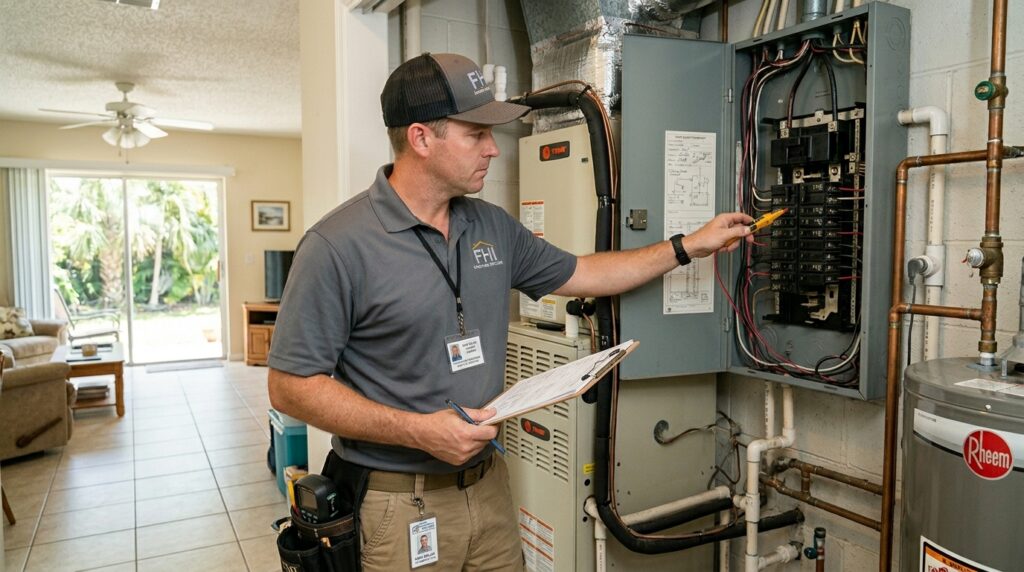
The answer often comes down to four critical systems inside the home:
- Roof
- Electrical
- Plumbing
- HVAC (heating and cooling)
If any of these systems are considered outdated, unsafe, damaged, or near the end of their useful life, the insurance company may require repairs before offering coverage.
In this guide, we’ll explain exactly what inspectors look for, the most common issues that fail a 4-point inspection in Florida, and what homeowners can do to improve their chances of passing.
Key Takeaways
- Shingle roofs older than 15 to 20 years commonly fail 4-point inspections, even if not actively leaking.
- Federal Pacific Electric panels and polybutylene plumbing are frequent underwriting red flags for home insurance.
- Failed inspections can result in denied coverage, required repairs before binding, or policy non-renewal.
What Is a 4-Point Inspection?
A 4-point inspection is a limited home inspection focused specifically on the four major systems that insurance companies consider the highest risk:
- Roof
- Electrical system
- Plumbing system
- HVAC system
Unlike a full home inspection, a 4-point inspection is not designed to evaluate the overall condition of the property. Instead, it helps insurance companies assess whether the home presents an elevated underwriting risk.
Most Florida insurance carriers require a 4-point inspection for homes that are approximately 20 years old or older, although some insurers may require them sooner depending on the property.
Why 4-Point Inspections Matter in Florida
Florida insurers face high exposure to:
- Hurricanes
- Roof claims
- Water damage losses
- Electrical fires
- Aging housing inventory
As a result, insurance companies have become far stricter about older homes and aging systems.
A home may appear perfectly livable to the owner but still raise concerns for an insurance underwriter.
In many cases, a failed 4-point inspection can result in:
- Denied homeowners insurance coverage
- Higher insurance premiums
- Required repairs before binding coverage
- Delayed real estate closings
- Policy non-renewal notices
Roof Problems That Commonly Fail a 4-Point Inspection
The roof is often the biggest issue during a Florida 4-point inspection.
1. Roof Age
Many Florida insurance companies have strict roof age guidelines.
Even if a roof is not actively leaking, insurers may decline coverage if the roof is considered too old.
Typical underwriting concerns include:
- Shingle roofs older than 15–20 years
- Tile roofs nearing the end of expected lifespan
- Flat roofs with visible wear
- Evidence of aging materials
Some insurers may still offer coverage if the roof has several years of remaining useful life confirmed by the inspector.
2. Missing or Damaged Shingles
Inspectors look closely for visible roof deterioration, including:
- Missing shingles
- Curling shingles
- Cracked tiles
- Soft spots
- Sagging areas
- Ponding water
Even relatively small visible issues may trigger underwriting concerns.
3. Active Leaks or Water Damage
Signs of moisture intrusion are major red flags.
This may include:
- Interior ceiling stains
- Mold growth
- Rotting wood
- Water-damaged drywall
- Evidence of prior repairs
Insurance companies view water intrusion as one of the highest-risk conditions in Florida homes.
4. Poor Roof Installation
Improper roof installation can also fail inspection.
Inspectors may note:
- Improper flashing
- Visible patchwork repairs
- Loose materials
- Code concerns
Electrical Issues That Fail a 4-Point Inspection
Electrical systems are another major concern for Florida insurance carriers because electrical fires can create catastrophic losses.
1. Federal Pacific Electrical Panels
Federal Pacific Electric (FPE) panels are one of the most common reasons homes fail 4-point inspections.
These panels have a long history of safety concerns and are often unacceptable to insurers.
Other commonly flagged panels may include:
- Zinsco panels
- Challenger panels
- Fuse boxes
2. Aluminum Wiring
Older aluminum branch wiring is another underwriting concern because of its increased fire risk.
Some insurers may require:
- Full rewiring
- Approved remediation methods
- Electrical certification from a licensed electrician
3. Double-Tapped Breakers
A double-tapped breaker occurs when two wires are connected to a breaker designed for only one wire.
This can create overheating and fire hazards.
4. Unsafe or Outdated Wiring
Inspectors may also fail homes with:
- Exposed wiring
- Improper splices
- Ungrounded systems
- Knob-and-tube wiring
- Cloth wiring
Plumbing Problems That Fail a 4-Point Inspection
Water damage claims are extremely costly in Florida, making plumbing systems a major focus during inspections.
1. Polybutylene Pipes
Polybutylene plumbing is one of the most commonly rejected pipe materials.
These pipes are known for failure risk and are frequently unacceptable to Florida insurers.
2. Active Leaks
Any visible plumbing leak can become a problem during inspection.
This includes:
- Leaking supply lines
- Dripping fixtures
- Water stains under sinks
- Corrosion around pipes
3. Corroded or Galvanized Pipes
Older galvanized plumbing systems often fail because corrosion can restrict water flow and increase leak risk.
Many insurers prefer updated plumbing materials such as:
- Copper
- PEX
- CPVC
4. Water Heater Issues
Inspectors frequently evaluate water heaters for:
- Age
- Rust
- Leaks
- Improper installation
Older water heaters nearing the end of their lifespan may trigger underwriting concerns.
How much could you save on Florida Homeowners Insurance? It takes two minutes to find out.
Get a Free QuoteHVAC Issues That Fail a 4-Point Inspection
The heating and cooling system is the fourth major category reviewed during the inspection.
1. Non-Functional HVAC Systems
If the HVAC system is not operational, the inspection may fail.
Inspectors typically verify that the system:
- Turns on properly
- Cools effectively
- Shows no major safety hazards
2. Extremely Old Systems
Very old HVAC systems may create underwriting issues even if they still function.
Older systems are viewed as higher risk for:
- Mechanical failure
- Water damage
- Electrical problems
3. Visible Damage or Poor Maintenance
Inspectors may note:
- Rust
- Damaged coils
- Leaking components
- Unsafe wiring
- Poor airflow
Can You Fail a 4-Point Inspection Completely?
Technically, inspectors do not usually “pass” or “fail” a home in the traditional sense.
Instead, they document the condition of the systems for the insurance company.
The insurance underwriter ultimately decides whether the property meets eligibility requirements.
However, homeowners commonly refer to a “failed” 4-point inspection when:
- The insurer declines coverage
- Repairs are required before binding
- The policy is canceled or non-renewed
How to Prepare for a 4-Point Inspection
Florida homeowners can improve their chances of a successful inspection by addressing issues ahead of time.
Helpful Preparation Tips
- Repair visible roof damage
- Fix plumbing leaks
- Replace outdated electrical panels
- Service HVAC equipment
- Clear access to attic and utility areas
- Gather permits and repair documentation
Simple preventative maintenance can sometimes make a major difference during underwriting review.
What Happens If Your Home Fails?
If underwriting issues are identified, the insurance company may:
- Request repairs
- Require system replacement
- Offer limited coverage
- Increase premiums
- Deny the application entirely
Some homeowners choose to complete repairs and resubmit the inspection.
Others may need to work with an independent insurance agent to find carriers willing to insure older homes.
Why Working With a Florida Insurance Agent Matters
Because underwriting rules vary significantly between carriers, working with an experienced Florida insurance agent can help homeowners navigate the process more effectively.
An independent agent may help:
- Identify insurers more flexible with older homes
- Explain underwriting requirements
- Review inspection findings
- Recommend cost-effective repairs
- Compare coverage options
In Florida’s evolving insurance market, guidance can make a major difference.
Final Thoughts
A 4-point inspection can feel intimidating, especially for owners of older Florida homes. But understanding what inspectors and insurance companies are looking for can help homeowners prepare proactively.
Most failed inspections involve issues with:
- Older roofs
- Unsafe electrical systems
- Outdated plumbing
- Aging HVAC equipment
By identifying potential problems early and addressing maintenance concerns before inspection day, homeowners may improve their chances of securing affordable homeowners insurance coverage.
As Florida insurers continue tightening underwriting standards, staying ahead of these issues is becoming more important than ever.
Frequently Asked Questions
1. What is a 4-point inspection in Florida?
A 4-point inspection is a limited inspection that evaluates the roof, electrical, plumbing, and HVAC systems of a home for insurance purposes.
2. Why do insurance companies require 4-point inspections?
Insurance companies use 4-point inspections to evaluate risk and determine whether older homes meet underwriting requirements.
3. What age home requires a 4-point inspection in Florida?
Many insurers require 4-point inspections for homes that are 20 years old or older, although requirements vary by carrier.
4. Can an old roof fail a 4-point inspection?
Yes. Roof age, visible damage, leaks, or limited remaining lifespan may create underwriting issues.
5. Are Federal Pacific panels a problem for insurance?
Yes. Many insurers consider Federal Pacific panels high risk and may require replacement before offering coverage.
6. Does polybutylene plumbing fail inspection?
In many cases, yes. Polybutylene pipes are commonly flagged because of their history of failures and leaks.
7. Can I get insurance after failing a 4-point inspection?
Possibly. Some insurers may allow repairs or offer limited coverage depending on the issues identified.
8. How long is a 4-point inspection valid in Florida?
Most insurers accept 4-point inspections for a limited period, often around 12 months, although rules vary.
9. How much does a 4-point inspection cost in Florida?
Costs vary by location and inspector, but many Florida 4-point inspections range from approximately $75 to $200.
10. Can homeowners prepare before a 4-point inspection?
Yes. Repairing visible issues, servicing systems, and addressing maintenance concerns before inspection can improve underwriting outcomes.
GreatFlorida Insurance agents can help you find the right homeowners insurance when purchasing a new home.
Ready to save on Florida Homeowners Insurance?
GreatFlorida Insurance Agents compare rates from Florida's best carriers for you.
Get a Free QuoteOr call 888.478.7801