


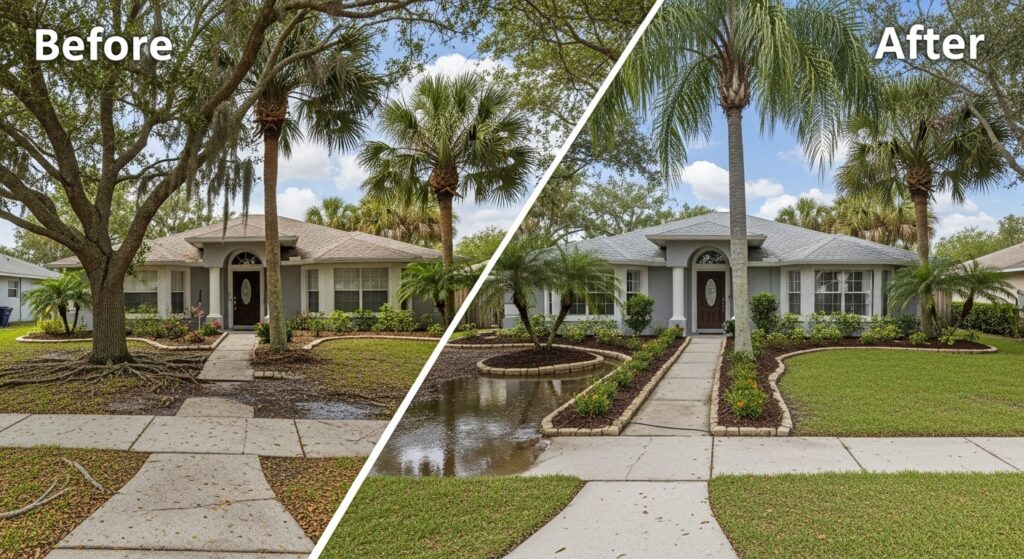
Landscaping can enhance a home’s beauty and value — or quietly create costly problems. In Florida, where severe weather, heavy rain, hurricanes, and high winds are part of life, poor landscaping choices can lead to property damage, safety hazards, and unexpected insurance claims.
While many homeowners focus on how their yard looks, far fewer consider how landscaping affects drainage, wind resistance, tree stability, and personal liability. In reality, bad landscaping is more than an eyesore — it can be a serious risk.
Why Landscaping Matters More in Florida
Florida’s climate makes landscaping uniquely challenging. Heavy rainfall, sandy soil, hurricane-force winds, and fast-growing vegetation can turn minor landscaping mistakes into major problems.
Common Florida landscaping risks include:
- Fallen or uprooted trees during storms
- Improper grading that leads to flooding
- Overgrown plants damaging roofs, siding, or windows
- Roots cracking foundations, driveways, and underground pipes
- Trip-and-fall hazards that create liability exposure
Common Landscaping Mistakes Florida Homeowners Make
Planting Trees Too Close to the Home
Trees add shade and beauty, but when planted too close to a house, they can become dangerous. During hurricanes or severe storms, shallow-rooted or poorly maintained trees are more likely to fall, damaging roofs, vehicles, fences, and neighboring properties.
Tree roots can also lift sidewalks, crack foundations, and interfere with plumbing or septic systems.
Poor Yard Drainage
Improper grading or blocked drainage can cause water to pool near the foundation of a home. Over time, this can lead to:
- Foundation damage
- Mold growth
- Interior water intrusion
- Landscape erosion
In Florida, standing water can also attract mosquitoes and worsen flood risks during heavy rain events.
Ignoring Tree and Shrub Maintenance
Overgrown branches hanging over roofs or driveways increase the chance of damage during storms. Dead or weakened limbs are especially dangerous and can fall without warning.
Regular trimming isn’t just cosmetic — it’s a key safety measure.
Using the Wrong Plants for Florida Conditions
Some plants simply aren’t suited for Florida’s climate. High-maintenance landscaping may require excessive watering or may fail during droughts, storms, or heat waves, leading to ongoing replacement costs and yard instability. Be sure to chose Florida-friendly plants and native plants, which you can discover on the floridayard.org website.
Creating Liability Hazards
Uneven walkways, exposed roots, poorly lit paths, and loose gravel can all create trip-and-fall risks for guests, delivery drivers, or neighbors — potentially leading to liability claims.
How Bad Landscaping Can Impact Insurance Claims
Many homeowners are surprised to learn that landscaping issues can directly affect a homeowners’ insurance outcomes.
Tree Damage and Neglect
If a healthy tree falls during a storm, damage is typically covered under homeowners insurance. However, if the tree was clearly dead, rotting, or poorly maintained, insurers may argue that the damage resulted from neglect.
Drainage and Water Damage
Damage caused by gradual water intrusion or long-term drainage issues may not be covered under standard homeowners policies. Insurance generally covers sudden and accidental events — not problems caused by lack of maintenance.
Liability Exposure
If someone is injured on your property due to poor landscaping conditions, personal liability coverage may apply. However, obvious hazards that were not addressed could complicate claims.
How much could you save on Florida Homeowners Insurance? It takes two minutes to find out.
Get a Free QuoteLandscaping Tips That Help Protect Your Home
Smart landscaping decisions can reduce risk and even help preserve your insurability.
- Plant trees at safe distances from structures
- Choose wind-resistant, native Florida plants
- Keep tree canopies trimmed away from roofs and power lines
- Ensure proper grading so water flows away from the home
- Install clear, well-lit walkways
- Remove dead trees and unstable limbs promptly
Storm-Ready Landscaping for Hurricane Season
Before hurricane season begins, Florida homeowners should treat landscaping as part of their storm-prep checklist.
Helpful steps include:
- Trimming trees before storms are forecast
- Securing or removing loose yard décor
- Clearing drains, gutters, and swales
- Documenting landscaping conditions with photos
Landscaping, HOAs, and Local Rules
Many Florida communities have HOA rules governing landscaping. While these rules may focus on appearance, homeowners should still prioritize safety and maintenance.
If HOA guidelines conflict with safety concerns, document issues and communicate proactively to avoid liability.
Frequently Asked Questions (FAQ)
1. Can bad landscaping really cause insurance problems?
Yes. Poor maintenance, drainage issues, or obvious neglect can complicate or limit insurance claims.
2. Does homeowners insurance cover fallen trees?
Typically yes, if the tree was healthy and fell due to a covered event like a storm.
3. Are dead trees covered if they fall?
Damage from dead or neglected trees may not be fully covered, as insurers may view this as preventable.
4. Can landscaping cause flooding?
Improper grading or blocked drainage can direct water toward a home and cause water damage.
5. Is flood damage covered by homeowners insurance?
No. Flood damage generally requires a separate flood insurance policy.
6. Can someone sue me for a landscaping injury?
Yes. Property owners can be held liable if unsafe landscaping causes injuries.
7. Does insurance cover landscaping itself?
Some policies offer limited coverage for landscaping damage caused by covered perils.
8. How often should trees be inspected?
At least annually, and before hurricane season, or after major storms.
9. Are native plants better for Florida homes?
Yes. Native plants are typically more wind-resistant, drought-tolerant, and lower maintenance.
10. Who can help me evaluate landscaping risk?
A licensed arborist, landscaper, and your insurance agent can help identify potential risks.
Smart Landscaping Is Smart Protection
Good landscaping is about more than looks — it’s about safety, storm resilience, and protecting what matters most. By addressing landscaping risks now, Florida homeowners can reduce damage, avoid liability, and better protect their homes year-round.
If you’re unsure how landscaping affects your coverage, talk with your local GreatFlorida Insurance agent.
Ready to save on Florida Homeowners Insurance?
GreatFlorida Insurance Agents compare rates from Florida's best carriers for you.
Get a Free QuoteOr call 888.478.7801