

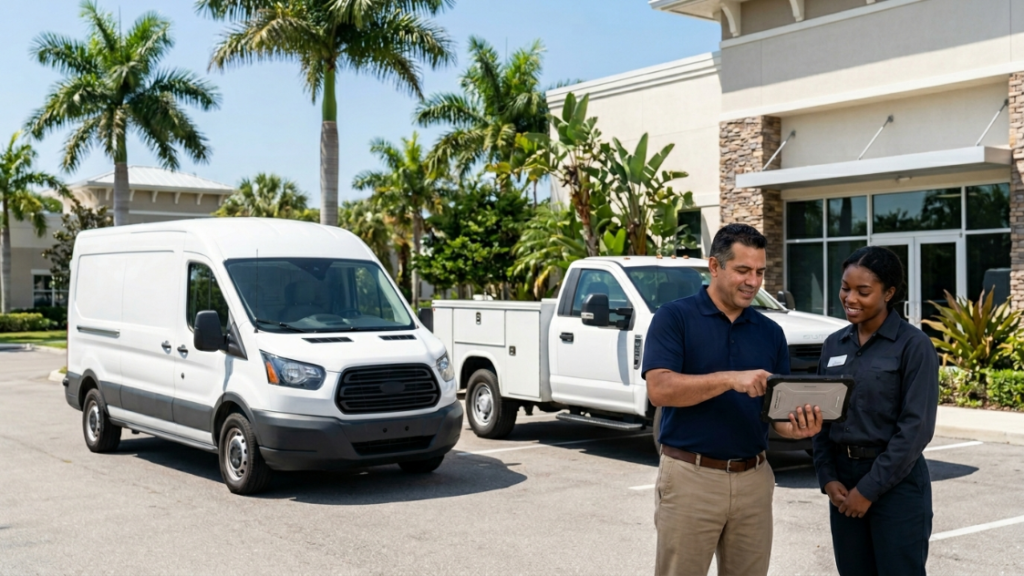
Many businesses rely on vehicles every day. A contractor may haul tools and equipment to a job site. A florist may deliver arrangements across town. A restaurant may use a van for catering orders. A retailer may transport inventory between locations. A landscaper may tow a trailer full of mowers. A small manufacturer may deliver products to customers. A farm, distributor, or service company may use trucks to carry goods, materials, or supplies.
When vehicles are used for business, especially to transport goods or haul loads, insurance becomes more complicated than a standard personal auto policy. A personal auto policy may not provide the right coverage for business use, commercial cargo, trailers, employees, deliveries, or heavier work vehicles.
That is where commercial auto insurance becomes important.
Commercial auto insuranceis designed for vehicles used in business operations. It may help cover liability, vehicle damage, medical payments, uninsured motorists, and other exposures depending on the policy. For businesses that transport goods or haul loads, it is also important to understand whether the items being carried are covered, whether trailers are included, and whether additional coverage such as inland marine, motor truck cargo, or hired and non-owned auto insurance may be needed.
The U.S. Small Business Administration explains that business insurance helps protect companies from unexpected costs related to accidents, lawsuits, property damage, and other losses. For businesses that depend on vehicles, the right commercial auto coverage can be a key part of protecting daily operations.
Why Personal Auto Insurance May Not Be Enough
A common mistake is assuming a personal auto policy will cover a vehicle simply because the business owner also uses it personally. That is not always the case.
Personal auto insurance is generally designed for personal driving, not business hauling, deliveries, job site travel, or transporting goods for compensation. If an accident happens while using a vehicle for business, the claim may be denied or limited if the insurer determines the vehicle was being used outside the policy’s intended purpose.
For example, a personal pickup truck used occasionally for commuting is different from a pickup used daily to haul tools, tow a trailer, or deliver products. A personal SUV used for family errands is different from one used by employees to make business deliveries.
If your vehicle is titled to the business, wrapped with business signage, used by employees, used to transport goods, or used to tow equipment, commercial auto insurance should be reviewed.
What Commercial Auto Insurance May Cover
Commercial auto insurance can include several types of coverage. The exact protection depends on the policy, vehicle type, business use, limits, deductibles, and endorsements.
Liability Coverage
Commercial auto liability may help if your business vehicle causes bodily injury or property damage to others. This is one of the most important parts of the policy because business vehicle accidents can create expensive claims.
If your employee rear-ends another vehicle while delivering products, liability coverage may help with the other party’s vehicle damage, injuries, and legal claims, subject to the policy limits.
Physical Damage Coverage
Physical damage coverage may help repair or replace your business vehicle after a covered loss. This often includes collision coverage and comprehensive coverage.
Collision may apply if your vehicle is damaged in a crash. Comprehensive may apply to certain non-collision losses such as theft, vandalism, fire, falling objects, or weather-related damage.
Medical Payments or Personal Injury Protection
Depending on the state and policy, medical payments or personal injury protection may help with certain medical expenses after an accident.
Uninsured or Underinsured Motorist Coverage
This coverage may help if your business vehicle is involved in an accident with a driver who has no insurance or not enough insurance.
Trailer Coverage
If your business uses trailers, do not assume they are automatically covered. Some policies may provide limited liability coverage while a trailer is attached, but physical damage to the trailer may require separate coverage. The goods or equipment inside the trailer may require still another type of coverage.
Transporting Goods: Are the Items You Carry Covered?
This is one of the most important questions for any business that transports goods.
Commercial auto insurance may cover the vehicle itself, but it does not always cover the cargo, tools, equipment, inventory, or products being transported. If your van is in an accident and the vehicle is damaged, the commercial auto policy may respond to the vehicle damage. But if the products inside are destroyed, a separate coverage may be needed.
Depending on the business, this could involve:
- Motor truck cargo insurance for goods being transported for others
- Inland marine insurance for tools, equipment, materials, or property in transit
- Installation floater coverage for materials being transported to be installed
- Bailee coverage if you have customers’ property in your care
- Business personal property coverage with transit extensions, if available
A contractor carrying tools, a caterer carrying food, a retailer carrying inventory, and a delivery business carrying customers’ goods may all need different coverage solutions.
Hauling Loads and Cargo Securement
Hauling a load adds risk. A poorly secured load can shift, spill, fall, or cause a crash. Loose cargo can damage your own vehicle, damage someone else’s property, injure others, or create a roadway hazard.
The Federal Motor Carrier Safety Administration states that cargo securement rules are intended to prevent cargo from leaking, spilling, blowing, or falling from commercial vehicles, and that commercial vehicles must be loaded and equipped so cargo is secured during transit. The FMCSA also notes that securement systems, parts, and components used to secure cargo must be in proper working order.
Even if your business is small, load safety matters. A landscaper towing equipment, a contractor hauling lumber, a retailer moving furniture, or a restaurant transporting catering supplies should take securement seriously.
Tie-downs, straps, tarps, locks, trailer gates, racks, shelving, and vehicle weight limits are not just operational details. They can also affect liability and claim outcomes after an accident.
Common Businesses That May Need Commercial Auto Coverage
Commercial auto insurance may be important for many types of small and medium businesses, including:
- Contractors and trades
- Landscapers and lawn care companies
- Restaurants and caterers
- Retail stores with delivery service
- Florists
- Bakeries and food businesses
- Cleaning companies
- Moving and delivery businesses
- Mobile repair services
- Real estate and property management companies
- Farms and agricultural businesses
- Wholesale distributors
- Event companies
- Nonprofits with business vehicles
If a vehicle helps your business earn revenue, deliver service, transport employees, haul equipment, or move goods, it is worth reviewing commercial auto coverage.
How much could you save on Florida Commercial Insurance? It takes two minutes to find out.
Get a Free QuoteOwned, Hired, and Non-Owned Vehicles
Business vehicle risk does not only involve vehicles owned by the company. Many businesses also use rented vehicles, borrowed vehicles, or employee-owned vehicles.
Owned Autos
Owned autos are vehicles titled to the business or listed on the commercial auto policy. These are usually the easiest to identify and insure.
Hired Autos
Hired autos are vehicles the business rents, leases, or borrows for work purposes. For example, a business may rent a van for a large delivery or lease a truck during a busy season.
Non-Owned Autos
Non-owned autos are vehicles the business does not own but that are used for business purposes. A common example is an employee using their personal car to run business errands, visit clients, pick up supplies, or make deliveries.
A business may need hired and non-owned auto coverage to help protect against liability claims involving vehicles the business uses but does not own. This is especially important if employees use personal vehicles for work.
Delivery and For-Hire Transportation
Not all business driving is treated the same. Delivering your own products may be different from transporting goods for others. A restaurant delivering its own food may have different insurance needs than a courier transporting packages for multiple clients.
If you are paid to transport goods for others, your insurance needs may be more specialized. You may need higher liability limits, motor truck cargo coverage, regulatory filings, or transportation-specific insurance.
Businesses involved in courier services, freight hauling, moving, logistics, hotshot trucking, or last-mile delivery should be especially careful. Standard commercial auto insurance may not be enough without the right endorsements or cargo coverage.
Weight, Vehicle Type, and Business Use Matter
Insurance companies look closely at how vehicles are used. A small sedan used for sales calls is different from a box truck used for deliveries. A pickup truck used by a contractor is different from a flatbed hauling building materials. A van used for catering is different from a refrigerated truck carrying perishable goods.
Factors that can affect coverage and premium include:
- Vehicle type
- Gross vehicle weight
- Radius of operation
- Type of cargo
- Number of vehicles
- Number of drivers
- Driver records
- Claims history
- Whether goods are owned by the business or others
- Whether the vehicle crosses state lines
- Whether trailers are used
- Whether hazardous materials are transported
The more clearly your policy reflects your actual operations, the better prepared you are when a claim occurs.
Important Coverage Options to Review
Businesses that transport goods or haul loads should ask about several coverage options.
Liability Limits
Business vehicle accidents can be expensive. Review whether your liability limits are high enough for the vehicles, routes, cargo, and risks involved.
Physical Damage
If your business depends on the vehicle, make sure collision and comprehensive coverage are appropriate. Consider the cost to repair or replace the vehicle.
Cargo Coverage
Ask whether goods, inventory, tools, or customers’ property are covered while in transit. If not, ask about inland marine or motor truck cargo coverage.
Trailer Coverage
Confirm whether trailers are covered for liability and physical damage. Also ask whether permanently attached equipment is covered.
Rental Reimbursement and Downtime
If a business vehicle is out of service after a covered claim, rental reimbursement or downtime coverage may help keep operations moving.
Towing and Roadside Assistance
For businesses that haul loads or travel between job sites, towing and roadside assistance can reduce disruption.
Hired and Non-Owned Auto
If employees use personal vehicles or the business rents vehicles, this coverage may be important.
Florida Considerations for Commercial Auto
Florida businesses face unique driving and weather conditions. Heavy traffic, tourists, seasonal residents, construction zones, sudden storms, flooding, and hurricane season can all affect commercial vehicles.
A business that delivers goods in Miami, Orlando, Tampa, Jacksonville, Sarasota, Fort Lauderdale, Naples, or the Florida Keys may deal with different driving risks than a business operating in a rural area. Coastal businesses may also face greater storm exposure.
Florida business owners should review:
- Whether vehicles are covered during hurricane-related damage
- Whether comprehensive coverage includes theft, flood, or storm damage
- Whether cargo is covered during transit
- Whether drivers are properly listed
- Whether trailers and equipment are included
- Whether coverage applies across county or state lines
- Whether employees using personal vehicles are covered
For businesses that transport goods across state lines, federal and state regulations may also apply.
Safety Tips for Transporting Goods and Hauling Loads
Insurance is important, but preventing accidents is even better. Businesses should create clear procedures for vehicle use, loading, and driving.
Train drivers to inspect vehicles before trips. Check tires, brakes, lights, mirrors, backup cameras, straps, tie-downs, trailer connections, and load balance. Make sure cargo is secured before leaving and rechecked during longer trips.
Avoid overloading vehicles. Stay within payload and towing limits. Use proper racks, bins, shelving, and restraints inside vans and trucks. Make sure trailers are connected correctly, safety chains are attached, and lights are working.
Drivers should avoid distracted driving, speeding, aggressive driving, and unsafe lane changes. If routes involve heavy loads, unfamiliar roads, or tight delivery areas, plan ahead.
Documentation That Helps After a Claim
After an accident involving a business vehicle, documentation can be essential.
Keep records of vehicle maintenance, driver training, cargo manifests, delivery logs, inspection reports, photos of securement, bills of lading, invoices, and customer agreements. If an accident happens, take photos of the scene, vehicle damage, cargo damage, road conditions, and how the load was secured.
If cargo is damaged, you may need proof of value, ownership, destination, and condition before the loss. Good records can make the claim process easier.
Final Thoughts
Commercial auto insurance is important for businesses that transport goods, make deliveries, haul tools, tow trailers, or carry loads for work. A personal auto policy may not provide the right protection when a vehicle is being used for business.
For businesses that haul loads, the vehicle is only part of the risk. You also need to think about cargo, tools, inventory, trailers, employees, rented vehicles, customer property, and liability if a load shifts or falls.
The right insurance plan may include commercial auto coverage, hired and non-owned auto coverage, trailer coverage, inland marine insurance, motor truck cargo coverage, or other commercial policies depending on how your business operates.
Before transporting goods or hauling loads, review your coverage with a local insurance agent. Make sure your vehicles, drivers, trailers, routes, and cargo are accurately described.
A properly structured policy can help protect your business, your customers, and your ability to keep moving, GreatFlorida Insurance can help.
Ready to save on Florida Commercial Insurance?
GreatFlorida Insurance Agents compare rates from Florida's best carriers for you.
Get a Free QuoteOr call 888.478.7801