


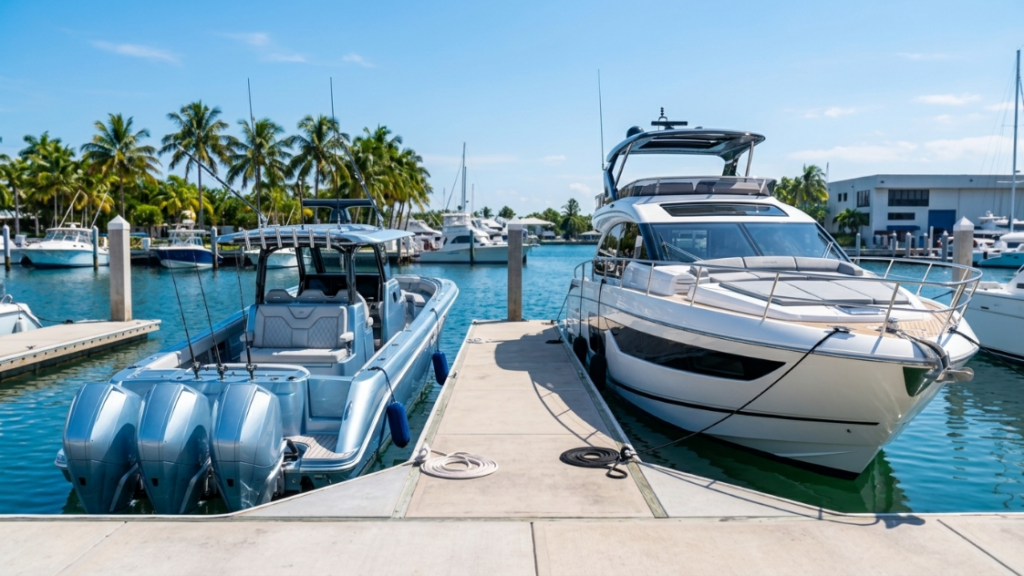
For many Florida boat owners, the terms boat insurance and yacht insurance may sound almost interchangeable. After all, both involve coverage for vessels, both may protect against damage and liability, and both are designed for people who spend time on the water.
But in the insurance world, boat insurance and yacht insurance are not always the same.
The difference usually comes down to the size, value, use, navigation area, equipment, complexity, and risk profile of the vessel. A small center-console used for weekend fishing nearshore does not have the same insurance needs as a large motor yacht with sleeping quarters, advanced electronics, crew, tenders, and extended navigation routes.
Boat insurance is typically designed for smaller recreational vessels. Yacht insurance is usually designed for larger, more valuable, more complex vessels that may travel farther, carry more equipment, and create greater liability exposure.
The Insurance Information Institute explains that boat insurance may provide protection for physical damage, liability, medical payments, trailer coverage, and other boating-related risks, depending on the policy. It also notes that larger or more expensive vessels may need broader coverage than smaller boats.
For Florida boat owners, the distinction matters. The wrong policy could leave gaps in coverage for navigation, storms, crew, passengers, fuel spills, tenders, custom equipment, or liability.
What Is Boat Insurance?
Boat insurance is generally designed for recreational watercraft such as fishing boats, pontoon boats, bowriders, deck boats, small sailboats, personal watercraft, and other smaller vessels.
A boat insurance policy may include coverage for:
Physical damage to the boat
The motor
Permanently attached equipment
The trailer
Liability for injury or property damage
Medical payments
Theft
Fire
Vandalism
Collision
Storm damage
Towing or emergency assistance
Fuel spill liability
Fishing equipment or personal property, if added
Coverage varies by insurer and policy. Some small boats may have limited coverage under a homeowners policy, but that coverage is often restricted by size, horsepower, location, and use. Many boat owners need a separate boat insurance policy for better protection.
Boat insurance is often appropriate for owners who use their vessel for local recreation, fishing, watersports, or short coastal outings.
What Is Yacht Insurance?
Yacht insurance is a more specialized form of marine insurance designed for larger or more valuable vessels. There is no universal definition of exactly when a boat becomes a yacht for insurance purposes, but insurers often look at vessel length, value, sleeping accommodations, navigation range, and overall complexity.
A yacht policy may be appropriate for larger motor yachts, sailing yachts, luxury cruisers, sportfishing yachts, liveaboard vessels, or vessels with more advanced systems and equipment.
Yacht insurance may include many of the same basic coverages as boat insurance, but it often adds more specialized protection. This may include broader navigation territories, higher liability limits, crew coverage, tender coverage, pollution liability, salvage coverage, hurricane haul-out coverage, personal effects, and coverage for more complex onboard systems.
Yacht insurance underwriting is usually more detailed. The insurer may require a marine survey, captain information, maintenance records, hurricane plan, navigation details, ownership experience, and information about where the vessel is stored.
Size and Value Are Major Differences
One of the clearest differences between boat insurance and yacht insurance is the size and value of the vessel.
A smaller recreational boat may be insured under a standard boat policy. A larger vessel may need a yacht policy because the potential claim severity is much greater.
A yacht may have:
Multiple engines
Cabins and sleeping quarters
Galley equipment
Air conditioning
Generator systems
Navigation electronics
Radar
Autopilot
Tender or dinghy
Expensive upholstery and finishes
Specialized safety equipment
Complex electrical and plumbing systems
These features increase the cost to repair or replace the vessel. They can also increase the chance of claims involving mechanical failure, water intrusion, fire, electrical issues, storm damage, theft, or liability.
A standard boat policy may not be designed to address all of these exposures.
Navigation Limits Matter
Boat insurance policies often include navigation limits. For example, a policy may cover operation on inland lakes, rivers, bays, or coastal waters within a certain distance from shore.
Yacht insurance often involves more customized navigation territories. A yacht may travel between Florida and the Bahamas, along the Atlantic Coast, throughout the Gulf of Mexico, or to the Caribbean. Those navigation plans matter because the farther a vessel travels, the more risks it may face.
Longer trips can involve:
Open-water exposure
Changing weather conditions
Foreign waters
Different repair facilities
Emergency towing or salvage
Customs and marina requirements
Crew or captain responsibilities
Extended time away from home port
If a vessel travels outside the policy’s navigation territory, coverage may be limited or denied. Florida yacht owners should be especially careful if they take trips to the Bahamas or Caribbean, because those routes may need to be listed or endorsed on the policy.
Liability Limits Are Often Higher for Yachts
Liability coverage is one of the most important parts of any boat or yacht policy. It may help protect the owner if the vessel causes injury to another person or damage to someone else’s property.
Yacht owners often need higher liability limits because a yacht may carry more passengers, operate in busier waterways, dock at expensive marinas, and create greater potential damage in a collision.
Liability claims may involve:
Injuries to passengers
Injuries to swimmers
Damage to other boats
Dock or marina damage
Fuel spills
Wake damage
Collisions
Towing or rescue incidents
Legal defense costs
The Florida Fish and Wildlife Conservation Commission provides boating safety resources and accident information, reminding boaters that safe operation, proper equipment, and responsible navigation are important parts of reducing risk on the water.
For larger vessels, higher liability limits and umbrella coverage may be worth discussing with a GreatFlorida Insurance agent.
Crew Coverage Can Be a Key Difference
Many small recreational boats are operated only by the owner or family members. Yachts may be different. Some yachts use paid captains, crew members, maintenance staff, dockhands, or delivery captains.
If anyone is paid to operate, maintain, or work aboard the vessel, insurance becomes more complex.
Yacht insurance may need to address:
Crew liability
Jones Act exposure
Longshore and harbor workers issues
Workers’ compensation considerations
Captain qualifications
Crew medical expenses
Employment-related claims
Contract crew or delivery captain exposure
A standard boat insurance policy may not be appropriate if the vessel has paid crew. Owners should be very clear with their agent about who operates the vessel and whether anyone is compensated.
Surveys and Underwriting
Yacht insurance usually involves more detailed underwriting than standard boat insurance.
For a smaller boat, the insurer may ask for the year, make, model, length, horsepower, value, storage location, and boating experience.
For a yacht, the insurer may require much more. This can include:
A current marine survey
Haul-out inspection
Engine information
Maintenance records
Hurricane plan
Navigation territory
Owner boating experience
Captain credentials
Crew details
Dockage information
Prior claims
Photos
Safety equipment
Fire suppression systems
A marine survey helps the insurer evaluate the vessel’s condition, seaworthiness, value, and risk. It may also identify maintenance issues that need to be corrected before coverage is issued or renewed.
Older yachts, wooden vessels, high-performance boats, or boats with prior damage may require additional review.
How much could you save on Florida Boat Insurance? It takes two minutes to find out.
Get a Free QuoteStorm and Hurricane Planning
Florida boat and yacht owners need to take hurricanes seriously. Storm preparation can affect both safety and insurance.
Boat insurance and yacht insurance policies may include special hurricane requirements. These may involve where the vessel must be stored, whether it must be hauled out, how it must be secured, or whether coverage changes during hurricane season.
Yacht policies may require a written hurricane plan, especially for vessels kept in Florida during storm season. The plan may include a haul-out contract, marina plan, captain responsibilities, approved storage location, or steps to secure the vessel.
Some policies may include hurricane haul-out reimbursement or named storm preparation coverage. Others may have higher named storm deductibles, restrictions, or exclusions.
The key is to review these requirements before hurricane season. If a policy requires certain preparation steps and the owner does not follow them, claim complications may arise.
Agreed Value vs. Actual Cash Value
Boat and yacht policies may settle physical damage claims using either agreed value or actual cash value.
An agreed value policy sets a specific insured value for the vessel at the beginning of the policy term. If there is a covered total loss, the policy may pay the agreed value, subject to policy terms.
An actual cash value policy factors in depreciation. If there is a covered loss, payment may be based on the vessel’s depreciated value at the time of loss.
Agreed value coverage often costs more, but many boat and yacht owners prefer it because it offers more certainty. This can be especially important for larger or more customized vessels.
When comparing policies, owners should ask:
Is the policy agreed value or actual cash value?
How is depreciation applied?
Are engines handled differently?
Are electronics depreciated?
Are partial losses settled differently than total losses?
Are custom upgrades included in the insured value?
The answer can make a major difference after a claim.
Equipment, Tenders, and Personal Property
A standard boat policy may provide some coverage for equipment and accessories, but larger yachts often require more detailed coverage.
Yacht owners may need to insure:
Navigation electronics
Radar
Fishing equipment
Dive gear
Water toys
Tenders
Jet skis
Dinghies
Communication systems
Galley equipment
Personal property
Artwork or valuables
Custom furnishings
Safety equipment
Tenders and personal watercraft may need to be scheduled separately. Expensive fishing, diving, or watersports equipment may also require special limits or endorsements.
Owners should avoid assuming everything aboard is automatically covered.
Charter and Business Use
Boat insurance and yacht insurance are usually written based on private recreational use. If the vessel is used for business, charter, rental, guided fishing, lessons, events, or paid passenger trips, coverage can change significantly.
A private pleasure policy may exclude commercial use. This is especially important for yacht owners who occasionally charter the vessel or allow others to use it for compensation.
If the vessel is used for charter, the owner may need a commercial marine policy, passenger liability coverage, crew coverage, or other specialized protection.
Before accepting payment for any vessel use, talk with an insurance agent.
Marina and Lender Requirements
Marinas and lenders may require specific insurance limits.
A marina may require proof of liability coverage before allowing the vessel to dock. A lender may require physical damage coverage if the boat or yacht is financed. Some marinas may also require pollution liability, wreck removal, or higher liability limits for larger vessels.
Yacht owners should review marina contracts carefully. The contract may require the owner to list the marina as an additional insured or provide proof of coverage before docking.
Cost Differences
Yacht insurance usually costs more than boat insurance because the vessel is larger, more valuable, more complex, and may create greater liability exposure.
Premiums may depend on:
Vessel value
Length
Age
Construction type
Engines
Speed
Navigation territory
Storage location
Storm exposure
Owner experience
Captain and crew
Claims history
Deductibles
Coverage limits
Survey results
Hurricane plan
A small boat used locally may be relatively affordable to insure. A larger yacht kept in Florida, used offshore, traveling to the Bahamas, and equipped with expensive systems will usually require more detailed underwriting and a higher premium.
Which Policy Do You Need?
The right policy depends on the vessel and how it is used.
A boat policy may be enough if you own a smaller recreational vessel used locally for fishing, cruising, or watersports.
A yacht policy may be needed if your vessel is larger, more valuable, has sleeping quarters, travels offshore, uses crew, has tenders, carries expensive equipment, or requires higher liability limits.
The name of the policy matters less than the coverage details. Some insurers may call a vessel a boat while another calls it a yacht. What matters is whether the policy fits the real exposure.
Questions to Ask Your Insurance Agent
Before choosing coverage, ask:
Is my vessel considered a boat or yacht for insurance purposes?
Is the policy agreed value or actual cash value?
What navigation territory is included?
Am I covered for trips to the Bahamas or Caribbean?
Are hurricanes, named storms, and wind damage covered?
Is there a storm deductible?
Are tenders, dinghies, or personal watercraft covered?
Are electronics and fishing equipment covered?
Is crew or paid captain exposure covered?
Is charter or rental use excluded?
What liability limits should I carry?
Does my marina require specific coverage?
Is wreck removal included?
Is fuel spill liability included?
Is emergency towing included?
These questions can help identify gaps before a claim occurs.
Final Thoughts
Boat insurance and yacht insurance both protect vessels, but they are not always the same. Boat insurance is usually designed for smaller recreational boats used locally. Yacht insurance is often designed for larger, more valuable, more complex vessels with broader navigation needs, higher liability exposure, specialized equipment, and possible crew considerations.
Florida owners should pay close attention to navigation limits, hurricane requirements, storm storage, liability limits, agreed value coverage, tenders, equipment, and whether the vessel is used privately or commercially.
The most important issue is not whether your vessel is called a boat or a yacht. The most important issue is whether your insurance policy matches how the vessel is actually used.
A local marine GreatFlorida Insurance agent can help you compare boat insurance and yacht insurance options, review Florida storm exposures, and make sure your coverage fits your vessel, navigation plans, and budget.
Ready to save on Florida Boat Insurance?
GreatFlorida Insurance Agents compare rates from Florida's best carriers for you.
Get a Free QuoteOr call 888.478.7801