


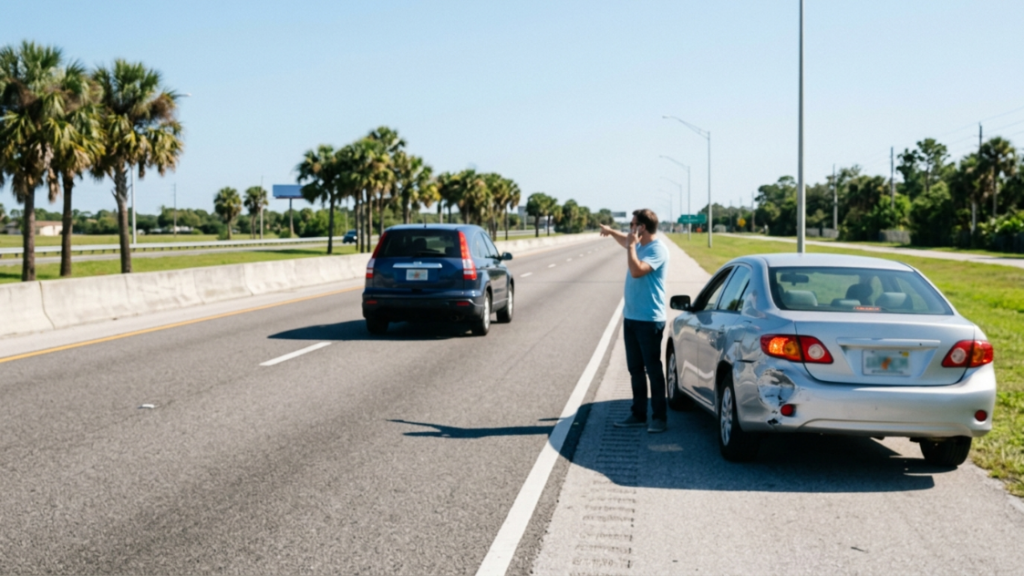
Many drivers focus on the most obvious parts of auto insurance: liability coverage, comprehensive coverage, collision coverage, and the monthly premium. But one of the most important coverage options is also one of the easiest to overlook: uninsured motorist coverage.
So, is uninsured motorist coverage worth it?
For many Florida drivers, the answer is yes. Uninsured motorist coverage, often called UM coverage, may help protect you if you are injured in an accident caused by a driver who has no bodily injury liability insurance or not enough insurance to pay for the harm they caused.
GreatFlorida Insurance recogizes, it is a major issue in Florida. Florida requires drivers to carry Personal Injury Protection and Property Damage Liability coverage, but bodily injury liability is not required for every standard driver in the same way it is in many other states. Because of that, some drivers may legally carry very little protection for injuries they cause to other people.
The Florida Department of Financial Services explains that uninsured/underinsured motorist coverage pays for accidental bodily injury, sickness, disease, or death when the at-fault party does not have Bodily Injury coverage or has insufficient liability limits. It also notes that Florida law requires companies to stack UM coverage unless stacking is rejected in writing.
The Insurance Information Institute describes uninsured/underinsured motorist coverage as protection that can reimburse you when an accident is caused by an uninsured motorist, including hit-and-run drivers.
In simple terms, uninsured motorist coverage helps protect you and your passengers when the other driver does not have enough insurance to take responsibility for the damage they caused.
What Is Uninsured Motorist Coverage?
Uninsured motorist coverage is auto insurance you buy on your own policy to protect yourself if another driver injures you and does not have enough insurance.
It is sometimes discussed as two related coverages:
Uninsured Motorist Coverage, or UM, applies when the at-fault driver has no applicable bodily injury liability coverage.
Underinsured Motorist Coverage, or UIM, applies when the at-fault driver has some liability coverage, but not enough to cover the full value of your injuries and damages.
In many conversations, people use “uninsured motorist coverage” to refer to both uninsured and underinsured motorist protection.
For example, if a driver runs a red light, hits your car, and causes serious injuries but has no bodily injury liability coverage, your UM coverage may help. If the driver has only low limits and your damages exceed those limits, underinsured motorist coverage may help fill part of the gap, up to your policy limits.
What Does Uninsured Motorist Coverage Usually Cover?
Uninsured motorist coverage is primarily about bodily injury protection. Depending on the policy and state rules, it may help cover:
Medical bills
Lost wages
Future medical care
Pain and suffering
Disability
Long-term injury effects
Loss of earning capacity
Injuries to passengers
Injuries to household members
Death benefits in serious crashes
The Florida statute governing uninsured and underinsured motorist coverage says the coverage is for protection of insured persons who are legally entitled to recover damages from owners or operators of uninsured motor vehicles because of bodily injury, sickness, disease, or death.
That is important because UM coverage is not just about a hospital bill. It can also matter when a crash creates long-term consequences: physical therapy, surgery, missed work, chronic pain, or reduced ability to earn income.
What Uninsured Motorist Coverage Usually Does Not Cover
Uninsured motorist coverage is commonly focused on bodily injury. It may not automatically pay for damage to your car.
If your vehicle is damaged by an uninsured driver, collision coverage may be the coverage that helps repair or replace your car, subject to your deductible. Some states and policies may offer uninsured motorist property damage coverage, but availability and rules vary. The Insurance Information Institute notes that uninsured motorist insurance commonly covers bodily injuries, while uninsured motorist property damage is a separate coverage concept.
UM coverage also does not replace every other part of your auto policy. It does not replace comprehensive coverage, collision coverage, rental reimbursement, roadside assistance, or property damage liability.
It is one part of a broader protection plan.
Why This Matters in Florida
Florida is a unique auto insurance state. Many drivers carry only the minimum required coverage, and the minimum required coverage may not include bodily injury liability for injuries caused to others.
That creates a real concern. If another driver causes a serious crash and has no bodily injury liability coverage, you may not have a meaningful insurance company to pursue for your injuries.
Your own Personal Injury Protection, or PIP, may help with certain medical expenses and lost wages regardless of fault, but PIP has limits. If your injuries are serious, expensive, or long-lasting, PIP alone may not be enough.
That is where uninsured motorist coverage can be valuable. It can provide a source of recovery through your own policy when the at-fault driver cannot.
Florida Law and UM Coverage
Florida law treats uninsured motorist coverage as an important optional protection.
Under Florida Statutes Section 627.727, a motor vehicle liability insurance policy that provides bodily injury liability coverage for a vehicle registered or principally garaged in Florida must also provide uninsured motorist coverage unless the insured rejects the coverage, selects lower limits, or selects non-stacked coverage as allowed by law.
This means UM coverage is not something Florida law ignores. It is important enough that insurers must address it when bodily injury liability coverage is included, but policyholders may reject it or choose different options.
If you rejected UM coverage in the past, it may stay rejected on future renewals or replacement policies unless you request it again, depending on the circumstances and policy changes. That makes it worth reviewing your current declarations page.
Stacked vs. Non-Stacked UM Coverage
Florida drivers may see two terms when reviewing uninsured motorist coverage: stacked and non-stacked.
Stacked UM coverage generally allows you to combine, or “stack,” UM limits across multiple covered vehicles on the policy. This can increase the total amount available after a covered claim.
Non-stacked UM coverage generally does not allow the same combining of limits and may provide less total protection in some situations, though it may cost less.
The Florida Department of Financial Services states that Florida law requires a company to stack UM coverage unless stacking is rejected in writing.
Here is a simple example:
If you have two vehicles and $100,000 of stacked UM coverage per person on each, you may have access to $200,000 of UM coverage, depending on the policy and claim.
If the same policy is non-stacked, you may be limited to $100,000.
The rules can be technical, so it is important to ask your agent how stacked and non-stacked options would work for your vehicles.
UM Coverage vs. PIP
Florida drivers often ask why they need uninsured motorist coverage if they already have Personal Injury Protection.
PIP and UM are not the same.
PIP is no-fault coverage. It helps pay certain medical expenses and lost wages after an auto accident, regardless of who caused the crash, subject to limits and policy terms.
UM coverage applies when another driver is legally responsible for your injuries but does not have enough bodily injury liability insurance.
PIP may be helpful for immediate medical bills, but it may not fully address a serious injury. UM coverage may help with damages beyond what PIP pays, including broader injury-related losses, subject to your policy limits.
Florida’s UM statute also says UM coverage is over and above, but does not duplicate, benefits available under PIP, workers’ compensation, disability benefits, medical expense coverage, motor vehicle liability coverage, or other responsible sources.
In plain English, UM coverage may help fill gaps after other applicable benefits are considered.
How much could you save on Florida Auto Insurance? It takes two minutes to find out.
Get a Free QuoteUM Coverage vs. Bodily Injury Liability
Bodily injury liability protects other people if you cause an accident and injure them.
Uninsured motorist coverage protects you and your passengers if someone else causes an accident and does not have enough coverage.
These are opposite sides of the risk.
Bodily injury liability is about what you owe others. UM coverage is about what others may owe you but cannot pay because they lack adequate insurance.
A strong auto policy often includes both.
UM Coverage vs. Health Insurance
Some drivers wonder whether health insurance makes uninsured motorist coverage unnecessary. Health insurance can help with medical bills, but it is not a complete replacement for UM coverage.
Health insurance may have deductibles, copays, out-of-network limits, exclusions, and reimbursement restrictions. It also may not pay for lost wages, pain and suffering, future loss of earning capacity, long-term disability, or other damages that can arise after a serious crash.
UM coverage may address a broader set of injury-related damages than health insurance, depending on the policy and claim.
This is especially important for people with high-deductible health plans, limited networks, self-employed income, physically demanding jobs, or family members who rely on their earnings.
Hit-and-Run Accidents
Uninsured motorist coverage may also matter after hit-and-run accidents.
The Insurance Information Institute states that uninsured/underinsured motorist coverage reimburses you when an accident is caused by an uninsured motorist, including hit-and-run drivers.
Hit-and-run accidents are frustrating because there may be no identified at-fault driver to pursue. If you are injured and the responsible driver leaves the scene, UM coverage may provide an important source of protection, subject to policy terms and reporting requirements.
If you are involved in a hit-and-run, report the crash promptly, document the scene, seek medical care if needed, and contact your insurance company.
Is Uninsured Motorist Coverage Required in Florida?
Uninsured motorist coverage is not automatically required in the same way as Florida’s basic required auto coverage. However, when a policy includes bodily injury liability coverage, Florida law generally requires UM coverage to be provided unless it is rejected or modified in writing.
This is why many Florida drivers see a UM rejection form when buying auto insurance. Signing that form may reduce your premium, but it also removes an important layer of protection.
Before rejecting UM coverage, ask what you are giving up and how much premium you are actually saving.
Is Uninsured Motorist Coverage Worth It If I Have an Older Car?
Yes, it can still be worth considering.
This is a common misunderstanding. Drivers sometimes think UM coverage is mainly about the value of the car. But in Florida, UM coverage is usually about injuries to people, not the age or value of the vehicle.
If you drive an older car and do not carry collision coverage, you may be choosing not to insure the vehicle’s physical damage. That is one decision.
But uninsured motorist coverage is about protecting your body, your income, your passengers, and your family. A crash can cause serious injuries whether your car is worth $5,000 or $50,000.
Is Uninsured Motorist Coverage Worth It If I Have Full Coverage?
“Full coverage” is not a standard insurance term. Many people use it to mean they have liability, comprehensive, and collision coverage. But that does not necessarily mean they have uninsured motorist coverage.
You can have collision and comprehensive coverage and still have no UM coverage. You can also have UM coverage but no collision coverage. They protect different things.
If you are not sure whether you have UM coverage, check your declarations page or ask your agent.
How Much Uninsured Motorist Coverage Should You Carry?
The right amount depends on your income, assets, household, health insurance, risk tolerance, and budget.
A common approach is to match your UM limits to your bodily injury liability limits. For example, if you carry $100,000 per person and $300,000 per accident in bodily injury liability, you may consider matching those limits for UM coverage.
Higher limits may be worth considering if you have:
Multiple drivers in the household
Teen drivers
Long commutes
Frequent highway driving
High medical deductibles
Dependents
A physically demanding job
Higher income
Limited disability protection
Concern about hit-and-run or uninsured drivers
Ask your agent to quote several limit options. Sometimes the difference between low UM limits and stronger limits is less than expected. Other times it may be expensive, but at least you can make an informed decision.
When UM Coverage May Be Especially Valuable
Uninsured motorist coverage may be especially valuable if you drive regularly in high-traffic areas, commute on highways, have passengers often, drive children or family members, rely heavily on your income, have limited health insurance, or live in a state with a significant uninsured driver problem.
Florida drivers may also value UM coverage because of the state’s minimum insurance structure and the number of drivers who may carry little or no bodily injury liability coverage.
The coverage can be particularly important for families. UM may help protect not just the named insured, but also family members and passengers, depending on the policy.
When Someone Might Decline UM Coverage
Some drivers decline UM coverage because of cost. Auto insurance can be expensive, especially in Florida, and families may be trying to lower monthly premiums.
Others decline because they do not understand what the coverage does. Some assume health insurance or PIP makes it unnecessary. Others assume “full coverage” already includes it.
There may be situations where someone chooses to decline or reduce UM coverage after reviewing their finances and risk tolerance. But that decision should be intentional, not accidental.
Before rejecting UM coverage, ask:
How much would I save?
What would I lose?
Do I have enough health insurance?
Could I afford months away from work?
What happens if the at-fault driver has no bodily injury coverage?
Would my passengers be protected?
Do I understand stacked vs. non-stacked?
Those questions can make the decision clearer.
Questions to Ask Your Insurance Agent
Before adding, changing, or rejecting UM coverage, ask:
Do I currently have uninsured motorist coverage?
Are my limits stacked or non-stacked?
What limits are available?
Can I match my bodily injury liability limits?
What is the premium difference for higher limits?
Does coverage apply to hit-and-run accidents?
Does it cover passengers?
Does it cover household members?
How does UM interact with PIP?
How does UM interact with health insurance?
Do I have uninsured motorist property damage coverage?
What happens if I reject UM coverage?
Can I add it later?
A short conversation can help prevent a major coverage gap.
Final Thoughts
So, is uninsured motorist coverage worth it?
For many Florida drivers, uninsured motorist coverage is one of the most important optional auto insurance protections to review. It may help protect you and your passengers if another driver causes an accident and has no bodily injury liability insurance, not enough coverage, or leaves the scene.
PIP and health insurance can help, but they may not fully protect you from the financial impact of a serious crash. Collision coverage may help repair your car, but it does not replace UM coverage for bodily injury. Bodily injury liability protects other people if you hurt them, but UM protects you if someone else hurts you and cannot pay.
Before rejecting uninsured motorist coverage, review the cost, limits, stacked vs. non-stacked options, and how the coverage fits your household. A GreatFlorida Insurance agent can help you compare options and decide whether UM coverage is worth it for your situation.
Ready to save on Florida Auto Insurance?
GreatFlorida Insurance Agents compare rates from Florida's best carriers for you.
Get a Free QuoteOr call 888.478.7801