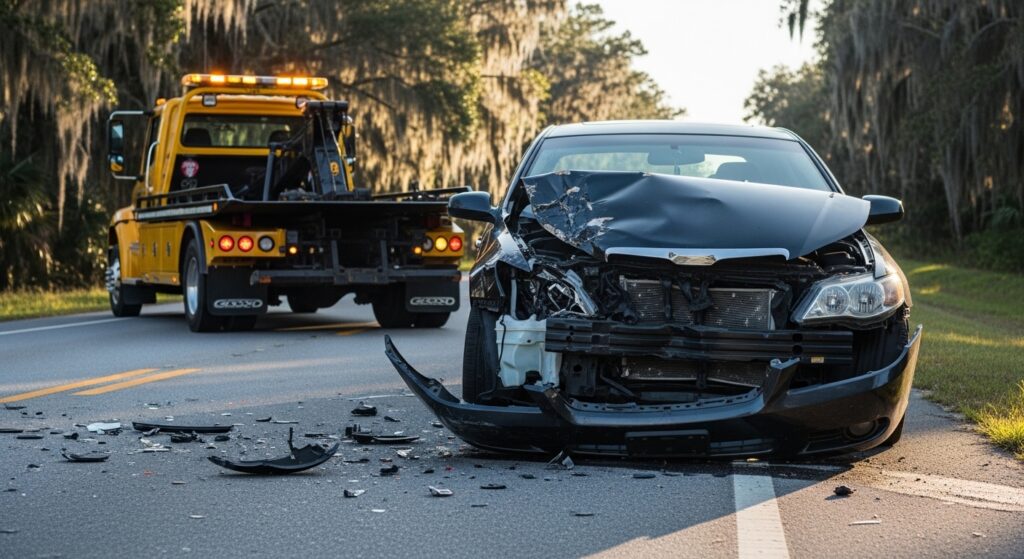
Getting into an accident is stressful enough—but finding out your car is totaled can make things even more overwhelming.
If your car is declared a total loss after an accident, the process can feel confusing and overwhelming. Florida drivers often have questions about how insurers determine total loss, how payouts are calculated, and what happens next.
This guide explains everything you need to know about totaled vehicles in Florida, including settlement calculations, insurance coverage, and your next steps.
What does “totaled” actually mean? How much will insurance pay? And what are your next steps?
If you’re a Florida driver facing this situation, this guide will walk you through exactly what happens if your car is totaled and how to navigate the process with confidence.
What Does It Mean When a Car Is Totaled?
A car is considered “totaled” (or a total loss) when the cost to repair it exceeds a certain percentage of its value.
In Florida, a vehicle is typically declared a total loss when repair costs reach around 80% or more of its actual cash value (ACV).
This means the insurance company determines it’s not financially reasonable to repair the vehicle.
How Insurance Companies Determine Value
When your car is totaled, your insurer will calculate its actual cash value (ACV), which is:
- The market value of your car before the accident
- Minus depreciation
Factors that affect this value include:
- Make, model, and year
- Mileage
- Condition prior to the accident
- Local market prices
According to the Insurance Information Institute, insurers use valuation tools and comparable sales data to determine payouts.
What Happens After Your Car Is Declared Totaled?
1. The Insurance Company Makes an Offer
You’ll receive a settlement offer based on your car’s ACV.
2. Your Loan or Lease Is Paid First
If you still owe money on your car, the insurance payout goes toward your loan balance first.
3. You Receive Remaining Funds (If Any)
If the payout exceeds your loan balance, you’ll receive the difference.
4. The Insurance Company Takes the Vehicle
The insurer typically takes possession of the totaled vehicle.
What If You Owe More Than the Car Is Worth?
This is known as being “upside down” on your loan.
If your loan balance exceeds the payout, you’re responsible for the difference—unless you have gap insurance.
Gap coverage can help cover the remaining balance.
Can You Keep a Totaled Car?
In some cases, yes.
You can choose to keep the vehicle, but:
- Your payout will be reduced
- The car may receive a salvage title
- Repairs and inspections may be required
What Insurance Covers a Totaled Car?
Coverage depends on your policy:
- Collision coverage – covers accidents
- Comprehensive coverage – covers theft, weather, and non-collision events
If you only have liability coverage, your own vehicle may not be covered.
Review your Florida auto insurance policy to understand your coverage.
How much could you save on Florida Auto Insurance? It takes two minutes to find out.
Get a Free QuoteHow Florida’s No-Fault System Impacts Total Loss Claims
Florida is a no-fault state, meaning your Personal Injury Protection (PIP) covers medical expenses regardless of fault.
However, property damage and vehicle replacement are handled separately through collision or liability coverage.
The Florida Highway Safety and Motor Vehicles provides additional information on insurance requirements.
Can You Negotiate a Total Loss Settlement?
Yes.
If you believe the insurer’s valuation is too low, you can:
- Provide comparable vehicle listings
- Submit maintenance records
- Request a re-evaluation
Being proactive can help you get a fair payout.
What to Do After Your Car Is Totaled
- Review your settlement offer carefully
- Check your loan balance
- Start shopping for a replacement vehicle
- Update your insurance policy
If you’re unsure about your options, consider getting a GreatFlorida Insurance quote to compare coverage for your next vehicle.
Common Mistakes to Avoid
- Accepting the first offer without review
- Not understanding your policy coverage
- Forgetting about gap insurance
- Delaying your claim process
Final Thoughts
Having your car totaled can feel overwhelming—but understanding the process makes it much easier to navigate.
Knowing how insurance companies determine value, what your coverage includes, and how to respond puts you in control during a difficult situation.
With the right preparation, you can move forward quickly and confidently. Contact a GreatFlorida Insurance agent for more information.
Frequently Asked Questions
1. What does it mean if my car is totaled?
It means repair costs exceed a percentage of the car’s value.
2. How much will insurance pay?
Your car’s actual cash value minus depreciation.
3. What is actual cash value?
The market value of your car before the accident.
4. Can I keep my totaled car?
Yes, but your payout will be reduced.
5. What if I still owe money?
The payout goes to your lender first.
6. What is gap insurance?
Coverage that pays the difference between your loan and the car’s value.
7. Can I negotiate the payout?
Yes, by providing evidence of value.
8. Does liability insurance cover my car?
No, it only covers damage to others.
9. How long does the process take?
Typically a few weeks depending on the claim.
10. What should I do next?
Review your settlement and plan for a replacement vehicle.
Ready to save on Florida Auto Insurance?
GreatFlorida Insurance Agents compare rates from Florida's best carriers for you.
Get a Free QuoteOr call 888.478.7801