


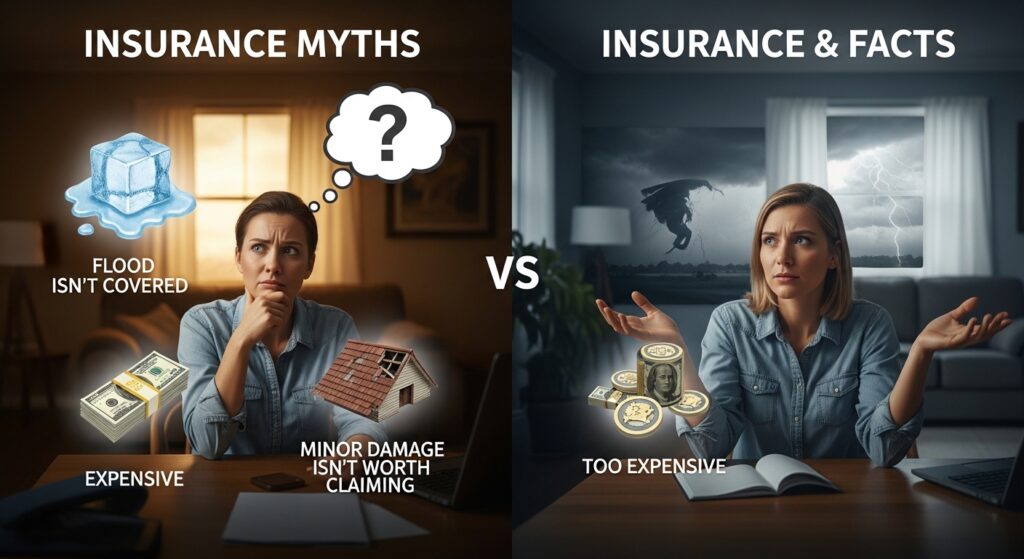
When it comes to insurance in Florida, misinformation can be expensive. Whether you own a home or drive daily, believing common myths about insurance coverage can lead to denied claims, higher premiums, or unexpected out-of-pocket costs. “Recognizing the difference between myth and fact is not just about being well-informed; it’s about ensuring your home and assets are financially protected,” says Bankrate.
In this guide, we’ll break down the most common home insurance myths and auto insurance myths in Florida—and explain what you really need to know.
Home Insurance Myths in Florida
Myth #1: Home Insurance Covers All Roof Damage
Reality: Not all roof damage is covered. Most Florida homeowners insurance coverage policies only cover sudden and accidental damage, like storms or fallen trees—not wear and tear or aging.
Myth #2: Flood Damage Is Covered by Home Insurance
Reality: Standard home insurance policies do NOT cover flooding. You need a separate flood insurance in Florida policy—even if you’re not in a high-risk zone.
Myth #3: Older Homes Can’t Be Insured
Reality: Older homes can absolutely be insured, but they may require inspections or updates. Insurance companies look at key systems like roofs, plumbing, and electrical—not just age.
Myth #4: Filing a Claim Always Raises Your Premium
Reality: Not always. While multiple claims can increase premiums, a single claim—especially from a major storm—may not significantly impact your rate.
Myth #5: Market Value Equals Insurance Value
Reality: Insurance is based on rebuild cost, not what your home would sell for. In Florida, rebuilding costs can be higher due to labor and materials.
Myth #6: Hurricane Damage Is Always Covered
Reality: Hurricane damage is typically covered, but you’ll likely have a separate hurricane insurance in Florida deductible, which is often higher than standard deductibles.
Auto Insurance Myths in Florida
“Unfortunately, there’s a lot of bad information that passes for ‘common wisdom,’” explains the Insurance Information Institute.
Myth #7: Red Cars Cost More to Insure
Reality: Insurance companies do NOT factor in color when determining rates. Your premium is based on factors like driving history, location, and vehicle type.
Myth #8: Minimum Coverage Is Enough
Reality: Florida’s minimum coverage requirements are often not enough to fully protect you. Many drivers are underinsured, which increases your financial risk.
Myth #9: Your Insurance Follows the Car, Not the Driver
Reality: In most cases, insurance follows the car—but coverage can depend on who is driving and whether they are listed on your policy.
Myth #10: Personal Auto Insurance Covers Business Use
Reality: If you use your car for business (rideshare, deliveries, etc.), you may need additional coverage. Standard personal policies often exclude business use.
Myth #11: Older Cars Don’t Need Coverage
Reality: Even if your car isn’t worth much, liability coverage is essential. Without it, you could be personally responsible for damages or injuries.
Myth #12: Your Credit Score Doesn’t Affect Your Rate
Reality: In many cases, insurers use credit-based insurance scores as a factor in determining premiums.
Why These Myths Matter in Florida
Florida’s insurance market is unique due to hurricanes, flooding risks, and higher-than-average claims. Misunderstanding your coverage can result in:
- Denied claims
- Coverage gaps
- Higher long-term costs
That’s why working with a knowledgeable agent and reviewing your policy regularly is critical.
How much could you save on Florida Homeowners Insurance? It takes two minutes to find out.
Get a Free QuoteFinal Thoughts
Insurance myths can be costly—but the right information can protect you. By understanding what your policy actually covers, you can make smarter decisions and avoid surprises when you need coverage most.
If you’re unsure about your current policy, now is a great time to review your coverage and make sure it fits your needs.
Frequently Asked Questions
1. Does home insurance cover roof leaks in Florida?
Only if the leak is caused by a covered peril, such as a storm. Gradual leaks due to wear and tear are not covered.
2. Do I need flood insurance if I’m not in a flood zone?
Yes. Many flood claims come from low-to-moderate risk areas in Florida.
3. What is a hurricane deductible?
A separate deductible that applies specifically to hurricane damage, often calculated as a percentage of your home’s insured value.
4. Does car color affect insurance rates?
No. Insurers do not consider vehicle color when calculating premiums.
5. Is minimum auto coverage enough in Florida?
Usually not. Minimum coverage may not fully protect you in a serious accident.
6. Does insurance cover business use of my car?
Not typically. You may need a commercial or rideshare policy.
7. Will filing a claim increase my premium?
It depends on your claims history and the type of claim.
8. Can I insure an older home in Florida?
Yes, but insurers may require inspections or updates.
9. What affects my auto insurance rate the most?
Driving history, location, vehicle type, and coverage levels.
10. How often should I review my insurance policy?
At least once a year or after major life changes.
To get clarity on the facts regarding your Florida auto insurance or your Florida homeowners insurance, contact GreatFlorida Insurance today.
Ready to save on Florida Homeowners Insurance?
GreatFlorida Insurance Agents compare rates from Florida's best carriers for you.
Get a Free QuoteOr call 888.478.7801