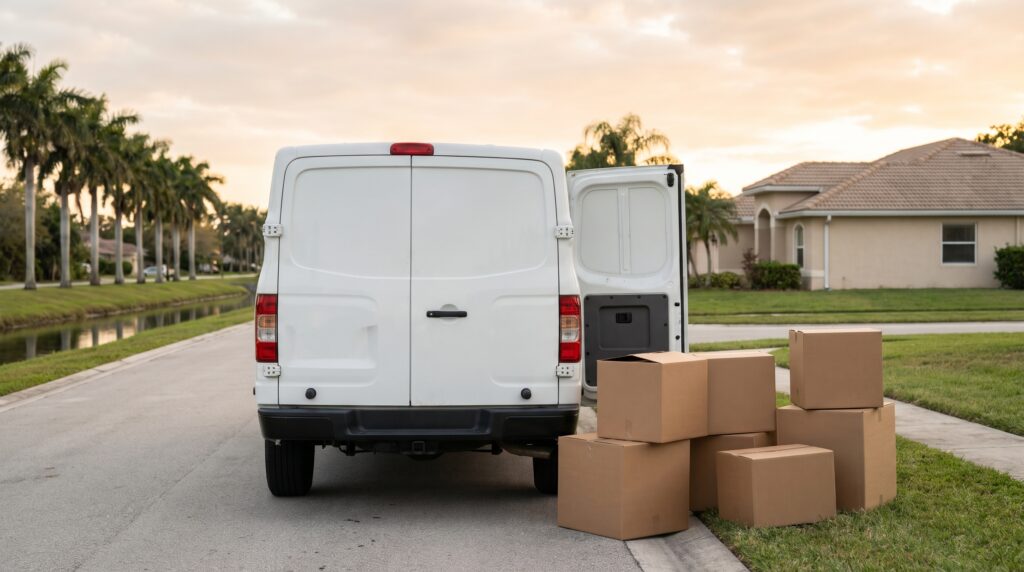
Florida has always been a state shaped by water—its beauty, its climate, and increasingly, its risk. In 2026, a noticeable shift is taking place: more Floridians are choosing to move out of neighborhoods with high flood exposure. This trend isn’t driven by panic; it’s driven by economics, insurance costs, and long-term lifestyle considerations. Understanding this movement can help Florida homeowners make informed decisions whether they plan to stay, upgrade, or relocate.
Key Takeaways
- Miami-Dade had the largest net out-domestic-migration of any U.S. flood-risk county: 67,418 more residents moved out than moved in.
- More than one-third of Miami-Dade homes are classified as high-flood-risk, and rising insurance premiums fuel relocation decisions.
- Pinellas County experienced its first net domestic out-flow after Hurricane Helene damage in 2024, with 35.8 percent of homes at high flood-risk.
- Remote work flexibility and resilience upgrades like impact windows and elevated mechanicals are key factors in relocation and resale decisions.
The New Migration Trend: More People Leaving High-Flood-Risk Areas
For the first time in years, some of Florida’s most recognizable coastal counties are seeing net domestic out-migration. While many residents still move to Florida from other states, those already here—especially those living near water or in low-elevation areas—are increasingly relocating to safer areas.
It’s not only about storms. It’s about the long-term cost of maintaining a home where flooding has become more frequent and insurance premiums more unpredictable.
Why Floridians Are Moving Out of Flood-Prone Neighborhoods
1. Rising Insurance and Maintenance Costs
As flood-risk increases, insurance premiums and repair costs rise with it. In highly exposed areas, annual insurance with flood protection can rival—or exceed—the cost of a mortgage. For many families, relocating becomes the more economical choice.
2. Repeated Flooding and Storm Fatigue
Even when a storm doesn’t make direct landfall, king tides, stormwater backups, and seasonal flooding can cause repeated property damage. For some, the emotional and financial toll becomes too great.
3. Transparency and Flood-History Awareness
Buyers today are more educated about flood-zone designations, elevation levels, and insurance requirements. Better disclosure means buyers are more cautious—and sellers may feel pressure to improve or relocate.
4. Remote Work Mobility
Many residents no longer need to live close to coastal job centers. Remote flexibility allows homeowners to choose lower-risk, lower-cost areas while retaining lifestyle and employment options.
5. Attractive Alternatives Within Florida
Not all of Florida is flood-exposed. Many inland and elevated counties offer lower insurance costs and similar amenities—without constant flooding concerns. This makes relocating within Florida appealing, not only leaving the state.
A recent national migration analysis by Redfin found that for the first time since 2019, high-flood-risk U.S. counties lost more residents than they gained. The MortgagePoint -+2Morningstar+2
In Florida, this trend is particularly pronounced—and it has strong implications for home sellers, buyers, and real-estate professionals. When multiple thousands of people move out of a county because of flood risk, rising insurance costs, or climate concerns, that shifts demand, pricing power, and resilience expectations.
Below are five Florida counties where the data or anecdotal signals are clear: flood risk is a major factor in out-migration. For each I’ve summarized the context, the real-estate implications, and what sellers or buyers should focus on.
1. Miami‑Dade County
Context
- Miami-Dade posted the largest net out-domestic-migration of any U.S. high-flood-risk county in the July 2023–July 2024 period: about 67,418 more people moved out than in. Newsweek+1
- More than a third of homes in the county are classified as “high-flood-risk” by the study’s measure. Newsweek+1
- Agents cite rising insurance premiums, frequent king-tide flooding, storm-threat fatigue and high housing costs as key reasons. Miami New Times+1
Implications for Sellers/Buyers
- Sellers: If you’re in Miami-Dade and planning to sell, you’ll need to clearly communicate flood mitigation, insurance history, and resilience upgrades—buyers are more discerning.
- Buyers: If purchasing here, expect higher premiums, stronger scrutiny of flood history and maintenance. For resale you’ll need to consider whether the home offers features that reduce risk.
- Pricing pressure: Even with international migration offsetting domestic outflows, the fact that more U.S. residents are leaving signals that buyer sentiment may shift.
2. Pinellas County
Context
- On Florida’s Gulf Coast (St. Petersburg region), Pinellas experienced its first net domestic out-flow in years after major damage from Hurricane Helene in late 2024 (~$93 million in damage). The MortgagePoint -+1
- Roughly 35.8 % of homes in Pinellas are estimated to face high flood-risk. The MortgagePoint –
Implications
- Sellers: Homes in Pinellas must signal resilience—storm damage repair, upgrades, documentation of flood history matter.
- Buyers: If you’re looking in Pinellas, you’ll want to focus on neighborhoods that are elevated, less exposed, or have known mitigation efforts.
- Market dynamic: The shift from growth to out-flow is an early warning. Areas nearby with less risk (e.g., Pasco County) may benefit. The MortgagePoint –
3. Hillsborough County
Context
- While not always the most cited in headlines, Hillsborough (Tampa metro) is increasingly under pressure from flood risk, storm surge potential and buyer migration trends in the broader Tampa-Bay area.
- Some recent research on Florida’s post-hurricane migration in the Panhandle suggests that flood/disaster risk affects mobility, which can apply more broadly across Florida counties. Federal Reserve Bank of Atlanta+1
Implications
- Sellers: Focus on differentiation via readiness—elevation, drainage, documented upgrades. There is opportunity to capture buyers leaving more exposed coastal counties.
- Buyers: Consider trade-offs: proximity to water/amenities vs. exposure to flood/storm risk. Resale value may increasingly depend on flood-resilience features.
- Opportunity: As some coastal counties see out-migration, inland/less-exposed counties like parts of Hillsborough may see uptick in demand—if they market correctly and communicate risk mitigation.
4. Lee County
Context
- Lee County (Cape Coral / Fort Myers region) suffered extremely heavy flooding from Hurricane Ian in 2022. While direct migration data may lag, ongoing flood/recovery stress influences buyer behaviour.
- Research on post-storm migration in Florida’s Panhandle suggests residents in heavily impacted zones are more likely to relocate, and less likely to land in improved neighborhoods. Federal Reserve Bank of Atlanta
Implications
- Sellers: Homes with documented major repairs (post-storm) or upgraded mitigation may command premium. Others may face discounting if risk is perceived high.
- Buyers: Understand that risk of major storm/flood event has been realized. Insurance/maintenance costs may be elevated. Resale may depend on capacity to show resilience.
- Neighborhood effects: If certain precincts within Lee County are losing population or seeing slower demand, the “location premium” for safe zones may rise.
5. Broward County
Context
- Broward (Fort Lauderdale region) is part of the South Florida corridor that shares many of the same pressures: sea-level rise, king tide flooding, storm surge, high home/insurance costs. While specific out-flow numbers for Broward were less detailed in the dataset, the region is part of the broader pattern of coastal Florida migration shifts. Miami New Times+1
Implications
- Sellers: Your marketing story must emphasise risk mitigation and lifestyle value—buyers are weighing risk heavily.
- Buyers: Be especially diligent on insurance history, flood zone status, elevation, and long-term cost.
- Strategy tip: Consider properties with “premium” resilience features (e.g., elevation, impact windows, backup power) if you’re buying or selling in Broward.
Key Takeaways for Florida Sellers & Buyers
- Flood risk is increasingly pricing-in: Even if the flood event hasn’t happened yet, risk awareness (and premium awareness) is changing market behaviour.
- Resilience upgrades matter more: Features like impact-rated windows/doors, elevated mechanicals, flood-resistant materials, and documented improvements are becoming differentiators.
- Pricing pressure may grow: In counties with net out-migration, sellers may face tighter competition and longer marketing times unless they present distinctly.
- Buyer migration shifting to safer zones: Counties or precincts that combine Florida appeal with reduced risk may become beneficiaries of those leaving high-risk zones.
- Insurance and cost of ownership are part of value equation: As premiums, assessments and HOA fees rise in high-risk zones, total cost of ownership becomes a key decision factor.
- High-risk neighborhoods may appreciate more slowly due to buyer hesitation and insurance-driven affordability issues.
- Homes with resilience upgrades may rise in value as buyers prioritize peace of mind and reduced maintenance risk.
- Higher-elevation and inland areas may see increased demand as migration remains within Florida.
- Sellers without mitigation improvements may need pricing flexibility to secure a competitive offer.
Risk is becoming part of the pricing equation—and homeowners who understand that dynamic can make better financial choices.
How much could you save on Florida Homeowners Insurance? It takes two minutes to find out.
Get a Free QuoteShould Florida Homeowners Stay or Move? Key Considerations
Every household is different, but here are practical questions Floridians are asking:
- Does the cost of flood insurance fit my long-term budget?
- How often has my neighborhood or street required repairs after storms?
- Does investing in resilience upgrades protect my property value?
- Would another Florida location give me the lifestyle and financial stability I want?
There’s no one right answer—but informed decision-making reduces regret and surprise costs.
Tips for Staying in a Flood-Prone Area
If staying is the right choice, the following upgrades can improve safety and resale value:
- Impact-rated windows and doors
- Elevating A/C, water heater, and electrical components
- Drainage and grading improvements
- Flood vents and sump pumps where appropriate
- Landscaping to manage water direction rather than retain it
Highlighting these upgrades in future real-estate listings can reduce buyer hesitation and support pricing.
Tips for Relocating Out of a Flood-Prone Area
For those choosing to move, the most successful transitions tend to include:
- Budgeting insurance, taxes, HOA/condo fees, and repair needs—not only purchase price
- Comparing elevation and FEMA flood-zone maps before selecting neighborhoods
- Requesting insurance quotes early in the home-search process
- Prioritizing resilient construction that reduces maintenance stress
In many cases, relocating within Florida—not leaving the state—gives homeowners a balance of affordability, lifestyle, and lower risk.
Whether you stay or move, understanding flood risk and long-term ownership costs is now essential for Florida homeowners. Being informed means protecting your finances, your peace of mind, and your future.
With trusted partners like GreatFlorida Insurance, residents can navigate flood insurance more confidently, ensuring that they are adequately protected against the unpredictable forces of nature.
Ready to save on Florida Homeowners Insurance?
GreatFlorida Insurance Agents compare rates from Florida's best carriers for you.
Get a Free QuoteOr call 888.478.7801