


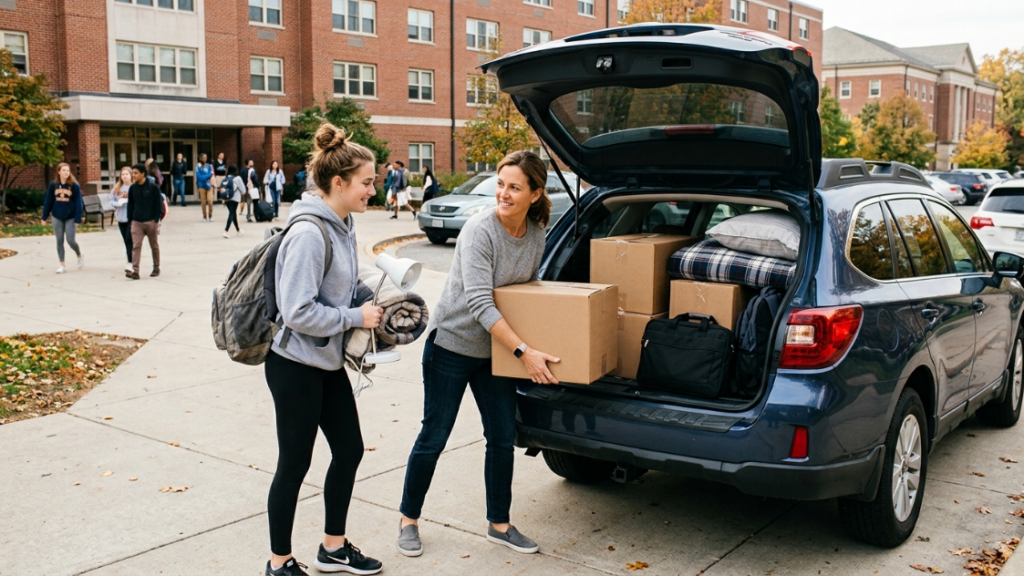
Sending a child off to college is exciting, emotional, and expensive. Between tuition, housing, books, meal plans, transportation, laptops, dorm supplies, and move-in day logistics, insurance can easily get overlooked. But before your student leaves home, it is worth taking time to review how your family’s insurance policies will respond once they are living on campus or in off-campus housing.
College changes a student’s risk profile. They may be living away from home for the first time, sharing space with roommates, driving in a new city, taking expensive electronics to campus, traveling back and forth for holidays, or signing their first lease. They may also be covered under some family policies in certain situations, but not in others.
GreatFlorida Insurance’s goal is not to over-insure your student. The goal is to understand where they are already protected, where coverage may be limited, and where a separate policy may be needed.
For most families, the key insurance areas to review are renters insurance, homeowners coverage, auto insurance, health insurance, liability coverage, valuables, identity theft, and travel-related protection.
Start With Where Your Student Will Live
The first insurance question is simple: Will your student live in a dorm, or will they live off campus?
That answer can change everything.
A student living in a dorm may have some limited coverage under a parent’s homeowners or renters policy. The National Association of Insurance Commissioners says that if a college student is under 26, enrolled in classes, and living in on-campus housing, the student may be covered under a parent’s homeowners or renters insurance policy.
However, “may be covered” does not mean “fully covered.” Your homeowners policy may limit coverage for belongings away from your residence. A deductible may apply. Certain items may be capped. Accidental damage may not be covered. Some policies may also have age, enrollment, or residency requirements.
If your student lives off campus in an apartment, rental home, shared house, fraternity house, or sorority house, a separate renters insurance policy is often the better option. Off-campus students are more likely to need their own coverage because a parent’s homeowners policy may not extend the same protection.
Renters Insurance for College Students
Renters insurance is one of the most important policies to review for a college student. It can help protect personal belongings and may also provide liability coverage and additional living expense coverage after a covered loss.
College students often bring more valuable property than they realize. A laptop, phone, tablet, headphones, bicycle, backpack, clothing, shoes, textbooks, furniture, gaming system, sports equipment, and small appliances can add up quickly.
The NAIC recommends that students renting an off-campus apartment or house consider renters insurance to protect belongings such as computers, televisions, bicycles, and furniture if they are damaged, destroyed, or stolen.
The Florida Department of Financial Services explains that renters insurance can protect against financial loss if personal property is damaged or destroyed by a covered peril such as fire, hurricane, or theft.
For parents, the key question is not just whether the student has coverage. It is whether the coverage is enough and whether it fits the student’s living situation.
Dorm Coverage vs. Apartment Coverage
Dorm students and apartment students should be treated differently.
If your student lives in a dorm, ask your insurance agent whether your homeowners policy extends coverage to a student away at school. Ask what percentage of the personal property limit applies, what deductible applies, and whether the student must be full-time.
If your student lives in an apartment, do not assume the landlord’s insurance protects them. A landlord’s policy usually covers the building, not the tenant’s laptop, clothing, furniture, or personal belongings. If there is a fire, theft, water leak, or storm damage, your student may need their own renters policy to replace damaged belongings.
Some apartment communities require proof of renters insurance before move-in. Even when it is not required, it can still be a smart and affordable protection.
Personal Property: Laptops, Phones, Bikes, and More
College students tend to carry valuable items around campus. Laptops go to libraries, phones go everywhere, bikes sit outside dorms, and backpacks move between classrooms, coffee shops, gyms, and cars.
Insurance coverage for personal property may apply differently depending on where the item is damaged or stolen. Some renters or homeowners policies may cover belongings away from the residence, but limits can apply. For example, a stolen laptop may be covered, but the deductible may be higher than the value of the claim.
The Insurance Information Institute recommends that families review whether a student’s possessions are properly covered before move-in and notes that standalone coverage may be worth considering for expensive electronics if accidental damage, such as drops or spills, is not covered by a standard policy.
Before move-in, create a simple inventory. Take photos of electronics, furniture, bikes, instruments, and other valuable items. Save receipts when possible. Record serial numbers for laptops, tablets, phones, bikes, and gaming systems.
Liability Coverage for Students
Liability coverage is easy to overlook, but it can matter for college students. A renters policy may include personal liability coverage if your student accidentally damages someone else’s property or someone is injured in their rental unit.
For example, a student could accidentally cause kitchen damage, overflow a sink or bathtub, damage a roommate’s property, or be held responsible for an injury in the apartment. Liability coverage may help with covered claims, legal defense, or settlement costs, depending on the policy.
Parents should also review whether liability coverage extends from their homeowners policy to a student away at school. If the student has their own renters policy, confirm the liability limits.
For families with significant assets, an umbrella insurance policy may also be worth reviewing. An umbrella policy may provide additional liability protection above eligible home, auto, renters, or other underlying policies.
Auto Insurance for College Students
Auto insurance can become complicated when a child goes to college. Whether your student takes a car to school, leaves a car at home, or attends school out of state can affect coverage and pricing.
If your student takes a car to college, tell your insurance company where the vehicle will be kept. The garaging address matters. A car kept in Miami, Orlando, Tampa, Gainesville, Tallahassee, Jacksonville, or another college town may be rated differently than a car kept at home.
If your student does not take a car to school, ask about a distant student discount. Some insurers offer discounts when a student attends school a certain distance from home and does not regularly have access to a vehicle.
If your student occasionally drives a roommate’s car, uses a family car during breaks, or drives when home for the summer, do not remove them from the policy without speaking with your agent. Removing a licensed household member can create coverage issues if they later drive.
The NAIC warns that failing to inform your auto insurer about drivers using your car can lead to denied claims, cancellation, or nonrenewal because of misrepresentation of licensed household members.
How much could you save on Florida Renters Insurance? It takes two minutes to find out.
Get a Free QuoteHealth Insurance and Campus Care
Health insurance should be reviewed before your student arrives on campus. Many students remain on a parent’s health insurance plan, but that does not always mean care is convenient or fully in network near school.
Under federal law, many young adults can stay on a parent’s health insurance plan until age 26. The NAIC notes that adult children up to age 26 may be covered by a parent’s health insurance policy.
Still, parents should check network access near campus. Are local doctors, urgent care centers, hospitals, pharmacies, and mental health providers in network? Does the plan cover care out of state? What does the student health center provide? Does the college require proof of insurance or offer a student health plan?
The NAIC’s back-to-school guidance notes that students without coverage through a parent’s plan, or with limited coverage because of network service areas, may choose a student health insurance plan.
Make sure your student has a digital and physical copy of their insurance card, knows where to go for urgent care, and understands basic costs such as copays, deductibles, and prescriptions.
Identity Theft and Cyber Risks
College students are frequent users of online portals, shared Wi-Fi, banking apps, payment platforms, school email, cloud storage, and social media. They may also share housing with roommates and receive mail in common areas.
Identity theft protection may be available through some homeowners policies, renters policies, credit monitoring services, or standalone plans. It may help with recovery expenses, fraud resolution, or monitoring, depending on the coverage.
Parents should encourage students to use strong passwords, multi-factor authentication, secure Wi-Fi, password managers, and account alerts. Students should also avoid leaving Social Security cards, passports, checkbooks, or sensitive documents in dorm rooms or shared apartments.
Valuable Items and Special Limits
Some belongings may not be fully covered under standard renters or homeowners insurance. Jewelry, watches, musical instruments, cameras, bicycles, sports equipment, and electronics may have special limits.
If your student is bringing expensive items to college, ask whether those items need to be scheduled separately. A student musician, athlete, photographer, cyclist, or gamer may have equipment that exceeds basic policy limits.
Also consider whether the item is covered for accidental damage. A policy may cover theft, but not a dropped laptop or spilled coffee on a keyboard.
Studying Abroad or Traveling
If your student will study abroad, travel for internships, join school-sponsored trips, or spend a semester in another state or country, insurance needs may change.
Review health insurance, travel medical coverage, renters or personal property coverage, auto coverage, and liability protection. Some policies may provide limited worldwide coverage, while others may not.
If the student is taking expensive electronics abroad, ask whether personal property coverage applies outside the United States. If they are renting a car overseas, auto coverage may be limited or excluded.
Questions Parents Should Ask Before Move-In Day
Before your student leaves for school, ask your insurance agent these questions:
Does my homeowners policy cover my student in a dorm?
Does coverage change if they live off campus?
Should they have their own renters insurance policy?
Are laptops, bikes, phones, and electronics covered?
Does the policy cover theft away from the dorm or apartment?
What deductible applies?
Is coverage replacement cost or actual cash value?
Should my student stay on our auto policy?
Is there a distant student discount?
Is the car rated at the correct garaging address?
Does our health plan work near campus?
Do we need identity theft protection or scheduled coverage for valuables?
Getting answers before move-in day can help avoid frustrating surprises later.
Final Thoughts
College is a major step toward independence. It is also a good time for families to review insurance. A student’s living situation, driving habits, health coverage, personal property, and liability risks can all change once they leave home.
For many families, the most important areas to review are renters insurance, auto insurance, health insurance, personal property coverage, liability protection, and valuable items. Dorm students may have limited protection under a parent’s homeowners policy, while off-campus students often need their own renters policy.
Before your child heads to campus, take an hour to review your policies with a GreatFlorida Insurance agent. Confirm what is covered, what is excluded, and what needs to be updated. The right preparation can help your student focus on school while giving your family more peace of mind.
Frequently Asked Questions About Insurance for Kids Going Off to College
1. Does my child need renters insurance in college?
Your child may need renters insurance, especially if they live off campus. Dorm students may have limited coverage under a parent’s homeowners policy, but off-campus students often need their own renters policy.
2. Does homeowners insurance cover a college student in a dorm?
Some homeowners policies may cover a full-time student living in on-campus housing, but limits, deductibles, and eligibility rules vary.
3. Does homeowners insurance cover off-campus apartments?
Usually not in the same way. A student living off campus may need a separate renters insurance policy to cover personal belongings and liability.
4. Are laptops and phones covered at college?
They may be covered for certain losses such as theft or fire, but deductibles, exclusions, and special limits can apply. Accidental damage may require separate protection.
5. Should my college student stay on my auto insurance?
Often, yes, especially if they drive your car during breaks or take a vehicle to school. Ask your agent before removing them from your policy.
6. Can I get a discount if my student does not take a car to college?
Some insurers offer distant student discounts when a student attends school away from home and does not regularly use a covered vehicle.
7. Can my child stay on my health insurance while in college?
Many young adults can stay on a parent’s health insurance plan until age 26, but parents should confirm network access near campus.
8. Does renters insurance cover roommates?
Usually, unrelated roommates are not automatically covered. Each roommate should consider having their own renters insurance policy.
9. Does college insurance cover theft from a car?
Some renters or homeowners policies may provide limited coverage for personal property stolen from a car, but auto insurance usually does not cover personal belongings inside the vehicle.
10. What should parents review before move-in day?
Parents should review renters or homeowners coverage, auto insurance, health insurance, liability limits, valuables, identity theft protection, deductibles, and whether the student’s address affects coverage.
Ready to save on Florida Renters Insurance?
GreatFlorida Insurance Agents compare rates from Florida's best carriers for you.
Get a Free QuoteOr call 888.478.7801