From seasonal travel and hurricane evacuations to everyday deliveries and neighborhood activity, Florida homeowners face unique security challenges. The good news is that most security risks can be reduced with thoughtful planning, simple upgrades, and consistent habits. While GreatFlorida Insurance is here for your homeowners insurance needs, we also want to provide you with security tips for prevention.
Why Residential Security Matters
Residential security is about prevention. A secure home is less likely to experience break-ins, property damage, or safety incidents. It also helps protect personal belongings, sensitive documents, and irreplaceable items.
For Florida homeowners, security matters even more because:
- Homes may be vacant during vacations or evacuations
- Storm damage can create temporary vulnerabilities
- Outdoor living spaces increase access points
- Package theft is increasingly common
Start With the Basics: Doors and Windows
Secure Exterior Doors
Your doors are the first line of defense. Exterior doors should be solid-core or metal, with properly installed deadbolts. Reinforced strike plates and longer screws can dramatically improve door strength.
Sliding glass doors should include secondary locks or security bars to prevent forced entry.
Lock and Reinforce Windows
Windows should lock securely and remain closed when you’re away. Ground-level windows and those hidden from view deserve extra attention.
Consider:
- Window locks or sensors
- Impact-resistant glass or shutters
- Keeping landscaping trimmed to maintain visibility
Lighting: One of the Most Effective Deterrents
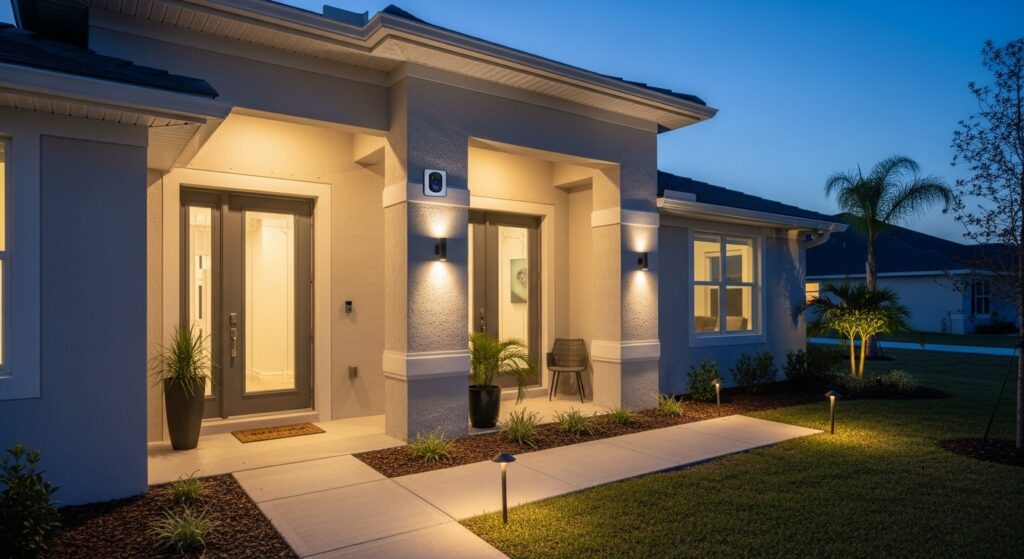
Good exterior lighting is one of the simplest and most effective security tools.
- Motion-activated lights near entry points
- Pathway lighting for visibility
- Well-lit garages and driveways
Lighting removes hiding places and signals that a home is occupied and maintained.
Smart Home Security Technology
Modern home security technology allows homeowners to monitor their property remotely and receive real-time alerts.
Video Doorbells and Cameras
Video doorbells and exterior cameras can deter theft and provide valuable documentation if an incident occurs.
Monitored Alarm Systems
Monitored systems can alert authorities when a break-in, fire, or other emergency is detected. Even visible signage alone can act as a deterrent.
Smart Locks and Sensors
Smart locks, window sensors, and garage monitors allow homeowners to check security status from anywhere. CNet provides a review of smart home security systems.
Everyday Habits That Improve Home Security
Technology is helpful, but daily habits matter just as much.
- Lock doors and windows consistently
- Remove spare keys from obvious hiding spots
- Hold mail and package deliveries when traveling
- Use timers for lights when away
- Get to know neighbors and communicate absences
Outdoor Areas and Landscaping
Landscaping plays a surprising role in residential security.
- Trim shrubs away from doors and windows
- Keep trees from providing access to upper levels
- Secure sheds, gates, and fences
- Store ladders and tools out of sight
How much could you save on Florida Homeowners Insurance? It takes two minutes to find out.
Get a Free QuoteSecurity During Storm Season and Evacuations
Hurricane season presents unique security challenges. Homes may be vacant during evacuations, and storm damage can expose entry points.
Before evacuating:
- Secure doors, windows, and shutters
- Lock garages and storage areas
- Remove loose outdoor items
- Document your home with photos or video
How Residential Security Relates to Insurance
While homeowners insurance helps protect against covered losses, preventing theft or damage is always preferable.
Security measures can:
- Reduce the likelihood of theft or vandalism
- Support smoother claims with documentation
- Help demonstrate responsible home maintenance
Some insurers may offer discounts for monitored security systems or protective devices.
Frequently Asked Questions (FAQ)
1. What is the most effective way to improve home security?
Layered security — strong doors, lighting, smart devices, and good habits — is the most effective approach.
2. Do security cameras really deter crime?
Yes. Visible cameras and doorbells can discourage opportunistic theft and provide documentation.
3. Should I leave lights on when I’m away?
Using timers or smart lighting is better than leaving lights on continuously.
4. How can I secure my home during hurricane evacuations?
Lock all entry points, secure shutters, remove outdoor items, and document the home before leaving.
5. Are smart locks safe?
Quality smart locks can be safe when properly installed and secured with strong passwords.
6. Does homeowners insurance cover theft?
Most homeowners policies cover theft, subject to limits and exclusions.
7. Can landscaping affect home security?
Yes. Overgrown landscaping can create hiding spots and reduce visibility.
8. How can neighbors help with security?
Trusted neighbors can watch for unusual activity and collect packages while you’re away.
9. Should I install a monitored alarm system?
Monitored systems add an extra layer of protection and faster emergency response.
10. Who can help me assess my home’s security risks?
Security professionals and your insurance agent can help identify vulnerabilities and coverage considerations.
Bottom Line
Residential security is about awareness, preparation, and consistency. By strengthening entry points, improving lighting, using smart technology, and practicing good habits, Florida homeowners can significantly reduce risk and protect what matters most.
A local GreatFlorida Insurance agent can also help review coverage and discuss how security measures fit into your overall protection plan.
Ready to save on Florida Homeowners Insurance?
GreatFlorida Insurance Agents compare rates from Florida's best carriers for you.
Get a Free QuoteOr call 888.478.7801