Letting someone borrow your car may seem like a simple favor. Maybe a friend needs to run an errand, a family member is visiting from out of town, a roommate needs transportation, or an adult child asks to use your vehicle for the afternoon.
But what happens if that person drives your car and gets into an accident?
The answer depends on several factors, including your auto insurance policy, whether the driver had permission, whether the driver lives in your household, whether the driver is listed or excluded, who caused the accident, what coverage you carry, and how serious the damage or injuries are.
In many situations, auto insurance follows the car first. That means your policy may be the first policy involved if someone else is driving your vehicle with your permission. However, this is not automatic in every situation, and policy language matters.
The Florida Department of Financial Services notes that some auto policies allow permissive use of an insured vehicle as long as the operator does not live with you or have regular use of your vehicle. Florida Highway Safety and Motor Vehicles also explains that Florida vehicles with a current registration must maintain Florida insurance coverage, including required Personal Injury Protection and Property Damage Liability coverage.
For Florida drivers, the best approach is to understand the rules before handing over the keys.
What Is Permissive Use?
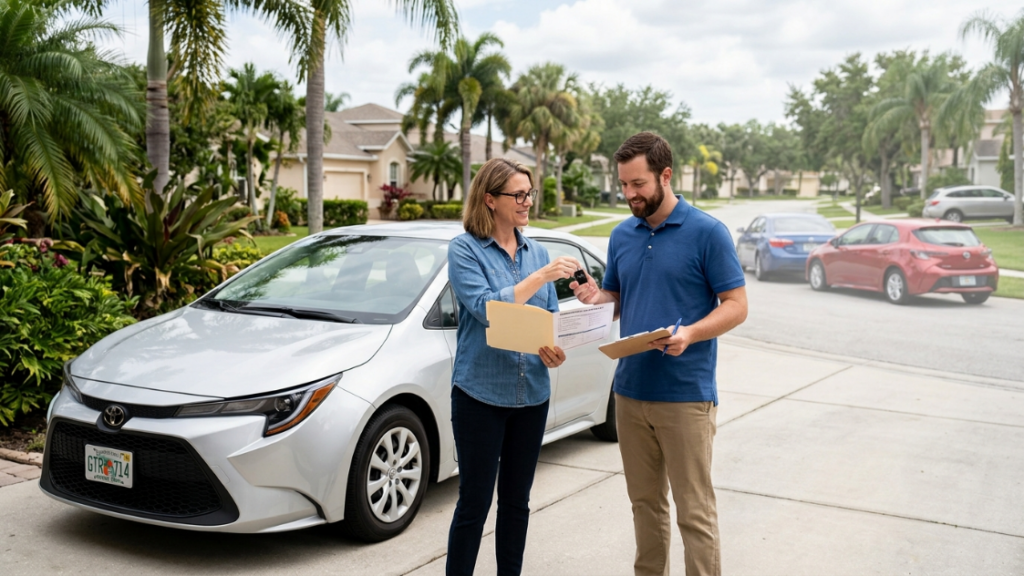
Permissive use means someone else is driving your vehicle with your permission.
This could include a friend, neighbor, visiting relative, coworker, or another person who does not normally drive your car but has your consent to use it.
For example:
You let your friend borrow your car to pick up groceries.
Your visiting parent uses your car while staying with you for the weekend.
Your neighbor moves your car out of the driveway.
Your adult sibling borrows your car for one afternoon.
Your coworker drives your vehicle during a short errand with your permission.
In these situations, your auto insurance policy may provide coverage, depending on the policy terms.
However, permissive use is usually meant for occasional use. It may not apply the same way if someone lives with you, regularly drives your car, is specifically excluded from your policy, or uses the vehicle outside the scope of your permission.
Does Insurance Follow the Car or the Driver?
A common saying is that “insurance follows the car.” That is often true, but it is too simple to rely on without checking your policy.
If someone borrows your car with permission and causes an accident, your auto policy may be the first policy used for vehicle damage, property damage, or certain injury-related coverage, depending on the policy and claim.
The driver’s own auto insurance may provide secondary coverage in some cases, especially if the claim exceeds your policy limits. But this depends on the driver’s policy, your policy, state law, and the details of the accident.
For example, if your friend borrows your car and hits another vehicle, your Property Damage Liability coverage may help pay for damage to the other person’s vehicle, up to your policy limits. If the damage exceeds your limits, the driver’s insurance may or may not provide additional protection.
This is why it is important to know both who is driving your car and how much coverage you carry.
Florida Minimum Auto Insurance Requirements
Florida requires drivers to maintain certain minimum auto insurance coverage for vehicles with a current Florida registration. Florida Highway Safety and Motor Vehicles states that before registering a vehicle with at least four wheels, owners must show proof of Personal Injury Protection and Property Damage Liability insurance.
Florida’s required minimum coverage generally includes:
Personal Injury Protection, often called PIP
Property Damage Liability, often called PDL
PIP helps pay certain medical expenses and lost wages after an accident, regardless of who caused the crash, subject to policy limits and rules.
Property Damage Liability helps pay for damage you or someone driving your insured vehicle causes to another person’s property.
However, Florida’s minimum required coverage may not be enough after a serious accident. Minimum limits can be quickly exhausted if another vehicle is badly damaged, multiple vehicles are involved, or someone is seriously injured.
That is why drivers should review optional coverages such as bodily injury liability, uninsured motorist coverage, collision coverage, comprehensive coverage, rental reimbursement, and umbrella insurance.
What If the Driver Had Permission?
If the person had permission to drive your car, your policy may apply under permissive use, subject to policy terms.
In a typical scenario, your auto insurance may respond first. That could include:
Property damage liability if the driver damages someone else’s car or property.
Collision coverage if your vehicle is damaged and you carry collision coverage.
Personal Injury Protection for certain injury-related expenses, depending on who was injured and how Florida no-fault rules apply.
Bodily injury liability if you carry it and the driver injures someone else.
Medical payments coverage if you carry it.
Uninsured motorist coverage in certain situations, depending on the facts and policy.
But there may be limits. Some policies reduce coverage for permissive drivers. Some exclude certain drivers. Some require household members to be listed. Some do not cover business use, delivery use, rideshare use, racing, criminal activity, or other excluded uses.
Before allowing someone to borrow your vehicle, review your policy or ask your agent how permissive use works.
What If the Driver Did Not Have Permission?
If someone takes your car without permission and gets into an accident, the claim may be handled differently.
For example, if your car is stolen and the thief causes an accident, your liability coverage may not apply the same way as it would for a permissive driver. If the vehicle itself is damaged, comprehensive coverage may apply for theft-related damage, depending on the policy.
If a friend or family member uses your car after you specifically told them not to, the situation may become more complicated. The insurer may investigate whether the driver had express permission, implied permission, or a history of regular access.
For example, if someone in your household regularly has access to your keys, the insurer may look closely at whether the use was truly unauthorized.
These situations can be fact-specific. If your vehicle is taken without permission, report the incident promptly and cooperate with the insurance investigation.
What If the Driver Lives in Your Household?
Household drivers are different from occasional permissive users.
Insurance companies usually want to know about all licensed drivers in the household, even if those drivers do not drive your car often. This may include spouses, teenage drivers, adult children, roommates, relatives, or others who have regular access to the vehicle.
If someone lives with you and drives your car but is not listed on the policy, a claim could become more complicated. The insurer may ask why the driver was not disclosed. Depending on the policy, coverage could be limited, denied, or subject to underwriting consequences.
The Florida Department of Financial Services notes that some policies allow permissive use when the operator does not live with you or have regular use of the vehicle. That distinction is important.
A visiting friend borrowing your car one time is different from a roommate using your car every week.
What If the Driver Is Excluded From the Policy?
An excluded driver is someone your policy specifically says is not covered.
If you let an excluded driver use your vehicle and that person causes an accident, your insurance may not cover the claim. That could leave you personally responsible for damages, injuries, lawsuits, repairs, or other costs.
Excluded drivers are often added to policies because of driving history, licensing issues, household arrangements, or underwriting concerns.
If someone is excluded from your policy, do not let them drive your car. Even a short trip could create a serious financial problem.
How much could you save on Florida Auto Insurance? It takes two minutes to find out.
Get a Free QuoteWhat If the Driver Has Their Own Insurance?
If the driver has their own auto insurance, their policy may provide some secondary protection in certain situations. However, you should not assume their insurance will fully protect you.
Your vehicle’s policy may still be first in line because the accident involved your car. The driver’s policy may apply only after your limits are used, or it may not apply depending on the policy language.
For example, if your friend borrows your car and causes $40,000 in property damage, but your policy has only $10,000 in Property Damage Liability, there may be a gap. The friend’s policy might help, but that is not guaranteed.
If you regularly lend your car to someone, you should know whether they have their own insurance, whether they are a safe driver, and whether your policy allows their use.
What If Your Car Is Damaged?
If someone else drives your car and damages it, your ability to repair or replace the vehicle depends on whether you carry collision coverage.
Collision coverage may help pay for damage to your car after a crash, regardless of who was driving, subject to policy terms and your deductible.
If you do not carry collision coverage, your policy may not pay to repair your car after an at-fault accident caused by a permissive driver. You may have to ask the driver to pay for the damage personally, but that can be difficult.
If another driver caused the accident, that driver’s property damage liability coverage may help pay for your car repairs. But if the at-fault driver is uninsured or underinsured, you could still face problems.
The key point: if your car matters financially, do not assume liability coverage alone protects it. Liability coverage protects other people when your car causes damage. Collision coverage protects your own vehicle after a crash, subject to the policy.
What If Someone Is Injured?
Injury claims can be much more serious than vehicle damage claims.
Florida is a no-fault state for certain auto insurance purposes. PIP coverage may help pay certain medical expenses and lost wages after an accident, regardless of who caused the crash. However, PIP has limits and does not replace all other coverage.
If the driver of your car injures someone else, bodily injury liability coverage may be important. Florida does not require every standard driver to carry bodily injury liability in the same way some states do, but many drivers choose to carry it for added protection.
If you do not carry bodily injury liability and someone driving your car causes serious injuries, you could face significant financial exposure.
Uninsured motorist coverage may also matter if the accident is caused by another driver who does not have enough insurance.
What If the Accident Exceeds Your Policy Limits?
If the accident causes more damage than your policy limits cover, you may be personally responsible for the difference.
For example, if your policy has $10,000 in Property Damage Liability and the driver of your car totals a $45,000 vehicle, your policy limit may not be enough. The injured or damaged party may pursue the driver, the vehicle owner, or other responsible parties depending on the facts.
This is one reason higher liability limits and umbrella insurance may be worth reviewing.
Umbrella insurance may provide additional liability protection above your auto policy, homeowners policy, or other underlying policies. However, umbrella policies usually require certain minimum underlying limits and may have exclusions.
If you lend your car to others, especially family members or household drivers, ask whether your umbrella policy would apply.
What If the Driver Was Using Your Car for Work or Delivery?
Business use can create major coverage problems.
If someone uses your car for food delivery, package delivery, rideshare driving, courier work, or other business activity and gets into an accident, your personal auto policy may not cover the claim.
Many personal auto policies exclude commercial use. That means coverage could be denied or limited if the vehicle was being used for business purposes at the time of the accident.
This can include:
Food delivery
Grocery delivery
Package delivery
Rideshare driving
Courier work
Paid transportation
Business errands beyond normal personal use
Use by an employee
If your car is used for business, even occasionally, tell your agent. You may need commercial auto insurance, rideshare coverage, delivery coverage, or another endorsement.
What If a Teen Driver Borrows the Car?
Teen drivers are often household members, so they usually need to be disclosed to the insurance company.
If your licensed teenager drives your car, your insurer generally expects that driver to be listed or rated on the policy. If a teen driver is not disclosed and gets into an accident, the claim may trigger coverage questions and underwriting consequences.
Teen drivers also create higher risk because of limited experience. If you have a teen in the household, review liability limits, collision coverage, uninsured motorist coverage, and umbrella insurance.
Also discuss clear rules:
When the teen may drive
Who can ride as a passenger
Whether they may drive at night
Whether they may use the car for school or work
Phone use and distractions
What to do after an accident
What If a Valet, Mechanic, or Parking Attendant Crashes Your Car?
If your car is damaged by a valet, mechanic, car wash employee, or parking attendant, the business’s insurance may apply. Many businesses carry garage liability or garagekeepers coverage for vehicles in their care, custody, or control.
However, your own policy may still become involved, especially if you need repairs quickly or if there is a dispute about responsibility.
In that situation, gather the business’s information, take photos, get a written incident report, and contact your insurer or agent for guidance.
Will Your Insurance Premium Go Up?
Your premium could increase after a claim, even if someone else was driving your car.
Insurance companies consider claims history, accident details, policyholder risk, driver information, and other underwriting factors. If your policy pays for an accident caused by a permissive driver, the claim may affect your future premium.
This can feel frustrating because you were not the one driving. But from the insurer’s perspective, the claim involved your vehicle and your policy.
If the person who drove your car is a household member or regular driver, the insurer may also require that driver to be added to the policy.
What Should You Do After Someone Crashes Your Car?
If someone driving your car gets into an accident, take these steps:
Make sure everyone is safe.
Call 911 if anyone is injured or if the accident requires a police report.
Get the names, phone numbers, license information, insurance information, and vehicle information for all drivers.
Take photos of the vehicles, scene, license plates, damage, road conditions, and any visible injuries.
Document who was driving your car and whether they had permission.
Do not admit fault at the scene.
Notify your insurance company promptly.
Ask your agent which coverages may apply.
Keep copies of repair estimates, medical bills, police reports, and claim communications.
If the accident involves serious injuries, disputed permission, an excluded driver, business use, or damages above your limits, consider speaking with legal counsel.
How to Protect Yourself Before Lending Your Car
Before allowing someone to drive your car, ask yourself:
Do they have a valid driver’s license?
Do they have a safe driving history?
Do they live in my household?
Are they listed or excluded on my policy?
Do they have their own insurance?
Are they using the car for personal reasons only?
Are they borrowing it one time or regularly?
Do I carry collision coverage?
Do I carry bodily injury liability?
Do I have enough property damage liability?
Do I have umbrella insurance?
Does my policy allow permissive use?
These questions may feel cautious, but they can prevent a major financial surprise.
Contact GreatFlorida Insurance for more information about auto insurance coverage.
Ready to save on Florida Auto Insurance?
GreatFlorida Insurance Agents compare rates from Florida's best carriers for you.
Get a Free QuoteOr call 888.478.7801