For Florida homeowners, the age of a roof has become one of the biggest factors affecting homeowners insurance eligibility. In recent years, many insurance companies have tightened underwriting requirements, leaving homeowners wondering whether their roof is “too old” to qualify for coverage.
Unfortunately, there is no single statewide rule that determines exactly how old a roof can be for homeowners insurance in Florida. Instead, each insurance company sets its own underwriting guidelines regarding roof age, roof condition, and remaining useful life.
That means two insurance companies may evaluate the exact same roof very differently.
Some homeowners discover their policy premiums increase dramatically once a roof reaches a certain age. Others receive non-renewal notices or struggle to obtain coverage altogether.
In this guide, we’ll explain how Florida insurance companies evaluate roof age, common underwriting rules, when a roof may create problems for coverage, and what homeowners can do to improve their insurability.
Why Roof Age Matters So Much in Florida
Florida insurers face enormous financial exposure from hurricanes, tropical storms, heavy rain, and wind-related roof claims.
Roof damage is one of the most common and expensive homeowners insurance claim categories in Florida.
As roofs age, insurers generally view them as more vulnerable to:
- Wind damage
- Leaks
- Water intrusion
- Structural deterioration
- Claim frequency
Because of this, roof age has become a major underwriting factor throughout the Florida insurance market.
Insurance companies often evaluate:
- The age of the roof
- The roofing material
- The condition of the roof
- The remaining useful life
- Any visible damage
- Prior repairs or claims
Is There a Maximum Roof Age for Insurance in Florida?
There is no universal Florida law stating that a roof becomes automatically uninsurable at a specific age.
However, many insurance companies apply internal roof age guidelines.
These guidelines vary significantly between carriers.
Common Roof Age Thresholds in Florida
Depending on the insurer and roof type, underwriting concerns often begin around:
- 10–15 years for some shingle roofs
- 15–20 years for many asphalt roofs
- 20+ years for tile roofs
- 25+ years for metal roofs
Some insurers may still offer coverage for older roofs if the roof passes inspection and has remaining useful life.
Others may refuse coverage entirely once the roof reaches a certain age.
Roof Age Guidelines by Roofing Material
Different roofing materials age differently, which affects how insurers evaluate them.
Asphalt Shingle Roofs
Asphalt shingle roofs are among the most common roofing systems in Florida.
Many insurers begin closely scrutinizing shingle roofs once they approach 15 years old.
Some carriers may:
- Require roof inspections
- Request proof of remaining useful life
- Limit coverage options
- Increase premiums
- Decline coverage
Shingle roofs are especially vulnerable to Florida’s intense sun, heat, wind, and storms.
Tile Roofs
Tile roofs often last longer than asphalt shingles and may remain insurable longer.
However, insurers still evaluate:
- Cracked tiles
- Underlayment condition
- Leaks
- Structural wear
Even if the tile itself appears fine, aging underlayment can become a concern.
Metal Roofs
Metal roofs generally receive more favorable treatment from insurers because of their durability and wind resistance.
Many metal roofs can remain insurable for decades if properly maintained.
Flat Roofs
Flat roofs often face stricter underwriting standards due to increased water intrusion risks.
Insurers may pay close attention to:
- Ponding water
- Membrane wear
- Drainage issues
- Visible deterioration
Can You Get Insurance With an Older Roof in Florida?
Yes — in many cases, homeowners can still obtain insurance with an older roof.
However, approval often depends on the roof’s condition and remaining useful life rather than age alone.
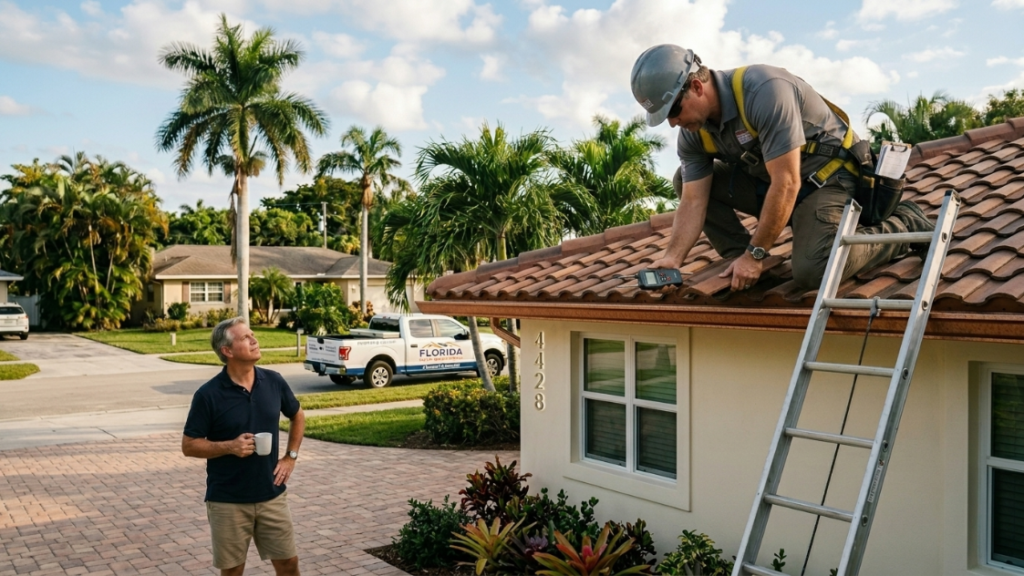
Roof Inspections Become Extremely Important
Insurance companies frequently require:
- 4-point inspections
- Roof certifications
- Wind mitigation inspections
If a licensed inspector confirms the roof has several years of remaining useful life, some insurers may still offer coverage.
The inspector may document:
- Current roof condition
- Signs of wear
- Visible damage
- Remaining lifespan estimates
What Roof Problems Cause Insurance Issues?
Roof age alone is not always the problem.
Visible deterioration and maintenance issues often create bigger underwriting concerns.
Common Roof Issues That Trigger Insurance Problems
- Missing shingles
- Curling shingles
- Leaks
- Soft spots
- Sagging areas
- Water stains
- Mold or rot
- Poor repairs
- Damaged flashing
- Exposed underlayment
Even relatively small visible issues may result in inspection concerns.
What Happens If Your Roof Is Considered Too Old?
If an insurance company determines a roof presents too much risk, several outcomes are possible.
1. Coverage Denial
Some insurers may decline to issue a new homeowners policy.
2. Policy Non-Renewal
Existing homeowners may receive a non-renewal notice requiring roof replacement before coverage can continue.
3. Limited Roof Coverage
Some policies may offer limited settlement options for older roofs.
This could include:
- Actual cash value coverage
- Depreciated claim payments
- Roof-specific deductibles
4. Higher Premiums
Older roofs often increase underwriting risk, which may result in higher premiums.
Florida Roof Insurance Laws and Recent Changes
Florida lawmakers have introduced reforms intended to address roof-related insurance challenges.
One important change involves how insurers evaluate roof condition.
Under Florida law, insurers generally cannot deny coverage solely because of roof age if:
- The roof is under 15 years old
- The roof passes an approved inspection
For roofs older than 15 years, homeowners may still qualify for coverage if an inspection confirms the roof has at least five years of useful life remaining.
However, insurers still maintain substantial discretion in underwriting decisions.
How much could you save on Florida Homeowners Insurance? It takes two minutes to find out.
Get a Free QuoteWhat Is a Roof Certification?
A roof certification is an inspection performed by a qualified professional to assess the roof’s condition and estimated remaining lifespan.
Insurance companies may request roof certifications when:
- The roof is older
- Underwriting concerns exist
- A policy renewal is being evaluated
- A home purchase is occurring
The certification may help homeowners demonstrate that the roof remains insurable.
Can Roof Replacement Lower Insurance Premiums?
In many cases, yes.
A newer roof may help homeowners qualify for:
- Lower premiums
- Additional carriers
- Better underwriting approval
- Wind mitigation discounts
Newer roofs are generally viewed as less risky because they are more resistant to:
- Wind damage
- Leaks
- Water intrusion
Homes with modern roofing systems may also qualify for stronger wind mitigation credits.
How Wind Mitigation Affects Roof Insurability
In Florida, wind mitigation features can significantly impact insurance eligibility and pricing. You can learn more about wind mitigation from this report from the Florida Office of Insurance Regulation.
Inspectors may evaluate:
- Roof shape
- Roof deck attachment
- Secondary water resistance
- Roof-to-wall connections
- Hurricane clips or straps
Homes with stronger wind mitigation features may qualify for substantial insurance discounts.
Tips for Homeowners With Older Roofs
If your roof is aging, proactive maintenance can improve your chances of maintaining coverage.
Helpful Steps Include:
- Schedule regular roof inspections
- Repair minor damage quickly
- Document maintenance records
- Clean gutters and drainage systems
- Address leaks immediately
- Keep photos and repair invoices
Well-maintained roofs may receive more favorable underwriting consideration than neglected roofs of the same age.
Why Independent Insurance Agents Matter
Because Florida insurance companies all use different underwriting rules, shopping coverage can become difficult for homeowners with older roofs.
An independent insurance agent can often help compare carriers that may be more flexible regarding:
- Roof age
- Roof material
- Inspection requirements
- Remaining useful life documentation
This can be especially valuable in Florida’s rapidly changing insurance market.
Final Thoughts
There is no single roof age that automatically disqualifies a Florida home from insurance coverage. However, roof age plays a major role in underwriting decisions throughout the state.
Most insurance companies evaluate not only the age of the roof but also:
- Its condition
- The roofing material
- Remaining useful life
- Visible signs of wear or damage
As Florida insurers continue tightening underwriting standards, homeowners with aging roofs may face:
- Higher premiums
- Inspection requirements
- Limited coverage options
- Potential non-renewals
Staying proactive with roof maintenance, inspections, and documentation can help improve your chances of securing affordable homeowners insurance coverage in Florida.
Frequently Asked Questions
1. How old can a roof be for homeowners insurance in Florida?
There is no universal age limit, but many insurers begin closely reviewing roofs once they reach 15 to 20 years old.
2. Can insurance companies deny coverage because of roof age?
Yes, although Florida law provides some protections for roofs under certain conditions and inspection standards.
3. Can I get insurance with a 20-year-old roof in Florida?
Possibly. Approval often depends on the roof’s condition and documented remaining useful life.
4. Do insurance companies require roof inspections in Florida?
Yes. Many insurers require 4-point inspections or roof certifications for older homes or aging roofs.
5. What roof type lasts longest for insurance purposes?
Metal and tile roofs generally last longer and may receive more favorable underwriting treatment than asphalt shingles.
6. What happens if my roof fails inspection?
The insurer may require repairs or replacement before offering or renewing coverage.
7. Does a new roof lower homeowners insurance premiums?
In many cases, yes. Newer roofs may qualify for better underwriting approval and wind mitigation discounts.
8. Can roof repairs help me keep insurance coverage?
Yes. Addressing visible damage and maintaining the roof properly may improve insurability.
9. What is a roof certification?
A roof certification is an inspection evaluating the roof’s condition and estimated remaining useful life.
10. Does Florida law protect older roofs from non-renewal?
Florida law limits certain roof-related underwriting actions when roofs meet inspection and useful life requirements, but insurers still maintain underwriting discretion.
Great Florida Insurance agents can help guide you through your homeowners insurance selection to find the right ploicy for you.
Ready to save on Florida Homeowners Insurance?
GreatFlorida Insurance Agents compare rates from Florida's best carriers for you.
Get a Free QuoteOr call 888.478.7801