


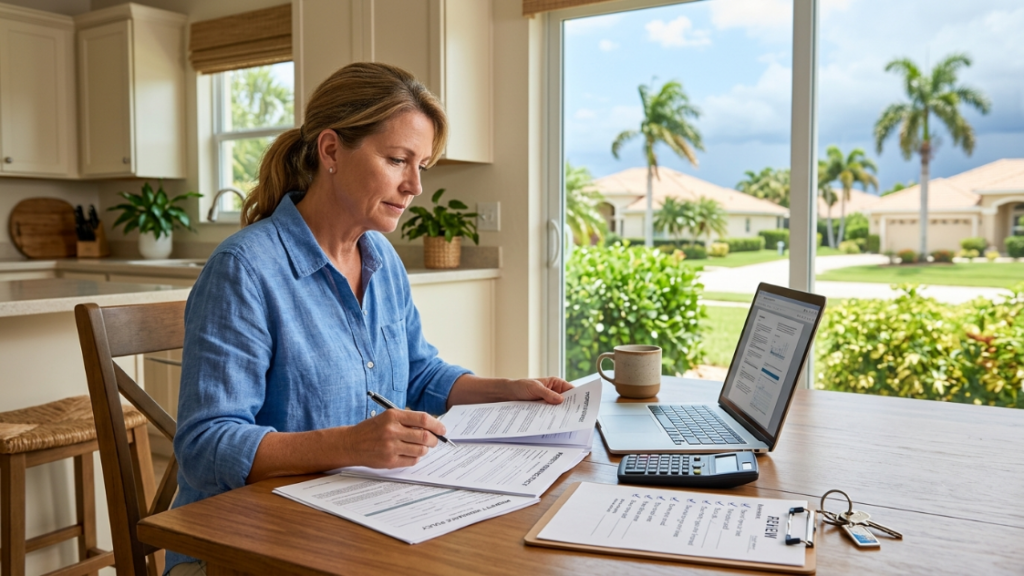
GreatFlorida Insurance agents are often asked he same question when they open a renewal notice or shop for coverage: Why is home insurance so expensive in Florida?
The answer is not just one thing. Florida home insurance is expensive because several major cost drivers overlap at the same time: hurricane risk, coastal exposure, reinsurance costs, roof age, high rebuilding costs, past litigation pressure, fraud concerns, limited carrier appetite, and the unique challenges of insuring homes in a storm-prone state.
Even when the market begins to stabilize, many homeowners still feel the pressure because premiums remain high compared with many other states. A newer inland home with wind mitigation features may be much more affordable to insure than an older coastal home with an aging roof, but Florida as a whole remains a challenging property insurance market.
The Florida Office of Insurance Regulation’s January 2025 Property Insurance Stability Report shows that average homeowners premiums varied widely by county, with some counties averaging more than $6,000 per year and Monroe County averaging more than $9,000. OIR also notes that actual charged premiums vary based on company, insured value, deductibles, and policy terms.
Understanding why rates are high can help homeowners make better decisions about coverage, mitigation, deductibles, and shopping options.
Florida Has Major Hurricane Exposure
The biggest reason Florida home insurance is expensive is hurricane risk. Florida is surrounded by warm water on three sides, has a long coastline, and faces exposure from the Atlantic Ocean, Gulf of Mexico, and Caribbean storm paths.
A single major hurricane can damage thousands of homes at once. That makes hurricane risk different from many ordinary insurance claims. A kitchen fire, theft claim, or plumbing leak may affect one home. A major hurricane can create widespread roof damage, water intrusion, structural damage, power outages, debris impact, and rebuilding demand across multiple counties.
Insurance companies have to price for the possibility of large catastrophe losses. Even if your home has never had a claim, your premium reflects the broader risk of insuring homes in a hurricane-prone state.
Coastal counties often face higher premiums because of wind speed, storm surge exposure, salt air, older housing stock, and the cost of rebuilding near the water. But inland homeowners are not immune. Hurricanes can travel across the state and cause wind, rain, tornado, and tree damage far from the coast.
Reinsurance Costs Push Premiums Higher
One of the least understood reasons Florida home insurance is expensive is reinsurance.
Reinsurance is insurance for insurance companies. Florida insurers buy reinsurance to help protect themselves from catastrophic losses, especially hurricane losses. When the cost of reinsurance rises, those costs are often reflected in consumer premiums.
This matters because Florida insurers must prepare for the possibility of severe storms that could create billions of dollars in claims. If global reinsurers charge more to cover Florida hurricane exposure, insurance companies may need to increase rates to remain financially stable.
The Insurance Information Institute has described Florida’s market as heavily affected by catastrophe exposure, litigation trends, and claims costs, while also noting that recent reforms have helped stabilize parts of the market.
For homeowners, this means your premium is not based only on your home. It is also affected by the cost of capital, catastrophe risk, and the price insurers pay to protect themselves after major storms.
Roof Age Is a Major Factor
Roof age has become one of the most important issues in Florida homeowners insurance. Older roofs can make it harder to find coverage, increase premiums, or reduce the number of insurers willing to quote.
Why does roof age matter so much? Because roofs are one of the most common and expensive parts of hurricane and wind claims. A roof that is older, poorly maintained, or near the end of its useful life may be more vulnerable to wind damage, water intrusion, and claim disputes.
Florida’s past roofing claim environment also contributed to insurer caution. For years, the state faced concerns about disputed roof claims, contractor solicitation, assignment of benefits, and litigation. Even after reforms, insurers still pay close attention to roof age, roof condition, roof shape, and roof material.
A newer roof may improve insurance options. A wind mitigation inspection may also help document features such as roof deck attachment, roof-to-wall connections, secondary water resistance, and opening protection.
Rebuilding Costs Have Increased
Home insurance is generally based on the cost to rebuild your home, not what you paid for it or what it might sell for. That is called replacement cost.
Replacement costs have increased in many areas because of labor shortages, material costs, supply chain pressure, building code requirements, and demand after storms. In Florida, rebuilding can be especially expensive after a major hurricane because contractors, roofers, materials, adjusters, and temporary housing may all be in high demand at the same time.
If the estimated cost to rebuild your home rises, your dwelling coverage limit may rise too. Higher coverage limits can lead to higher premiums.
This can be frustrating for homeowners because the premium may increase even if nothing has changed about the home. But if rebuilding costs rise, insurers must account for the higher cost of repairing or replacing damaged property.
Florida’s Past Litigation Environment Raised Costs
Florida’s homeowners insurance market has also been affected by litigation and claim dispute costs. For years, insurers and regulators pointed to claim-related lawsuits, attorney fees, assignment of benefits, and roof claim disputes as major contributors to higher costs.
The Insurance Information Institute reported that Florida had a disproportionate share of homeowners claim-related litigation compared with its share of homeowners claims, and it has noted that legal reforms have contributed to improved market stability and rate filing reductions among some insurers.
This is an important part of the story because claim costs are not limited to the cost of repairing damage. They can also include legal defense, settlements, attorney fees, engineering disputes, appraisals, and other claim-handling expenses. When those costs rise across the market, premiums can rise too.
Florida has passed major property insurance reforms in recent years, and some data suggests litigation has declined. But homeowners may not feel immediate relief because insurance pricing also depends on hurricane risk, reinsurance, rebuilding costs, and carrier finances.
Water Damage Is a Costly Claim Category
Water damage is another reason Florida home insurance can be expensive. Not all water damage is the same.
A sudden plumbing leak inside the home may be treated differently than flood damage from rising water. A roof leak may be treated differently depending on the cause, age of the roof, and policy language. Water backup may require an endorsement. Flood damage is usually excluded from a standard homeowners policy and requires separate flood insurance.
Florida homes face heavy rain, humidity, storms, plumbing failures, air conditioning leaks, roof leaks, and flood exposure. Water damage claims can be expensive because they may involve flooring, drywall, cabinets, mold remediation, personal property, and temporary living expenses.
Because water damage claims are common and costly, some policies may include water damage limits, exclusions, or special requirements.
How much could you save on Florida Homeowners Insurance? It takes two minutes to find out.
Get a Free QuoteFlood Risk Is Separate From Home Insurance
Many homeowners are surprised to learn that standard homeowners insurance usually does not cover flood damage. Flood insurance is typically purchased separately through the National Flood Insurance Program or a private flood insurer.
This matters in Florida because flood risk is not limited to beachfront homes. Heavy rain, poor drainage, storm surge, overflowing canals, and inland flooding can affect homes outside traditional high-risk flood zones.
When people compare the cost of home insurance in Florida, they should remember that the homeowners premium may not include flood insurance. A homeowner may need both policies to have a more complete protection plan.
In some areas, mortgage lenders require flood insurance. In other areas, flood insurance may be optional but still worth considering.
Carrier Availability Affects Pricing
Another reason Florida home insurance can be expensive is that not every insurer wants to write every home in every area.
Some companies limit coastal exposure. Others may restrict older roofs, older homes, certain construction types, prior claims, or homes with specific features. Some carriers reduce the number of policies they write in higher-risk counties. Others may require inspections or decline homes that do not meet underwriting standards.
When fewer companies are willing to quote, competition may be limited. A homeowner with a newer inland home may receive several quotes, while a homeowner with an older coastal home may have fewer options.
This is one reason working with a local insurance agent can be helpful. A local agent may know which carriers are currently writing in your area and which ones are more flexible for your home’s age, roof, location, and coverage needs.
County and Location Matter
Florida home insurance rates vary widely by county. Homes in coastal and high-risk counties often cost more to insure because of hurricane, wind, storm surge, and rebuilding exposure.
The Florida Office of Insurance Regulation’s 2025 report provides county-level average premiums, showing large differences across the state. For example, Monroe County averaged $9,058, Palm Beach averaged $6,614, Broward averaged $6,290, Miami-Dade averaged $6,045, and Collier averaged $5,604. By comparison, Sumter averaged $2,064, Martin averaged $2,213, Baker averaged $2,313, and Highlands averaged $2,330.
These are averages, not personalized quotes. Your actual premium may be higher or lower based on the home itself. But the county-level data shows why location is such an important part of Florida insurance pricing.
Deductibles Can Make Premiums Look Different
Florida homeowners policies often include multiple deductibles. You may have an all-other-perils deductible and a separate hurricane deductible.
The hurricane deductible is often a percentage of the dwelling coverage limit. For example, if your home is insured for $500,000 and your hurricane deductible is 2%, your out-of-pocket hurricane deductible would be $10,000.
A quote with a higher hurricane deductible may have a lower premium, but it also shifts more cost to the homeowner after a storm. That is why it is important to compare more than the annual price.
When reviewing quotes, compare:
Dwelling coverage
Personal property coverage
Loss of use coverage
Liability limits
All-other-perils deductible
Hurricane deductible
Roof settlement terms
Water damage limits
Wind or hail exclusions
Ordinance or law coverage
Flood insurance options
The cheapest quote is not always the best value if it leaves major gaps.
Wind Mitigation Can Help
One of the best ways Florida homeowners may be able to reduce premiums is through wind mitigation. A wind mitigation inspection documents features that help a home resist wind damage.
These features may include:
Roof shape
Roof deck attachment
Roof-to-wall connections
Secondary water resistance
Impact-rated windows or shutters
Opening protection
Garage door protection
Roof covering type
If your home qualifies for credits, a wind mitigation inspection may help lower your premium. The savings can vary by home and insurer, but in Florida it is often worth asking about.
Homeowners should also keep inspection reports, roof permits, shutter documentation, and upgrade receipts. Good documentation can help when shopping for coverage.
Newer Homes May Have Better Options
Newer homes may qualify for better insurance options because they are often built to stronger building codes. Florida’s building codes have changed over time, especially after major hurricane events.
A newer home may have better roof connections, stronger windows, improved construction standards, and updated electrical, plumbing, and HVAC systems. These features can reduce the likelihood of severe damage and may make the home more attractive to insurers.
Older homes can still be insured, but they may need updates, inspections, or specialized coverage. Roof condition, electrical systems, plumbing, and overall maintenance can all affect eligibility.
How Homeowners Can Respond
Florida homeowners cannot control hurricanes, reinsurance markets, or statewide rebuilding costs. But there are steps they can take.
First, review your policy before renewal. Do not wait until a cancellation or nonrenewal notice arrives. Ask your agent to compare options early.
Second, consider a wind mitigation inspection if you do not already have one. If you have made improvements, update your documentation.
Third, maintain your roof and keep records. If your roof is newer, make sure the permit and installation records are available.
Fourth, compare deductibles carefully. A lower premium with a high hurricane deductible may not be the best choice for every household.
Fifth, consider flood insurance separately. Homeowners insurance and flood insurance are different.
Finally, work with an agent who understands the Florida market. Carrier appetite changes, and a local agent can help you evaluate available options.
Final Thoughts
Home insurance is expensive in Florida because the state has a difficult combination of risks: hurricanes, coastal exposure, reinsurance costs, high rebuilding expenses, roof claim concerns, water damage, flood exposure, litigation history, and limited carrier appetite in some areas.
Some signs suggest the Florida market has begun stabilizing after recent reforms, but premiums remain high for many homeowners. The cost of coverage still depends heavily on location, roof age, replacement cost, wind mitigation, deductibles, and the insurer’s underwriting rules.
The best strategy is to understand what drives your premium, review your coverage regularly, document mitigation features, compare options, and avoid choosing a policy based only on the lowest price.
A local GreatFlorida Insurance agent can help you evaluate your home, explain available discounts, compare carriers, and build a coverage plan that fits your property and budget.
Ready to save on Florida Homeowners Insurance?
GreatFlorida Insurance Agents compare rates from Florida's best carriers for you.
Get a Free QuoteOr call 888.478.7801