A new year often brings a renewed motivation to get your home in order. Whether you’re looking to save money, boost your home’s value, or prevent future insurance claims, many household repairs can be handled without calling in a professional.
According to GreatFlorida Insurance, simple maintenance and small repairs are one of the most effective ways Florida homeowners can protect their property — especially with rising insurance rates and more unpredictable weather patterns.
This updated 2026 guide walks you through the most common home repairs you can confidently take on yourself and explains how keeping up with these small tasks can help maintain a safer, more resilient home.
1. Fixing a Stuck or Hard-to-Open Sliding Door
Florida humidity and sand often create buildup in sliding door tracks, making them difficult to open. The fix is straightforward:
Remove the door if possible.
Vacuum out dirt, sand, and debris from the track.
Scrub with warm water and mild soap.
Dry completely, then apply a silicone-based lubricant.
Why it matters for insurance: A smoothly operating door is an important hurricane safety feature — stuck doors can prevent quick emergency exits or compromise storm preparedness.
2. Patching Drywall Holes
From accidental door swings to pulled-out anchors, drywall damage is common. For small to medium holes, you can patch them yourself:
Use a self-adhesive mesh patch.
Apply joint compound in thin layers, letting each one dry.
Sand between coats for a smooth finish.
Prime and paint to match.
This simple repair improves home aesthetics and can prevent moisture intrusion in Florida’s humid climate.
3. Repairing or Replacing Window Screens
Damaged screens allow insects — and Florida has plenty of them — into your home. Replacing a screen takes less than 30 minutes and requires inexpensive materials:
Remove the screen frame.
Lay a new screen over the frame.
Use spline and a spline roller to secure the screen.
Trim excess material.
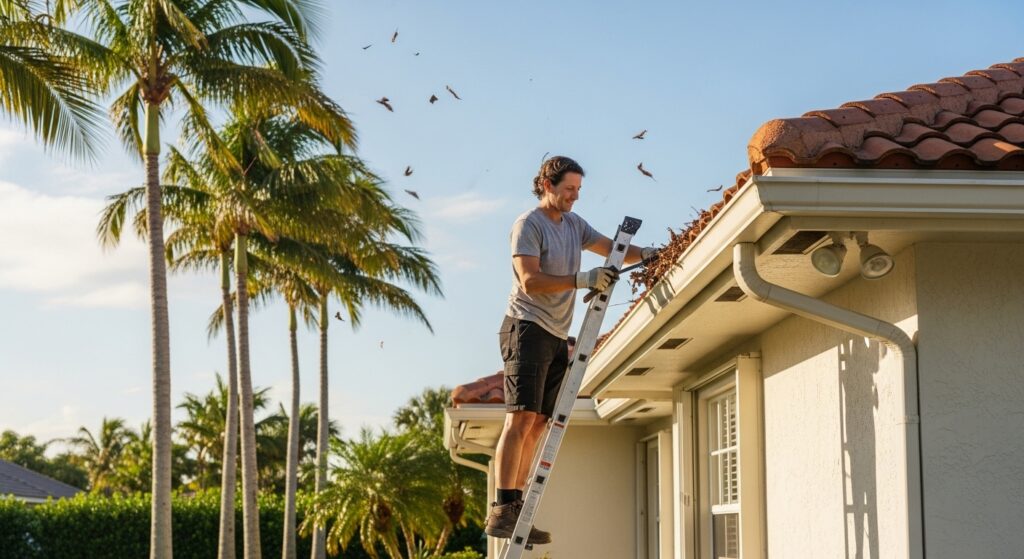
4. Cleaning Gutters and Downspouts
Clogged gutters cause water backup, roof leaks, and foundation issues. In Florida, heavy rainstorms make this especially important.
To DIY:
Wear protective gloves.
Use a gutter scoop or your hands to remove debris.
Flush gutters with a hose.
Check downspouts for blockages.
Insurance tie-in: Water damage is one of the most common insurance claims in Florida. Proper gutter maintenance helps prevent roof leaks and interior water damage.
5. Replacing Weatherstripping
Worn weatherstripping increases electric bills and reduces climate control efficiency. Replacing it is easy:
Pull off the old weatherstripping.
Clean the surface.
Measure and cut new weatherstripping.
Peel backing and press into place.
This can improve hurricane readiness by reducing the amount of wind-driven rain entering the home.
6. Fixing a Running Toilet
A constantly running toilet wastes water and increases utility costs. Common causes:</p>
Worn flapper valve
Chain too long or tangled
Faulty fill valve
Most repairs require no tools and cost only a few dollars.
7. Stopping Minor Plumbing Leaks
Not all leaks require a plumber. If you notice moisture around a faucet, showerhead, or under a sink:
Tighten loose connections.
Replace worn washers or O-rings.
Use plumber’s tape on threaded joints.
Important: If the leak involves a large pipe, active water damage, mold, or flooring swelling, call a professional immediately.
8. Replacing Light Fixtures and Outlets (Simple Jobs Only)
Basic electrical tasks like replacing light fixtures, swapping outlet covers, or updating a thermostat can be done safely if you follow these steps:
Turn off power at the breaker.
Use a voltage tester.
Follow manufacturer instructions.
Do not attempt rewiring, panel work, or anything requiring new circuits — those require a licensed electrician and may affect insurance coverage.
9. Maintaining Your Air Conditioner
Florida homeowners rely on AC systems year-round. Regular DIY maintenance extends unit life:
Replace or clean filters monthly.
Clear debris around the outdoor unit.
Vacuum dust from intake vents.
Annual professional servicing is still recommended to protect system efficiency and avoid claim issues if damage occurs.
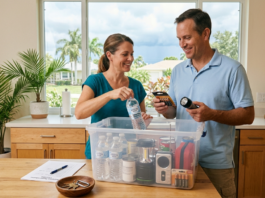
10. Improving Hurricane Preparedness
Several storm-prep tasks are DIY-friendly:
Install window protection film.
Secure outdoor furniture.
Test and maintain shutters.
Check door seals and thresholds.
These small steps can reduce wind-driven water intrusion and reinforce your home ahead of severe weather.
Q What home repairs can most people safely do themselves?
Most homeowners can handle tasks like patching drywall, fixing sliding doors, replacing window screens, cleaning gutters, tightening plumbing connections, swapping light fixtures, and replacing weatherstripping.
Q. Which DIY repairs help prevent insurance claims?
Gutter maintenance, small plumbing fixes, hurricane readiness, roof inspections, and AC filter replacements can prevent water damage, mold growth, and storm-related issues — all common insurance claims.
Q. Is it safe to do minor electrical work?
Yes, as long as you turn off power at the breaker and stick to simple tasks like replacing fixtures or outlets. Never attempt rewiring or panel work without a licensed electrician.
Q. How often should Florida homeowners clean gutters?
At least twice per year — and more often if your home is near trees or experiences frequent storms.
Q.When should I call a professional for a leak?
Contact a plumber if the leak involves major pipes, active flooding, mold, flooring damage, or anything beyond simple fixture tightening or seal replacement.
Q.How do I know if my sliding door needs track cleaning?
If your door grinds, sticks, or is difficult to open, there’s likely sand or debris in the track. A simple cleaning usually restores smooth movement.
Q.Can DIY repairs lower my insurance rate?
While DIY repairs don’t directly lower premiums, proper maintenance can reduce the likelihood of claims, which helps keep insurance costs stable long-term.
Q. How often should I change my AC filter?
Most Florida homes should replace AC filters every 30 days due to high usage and humidity.
Q. What hurricane prep tasks are DIY-friendly?
You can secure outdoor furniture, reinforce doors, install window film, maintain shutters, and check seals around windows and doors.
Q. What DIY repairs should homeowners never attempt?
Avoid major electrical work, roofing repairs, structural changes, gas line repairs, and anything involving large plumbing systems.
GreatFlorida Insurance offers homeowners insurance to keep your home in top condition. Contact us today
Ready to save on Florida Homeowners Insurance?
GreatFlorida Insurance Agents compare rates from Florida's best carriers for you.
Get a Free QuoteOr call 888.478.7801