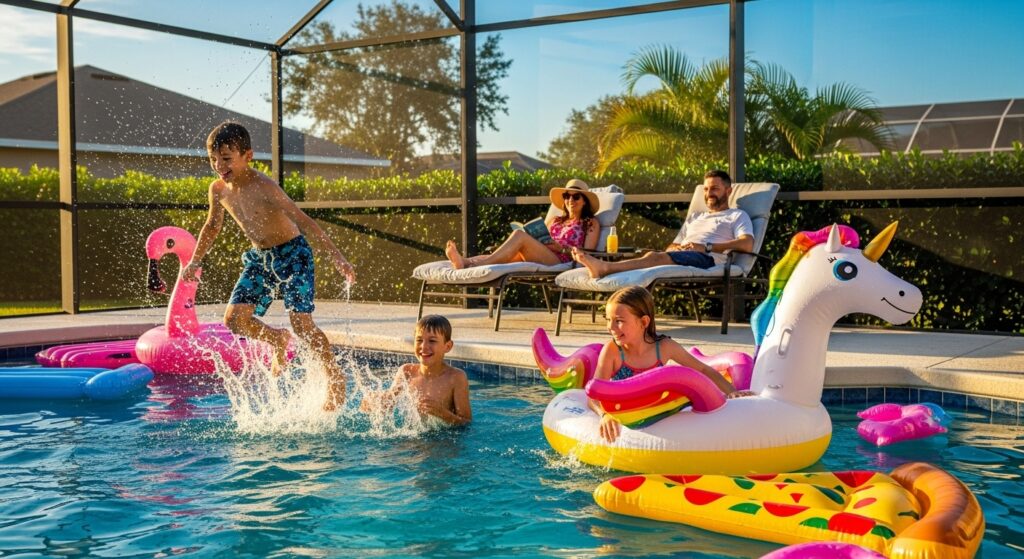
A swimming pool is one of the most desirable home features in the Sunshine State. Florida homeowners imagine crystal-clear water, sunshine all year, weekend BBQs, and a refreshing escape just steps from the back door. And for many, pool ownership delivers on those dreams — but not without responsibilities that first-time pool owners often underestimate.
Florida pools require more maintenance than pools in most other states due to heat, humidity, hurricanes, algae risks, and safety laws, and they introduce unique home-insurance considerations that should not be overlooked.
If you’re thinking about adding a pool or buying a home with one, here is a clear-eyed look at what Floridians should expect.
Key Takeaways
- Most Florida homeowners spend $150 to $450 monthly on pool electricity, chemicals, maintenance, and repairs combined.
- Florida law requires a 4-foot fence, self-latching gate, and at least one safety feature such as motion detection.
- A well-maintained pool adds 5 to 8% to home value, but hurricanes and algae growth require constant care in Florida’s climate.
Why Pools Are So Popular in Florida
Florida has more residential swimming pools than any state except California — and the trend keeps rising. With year-round warm weather, high property values, and active outdoor lifestyles, pools are natural additions to Florida homes.
Benefits include:
- A fun hub for family and friends
- Relief from the summer heat
- Exercise without leaving home
- Potential boost to resale value
- Lower cost compared to annual beach vacations or gym memberships
However, long-term enjoyment requires understanding the real-world responsibilities behind the dream.
Maintenance in Florida Is a Full-Time Commitment
Warm weather means longer swimming seasons — but it also means longer maintenance seasons.
Weekly tasks Florida pool owners should expect
- Skimming debris from storms and wind
- Vacuuming and brushing walls
- Clearing skimmer and pump baskets
- Checking and balancing chemical levels
- Running the pump to keep water circulating
Florida-specific maintenance challenges
| Risk | Why It’s Worse in Florida |
|---|---|
| Algae | Hot water + UV exposure accelerates growth |
| Rain | Dilutes chemicals, introduces contaminants |
| Hurricanes | Debris, flooding, and power outages |
| Heat | Shortens chemical lifespan and increases evaporation |
| Landscaping | Palm trees and tropical plants drop constant debris |
Whether you tackle maintenance yourself or hire a pool company, consistency is mandatory.
The True Cost of Pool Ownership in Florida
A pool is not a one-time expense. Most homeowners underestimate ongoing and long-term costs.
Average monthly costs
| Type | DIY Cost | Professional Cost |
|---|---|---|
| Chemicals | $50–$120 | Included |
| Electricity (pump, heater) | $40–$110 | $40–$110 |
| Maintenance service | — | $120–$200 |
| Repairs/parts over time | $30–$60 | $30–$60 |
Most Florida homeowners spend $150–$450/month total, depending on pool size, equipment, and whether they outsource the work.
Repairs and Equipment Replacement
Florida pool equipment works harder due to high temperatures. Expect to replace or repair over time:
- Pumps (every 5–7 years)
- Pool heater (10–12 years)
- Salt cell (5–7 years for saltwater pools)
- Pool light fixtures
- Pool resurfacing (every 8–12 years)
And hurricanes introduce risk — debris and power outages can damage pumps and filters if not prepared in advance.
Pool Safety and Insurance Are Connected in Florida
Pools can increase home value — but they also increase liability. Understanding Florida safety requirements helps ensure the pool remains an asset rather than an insurance risk.
Florida pool safety law (Residential Swimming Pool Safety Act)
New pools must include at least one of the following:
- Approved barrier/fence
- Self-closing/self-latching gate
- Pool cover
- Door alarm or child safety alarm
- Motion-activated water alarm
Full law reference:
https://floridapoolpro.com/residential-swimming-pool-safety-act/
How a pool affects insurance
Most Florida home-insurance companies require:
- A fence at least 4 feet high
- A self-latching gate
- Non-climbable access zone around the fence
- No diving boards or slides in many policies
Some carriers may increase liability limits automatically when a pool is present. Many homeowners choose to add umbrella liability coverage for extra protection.
Authoritative resource:
https://www.floir.com/Office/KnowYourInsurance.aspx
Weather: The Biggest X-Factor
Florida pool performance changes dramatically with the seasons.
- June–September: Highest risk of algae and summer storms
- Fall: Debris from tropical storms + leaves
- Winter: Warm temperatures usually mean continued maintenance
- Spring: Peak pollen season can clog filters quickly
Power outages during hurricanes can cause the water to go green in just 2–3 days, making a generator valuable for many pool owners.
Does a Pool Increase Florida Home Value?
In warm-weather states, the answer is generally yes.
Florida appraisers estimate:
- A well-maintained pool can add 5–8% to home value
- Homes sell faster with a pool in many coastal communities
- Neighborhood norms matter — if most homes nearby have pools, buyers expect them
But a run-down or neglected pool can hurt marketability and reduce buyer interest due to repair concerns.
How much could you save on Florida Homeowners Insurance? It takes two minutes to find out.
Get a Free QuoteSigns You’re a Great Candidate for a Florida Pool
You will likely love owning a pool if you:
- Live in a household that swims regularly
- Enjoy entertaining or outdoor family time
- Have room in the budget for ongoing maintenance
- Are comfortable with safety, supervision, and maintenance responsibilities
A pool may not be ideal if you:
- Prefer a low-maintenance backyard
- Travel frequently or don’t enjoy time outdoors
- Would rarely use it
Final Word: Is a Pool Worth It in Florida?
For many Floridians, the answer is absolutely yes — with realistic expectations. A pool adds fun, exercise, luxury, and resale value. But it also requires consistent maintenance, financial planning, and safety awareness.
A pool isn’t just water — it’s a lifestyle. The happiest Florida pool owners are the ones who see both the sunshine and the upkeep
The American Red Cross recommends the establishment and enforcing of pool rules and safe behaviors around your pool at home, for more information, click on the link provided.
GreatFlorida Insurance provides quality home insurance and umbrella policies to fit your budget. For more information call us at 888-478-7801 or visit us online at www.greatflorida.com.
How much does it cost to maintain a pool in Florida?
Most Florida homeowners spend between $150 and $450 per month on electricity, chemicals, maintenance services, and periodic repairs.
Do pools increase home insurance in Florida?
Insurance premiums may increase because pools add liability exposure. Most insurers require a secured fence, self-latching gate, and safety compliance before providing coverage.
Do pools add value to homes in Florida?
Yes. In many Florida neighborhoods, a pool can add 5–8% to home value and may help the home sell faster when properly maintained.
Are saltwater pools easier to maintain in Florida?
Saltwater pools require fewer chemicals but still need weekly care in Florida due to heat, storm debris, and algae risks.
Does home insurance cover pool damage from hurricanes?
Home insurance may cover damage to pool equipment and enclosures from windstorms, but floodwater contamination is typically excluded. Coverage varies by insurer.
Is a fence required around pools in Florida?
Yes. Florida’s Residential Swimming Pool Safety Act requires at least one approved safety feature such as an isolation fence, self-latching gate, or alarm system.
What is the most common pool problem in Florida?
Algae is the most common issue due to warm water, heavy sunlight, and rainfall. Consistent chemical balancing and circulation prevent rapid growth.
How often should a pool be resurfaced in Florida?
Most Florida pools require resurfacing every 8 to 12 years depending on material, chemical consistency, and sunlight exposure.
Do storms make pool care harder in Florida?
Yes. Rain, wind, and power outages introduce debris and bacteria and can cause chemical imbalance. Preparation before storms is strongly recommended.
Is a pool worth it in Florida?
A pool is worth it for homeowners who will use it regularly and are prepared for year-round maintenance, safety, and ongoing costs.
Ready to save on Florida Homeowners Insurance?
GreatFlorida Insurance Agents compare rates from Florida's best carriers for you.
Get a Free QuoteOr call 888.478.7801